
PDIP Responds to Supreme Court Ruling on Gibran’s High School Equivalency Certificate, Raises DPR Inquiry Rights
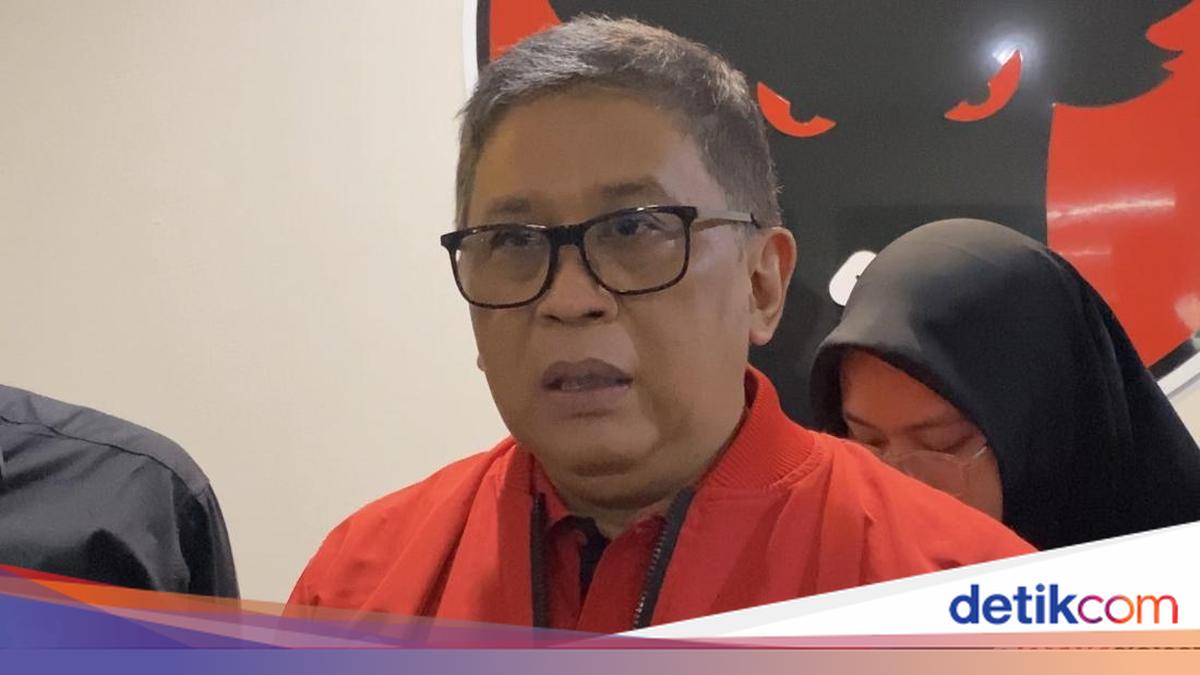
PDIP Secretary-General Hasto Kristiyanto has responded to the Supreme Court’s (MA) decision to reject an appeal concerning the equivalency of Vice-President Gibran Rakabuming Raka’s high-school qualification. He said the ruling reinforced concerns that constitutional requirements for presidential and vice-presidential candidates had not been met.
“This also proves that in politics there is no lie that lasts for ever, especially when it involves an abuse of power. That is where the truth will find its own way,” Hasto said in a statement on Saturday (31 October 2026).
Hasto said the Supreme Court ruling had brought renewed attention to the equivalency of Gibran’s qualification, which had also been scrutinised in proceedings at the Constitutional Court (MK).
“The Supreme Court’s decision further reinforces the point that Gibran’s qualification was recognised through a certificate, even though during the MK hearing the diploma itself could not be found,” he said.
Hasto argued that the issue was not merely administrative, but also concerned a fundamental qualification that a prospective leader must meet under the Constitution.
“This touches on a very fundamental matter: the constitutional requirement that candidates have at least a senior high-school diploma or equivalent has not been met,” he said.
Hasto also referred to Constitutional Court Decision No. 90 of 2023, which changed the age requirements for presidential and vice-presidential candidates. He said that process had also been marked by the abuse of power and a serious ethics violation involving Anwar Usman, who was then chief justice of the MK.
“This was compounded by Constitutional Court Decision No. 90 of 2023, when power was also brought to bear on the age requirement, in the case involving a serious ethical violation by ‘Uncle Usman’, who was then chief justice of the MK,” Hasto said.
“Then there were further efforts to exert power, which ultimately allowed Gibran to qualify as a vice-presidential candidate, followed by an abuse of power through the enormous social assistance spending that has put pressure on the public finances under Mr Prabowo, as well as the deployment of ‘parcok’ [a colloquial term for state apparatus allegedly used for political purposes], among other things. All of this completes the picture of various forms of abuse of power,” he added.
Hasto said he was confident that the public would respond to and correct these issues. Public aspirations, he said, could be channelled through political parties and other political and constitutional mechanisms.
He also referred to calls by several PDIP cadres, including Komarudin Watubun and Andreas Hugo Pareira, for Gibran to resign as vice-president.
“Mr Komarudin and Mr Andreas Pareira have said that he should resign. This is the voice of a growing number of people. It must not be ignored,” Hasto said.
Hasto said PDIP needed support from other political parties if it was to pursue the use of the DPR’s right of inquiry. With 110 seats in parliament, or around 18 per cent of the total, he said PDIP could not push the initiative alone.
“PDIP has a little over 18 per cent of the strength. We have only 110 seats. So dialogue with other parties is also needed. We believe other parties will listen to these voices, particularly amid the increasingly widespread process of delegitimisation taking place,” Hasto said.
“This must be an issue for us as a nation, not a matter for Party A, Party B or the Indonesian Democratic Party of Struggle. If it is not addressed, it will create a prolonged moral crisis and a prolonged crisis of leadership by example,” he added.
Hasto said discussions with other parties had begun, but involved only some of them so far. “We are only in dialogue with a few parties, because consolidation will inevitably take place in the DPR,” he said.
The Supreme Court had earlier granted an appeal brought by a member of the public, Subhan, concerning a certificate recognising Gibran’s overseas high-school education. The court ruled that the certificate was invalid and null by law.
“Appeal granted. The lower court judgment is set aside. The court adjudicates the case itself: the claimant’s entire lawsuit is granted,” the Supreme Court said in decision No. 742 K/TUN/2026, according to its official website on Friday (30 October).
Subhan’s appeal followed his lawsuit at the Jakarta Administrative Court (PTUN Jakarta), case No. 62/G/2026/PTUN.JKT, against the Ministry of Primary and Secondary Education. He sought a ruling that Certificate No. 9149/D.D1/KS/2019, issued in Jakarta on 6 August 2019 by the Directorate-General of Primary and Secondary Education, was invalid and null by law; that it be withdrawn from whoever held it and destroyed; and that the defendant pay the legal costs.
The Jakarta Administrative Court initially dismissed Subhan’s claim. He appealed, but the Jakarta Administrative High Court upheld the lower court’s ruling. He then appealed to the Supreme Court, which granted his claim.
Certificate No. 9149/D.D1/KS/2019 recognised Gibran’s overseas high-school education and was used for his registration as a vice-presidential candidate in 2024. In its ruling, the Constitutional Court said it had found no evidence of Gibran’s overseas high-school diploma on which the equivalency certificate was based.
Source: jawawa.id (https://jawawa.id/newsitem/pdip-responds-to-supreme-court-ruling-on-gibrans-high-school-equivalency-certificate-raises-dpr-inquiry-rights-1793422267)
Originally published by detikcom (https://news.detik.com/berita/d-8732171/pdip-respons-putusan-ma-soal-suket-sma-gibran-singgung-hak-angket-dpr), translated from Indonesian