
PDIP Respects Constitutional Court Ruling Upholding Direct Regional Elections
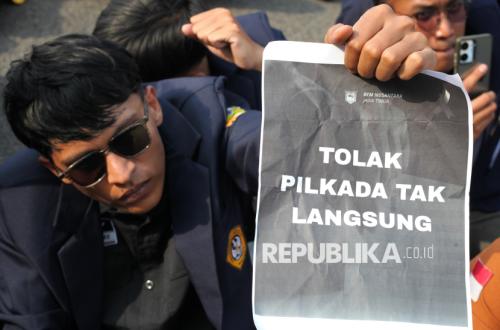
Chairwoman of the Indonesian Democratic Party of Struggle (PDIP) Puan Maharani has responded to the Constitutional Court’s (MK) ruling that regional head elections (Pilkada) will continue to be chosen directly by the people. She stated that the party respects and honours the decision. “Yes, we respect and honour the MK’s decision,” Puan said at the parliament complex in Senayan on Thursday (2/7/2026). The Speaker of the House of Representatives also confirmed that the ruling would be followed up according to existing procedures. “We will follow up on this matter through the available mechanisms,” she added.
The Constitutional Court had earlier affirmed that regional head elections must remain direct. The ruling was delivered during a session on the judicial review of the Pilkada Law. Chief Justice Suhartoyo stated that the decision was guided by universally applicable electoral principles. The Court also recognised and respected the existence of special or autonomous regional government units.
With this ruling, the Court declared the petition challenging Article 1, point 1 of Law Number 8 of 2015 on the Election of Governors, Regents, and Mayors (the Pilkada Law) as inadmissible. The petition was registered under case number 195/PUU-XXIV/2026. In its considerations, the Court assessed that the petitioners failed to demonstrate any constitutional harm, whether actual or potential, that could occur within the bounds of reasonable reasoning. The Court referred to several previous rulings, including MK Decision Number 072/PUU-II/2024, 073/PUU-II/2004, 69/PUU-XXIV/2024, and 110/PUU-XXII/2025.
The petition was filed by four university students: Vendy Setiawan, Lala Komalawati, Susi Lestari, and Afifah Nabila Putri. They challenged the phrase “directly and democratically” in Article 1, point 1 of the Pilkada Law. The article states, “The election of governor and deputy governor, regent and deputy regent, as well as mayor and deputy mayor, hereinafter referred to as election, is the implementation of popular sovereignty in the province and regency/municipality to elect the governor and deputy governor, regent and deputy regent, as well as mayor and deputy mayor directly and democratically.”