
PDIP Reminds NU Congress to Focus on Community Issues, Not Leadership Contest
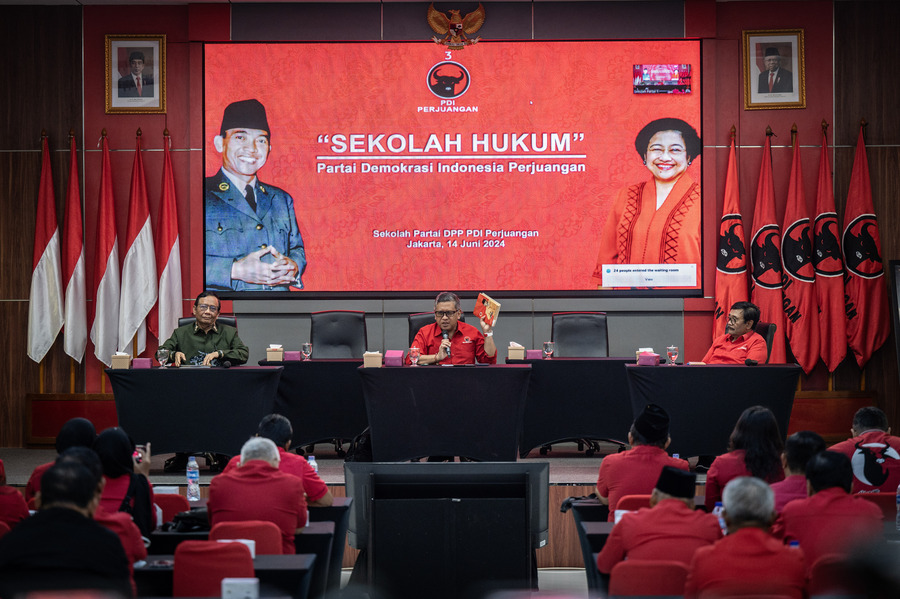
The Central Leadership Board (DPP) of the Indonesian Democratic Party of Struggle (PDIP) has offered important notes ahead of Nahdlatul Ulama’s major gathering. DPP PDIP Chairman Said Abdullah has advised that the energy of the Nahdlatul Ulama (NU) Congress should not be exhausted solely on contesting leadership positions.
According to him, the highest forum of Indonesia’s largest Islamic organisation would be far better directed fully towards formulating solutions to the various real problems faced by the community and the Indonesian nation.
In an official statement in Jakarta on Wednesday (26/8), Said stressed the importance of safeguarding NU’s dignity as a sturdy cultural anchor within society.
“As a subcultural force, NU serves as a cultural space where Islamic values, Indonesianness, tolerance, and local wisdom process organically. This practice is what has constituted NU’s strength to this day,” Said stated.
Furthermore, the senior politician explained that the real challenges at the grassroots level are currently very complex. They range from poverty, unemployment, crises in the agricultural and environmental sectors, to global pressures that have a direct impact on economic dynamics and the quality of democracy.
Therefore, the social capital possessed by NU must continue to be nurtured so that the organisation is not swept away by the currents of practical politics. Said firmly reminded that the leadership succession process within NU should avoid the pragmatic and transactional patterns of political leadership replacement.
Although deeply rooted in the pesantren tradition of rural areas, the scope of NU’s role and public expectations have now surpassed the boundaries of village communities. The Islamic intellectual tradition combined with the contributions of hundreds of thousands of graduates from various parts of the world has made NU a strategic force.
Said assessed that NU has now transformed from merely a subcultural force into a diasporic force that plays an important role in responding to the challenges of global civilisation. He then referred to the golden age of Islam during the Abbasid Dynasty from the 8th to the 13th century AD, which did not rely solely on political power but on the advancement of knowledge.
“In fact, Islam’s decline was due to the many political disputes,” he said.
He is optimistic that NU will grow even larger and make real contributions to building Islamic civilisation if it remains consistent on the path of serving the community. In addition, Said encouraged that the outcomes of Bahtsul Masail, as a scholarly deliberation forum for NU ulama and intellectuals, be amplified more in the public sphere to demonstrate Islam’s capacity to answer the challenges of the times.
“As part of the Nahdliyin community, having been born, raised, and grown up within the NU environment, I hope NU remains steadfast on the path of moral, spiritual, and social exemplarity,” said Said, who also serves as Chairman of PDIP East Java.
For information, the 35th NU Congress is scheduled to take place from 27–31 August 2026 and will be centred at Bahrul Ulum Islamic Boarding School, Tambak Beras, Jombang, East Java. The opening agenda of the congress is planned to be attended directly by President Prabowo Subianto.
The organising committee is also implementing digital-based governance innovation in the form of a special chip-technology card for congress participants to ensure valid participant verification while preventing potential access manipulation during the event.