
PDIP Questions Indonesia's Subservience to Superpowers: Is Foreign Policy Still Free and Active?
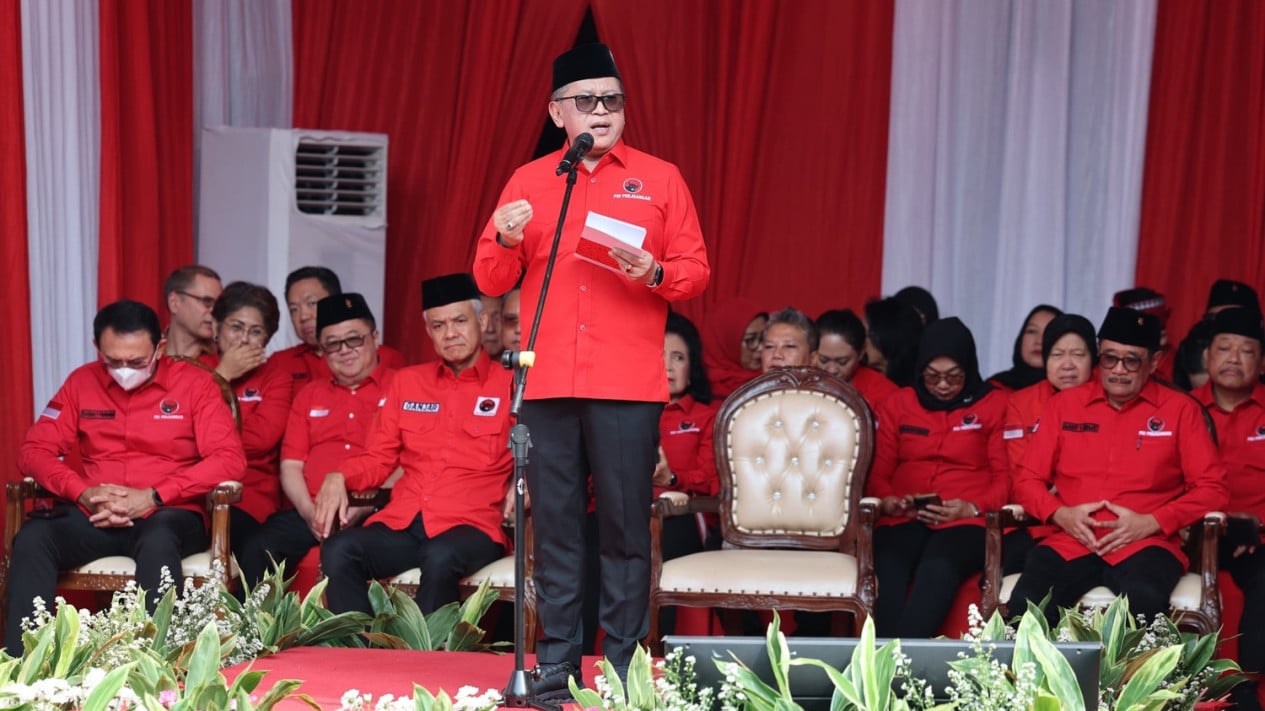
The Central Leadership Council (DPP) of PDI Perjuangan held a Red and White Flag-raising ceremony to mark Pancasila Day on June 1 at the courtyard of At Taufiq Mosque in Lenteng Agung, South Jakarta, on Monday, 1 June 2026.
The solemn ceremony was attended by regional DPRD members from the PDI Perjuangan faction, DPC and PAC PDIP officials across Jakarta, and PDIP Task Force members.
DPP PDIP Secretary-General Hasto Kristiyanto officiated the ceremony and delivered a speech.
In his speech, Hasto reiterated the importance of viewing Pancasila not merely as political rhetoric, but as a geopolitical ideology and a tool for liberating the economic interests of the common people.
“Pancasila embodies a resolve to free Indonesians from the shackles of colonialism and oppression,” Hasto said.
Hasto criticised the nation’s deviation from the development blueprint established by the founders, particularly regarding economic independence and Indonesia’s global standing.
Hasto explained that during President Soekarno’s era, Pancasila was widely understood as a collective vision positioning Indonesia strategically on the world stage. He recalled this in line with PDI Perjuangan Chairperson Megawati Soekarnoputri’s grand vision.
“In Bung Karno’s geopolitical vision, Indonesia should be led by ideas – a resolve to become the strongest nation in the Indian Ocean and a gateway to the world’s future in the Pacific Ocean,” he said.
To support this global vision, Hasto explained that past development was based on scientific research and mastery of knowledge, positioning universities as civilisation hubs (City of Intellect), particularly in managing maritime resources in Eastern Indonesia.
However, Hasto lamented that this strategic direction has shifted. He raised critical questions about the independence of Indonesia’s current foreign policy stance.
“Many are questioning whether Indonesia’s foreign policy remains free and active, or has it succumbed to superpower hegemony? Is there still room for organic public participation in national economic activities, or are all policies dictated from the top?” he said.