
PDIP, PKB, and Golkar Respond to KPK Proposal on Presidential Candidates Requiring Party Cadre Status
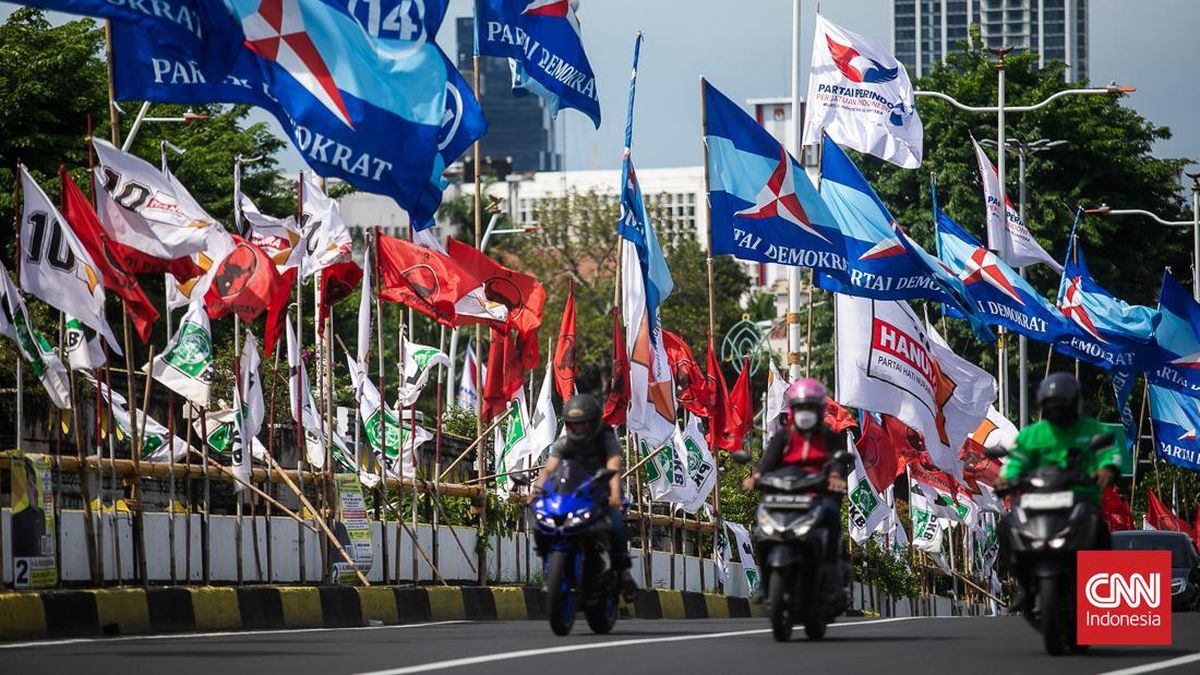
Several parties in parliament have voiced their opinions on the KPK’s proposal that candidates for president (capres), vice-president (cawapres), and regional heads must undergo a party cadre system.
The KPK’s proposal is outlined in the summary of the 2025 Annual Monitoring Directorate Report, released on 17 April. In the report, the KPK proposes improvements in governance for several institutions and strategic government programmes, including political parties.
The KPK issued a total of 16 recommendations for improving political parties, one of which is the revision of Article 29 of Law No. 2 of 2011 on Political Parties to require capres, cawapres, and regional heads to be party cadres.
“Requirements for prospective presidential/vice-presidential/regional head/deputy regional head candidates, in addition to being democratic and open, add a clause originating from the party cadre system,” as quoted from the report.
Golkar Party Secretary General, Muhammad Sarmuji, disagrees with the proposal. According to Sarmuji, figures for capres or cawapres are prospective national leaders.
Therefore, they must be given space to become good candidates. Figures for capres or cawapres from parties are indeed prioritised. However, parties, he says, must also be open to figures from outside.
“If the best presidential or vice-presidential candidate is outside the political party, it should also be open to being nominated. That is the function of political parties in political recruitment,” Sarmuji said on Friday (24/4).
PDIP Deputy Chairman and 2024 presidential contender, Ganjar Pranowo, disagrees with the KPK’s proposal that capres must go through the cadre system. According to Ganjar, requiring capres to follow the cadre system is not easy.
Therefore, he says, parties should remain open to candidates from outside. However, the public needs to increase political awareness regarding track records and capacity.
“Requiring candidates to undergo cadre training first seems not easy. However, the public should be able to assess candidates’ capacity from their track records, education, and experience,” he said.
PKB Secretary General, Hasanuddin Wahid, supports the proposal. He views the requirement for capres to be cadres as important to encourage parties to strengthen their cadre systems and political education.
“That is an interesting idea and will strengthen the position of parties while encouraging parties to strengthen their cadre systems and political education to produce leaders capable of filling public positions well in the executive and legislative branches at all levels,” he said.
In agreement, PKB Deputy Chairman Daniel Johan supports the KPK’s proposal. According to him, the status of cadres contesting in the presidential election will be a pride for the party.
“My principle is I agree, all parties are very proud and hope that their best cadres will run as capres and cawapres,” he said.