
PDIP Legislator Reveals Importance of Special Assistance for Elderly and High-Risk Hajj Pilgrims
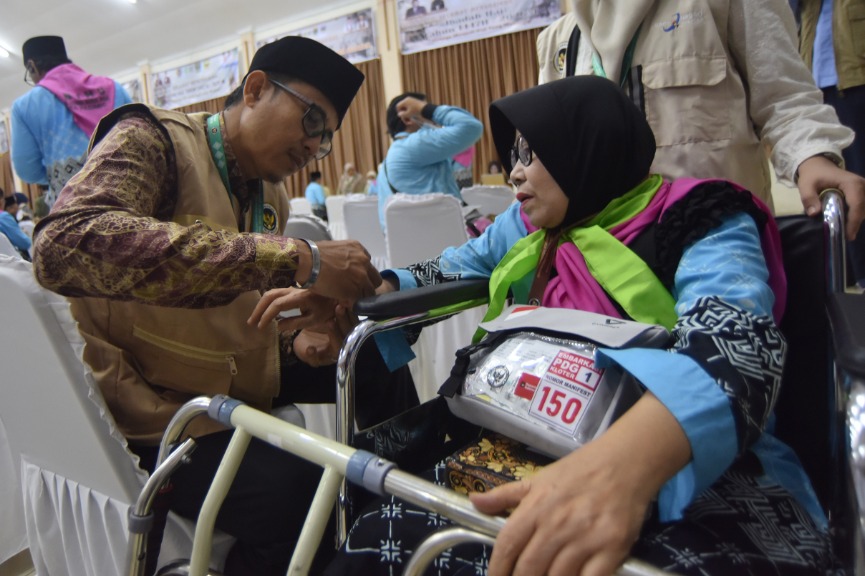
Member of the Indonesian House of Representatives from the PDIP faction, Ansari, has requested that the Hajj Organising Committee (PPIH) improve the quality of assistance for elderly pilgrims and high-risk groups. According to him, these groups require more intensive attention, especially in facing the dense series of Hajj rituals in the Holy Land. ‘Elderly pilgrims and high-risk groups must be a priority in Hajj services. Optimal assistance is crucial so they can perform their worship safely, comfortably, and with devotion,’ said Ansari in a statement on Thursday (4/6/2026). The appeal was conveyed as part of an evaluation of the implementation of Hajj services in the field. Ansari assessed that assistance for elderly pilgrims is not merely sufficient on an administrative level, but must touch on aspects of safety, health, mobility, and the readiness of officers to respond to emergency conditions. He stressed that elderly and high-risk pilgrims are the groups most vulnerable to experiencing obstacles during the pilgrimage. Age factors, physical condition, congenital diseases, and the density of worship activities are the main reasons for needing a more measured and responsive assistance system. ‘Humane and responsive service is also greatly needed; there must be no pilgrims who face difficulty getting help when encountering health problems or physical limitations,’ Ansari asserted. The PPIH is expected to strengthen coordination among officers, ranging from the health sector and worship guides to flight group officers. With better coordination, every pilgrim needing help can be quickly identified and receive appropriate treatment. ‘This is important for us to convey, because based on the evaluation results we conducted, assistance for elderly and high-risk groups felt lacking, so it needs to be improved in the future,’ he explained. In addition, Ansari also urged that the evaluation of Hajj services be conducted not only after the entire process is complete but also periodically during the implementation. This step is considered important so that any obstacles in the field can be immediately rectified and not wait until they become major problems. According to him, the success of organising the Hajj pilgrimage is not only measured by the technical smoothness of the pilgrims’ departure and return but also by the extent to which the state is able to ensure that vulnerable pilgrims still receive proper protection and services. With the increasing number of elderly pilgrims in the Hajj organisation, strengthening the assistance system is considered an urgent need. The PPIH is asked not only to rely on general procedures but also to prepare a special approach for pilgrims with physical limitations or high health risks. ‘With improved assistance services, we hope all pilgrims, especially the elderly and high-risk groups, can perform the Hajj pilgrimage more calmly and safely and receive services that match their needs,’ he concluded.