
PDIP Legislator: People Will Be Reluctant to Become Teachers if Their Welfare Is Neglected
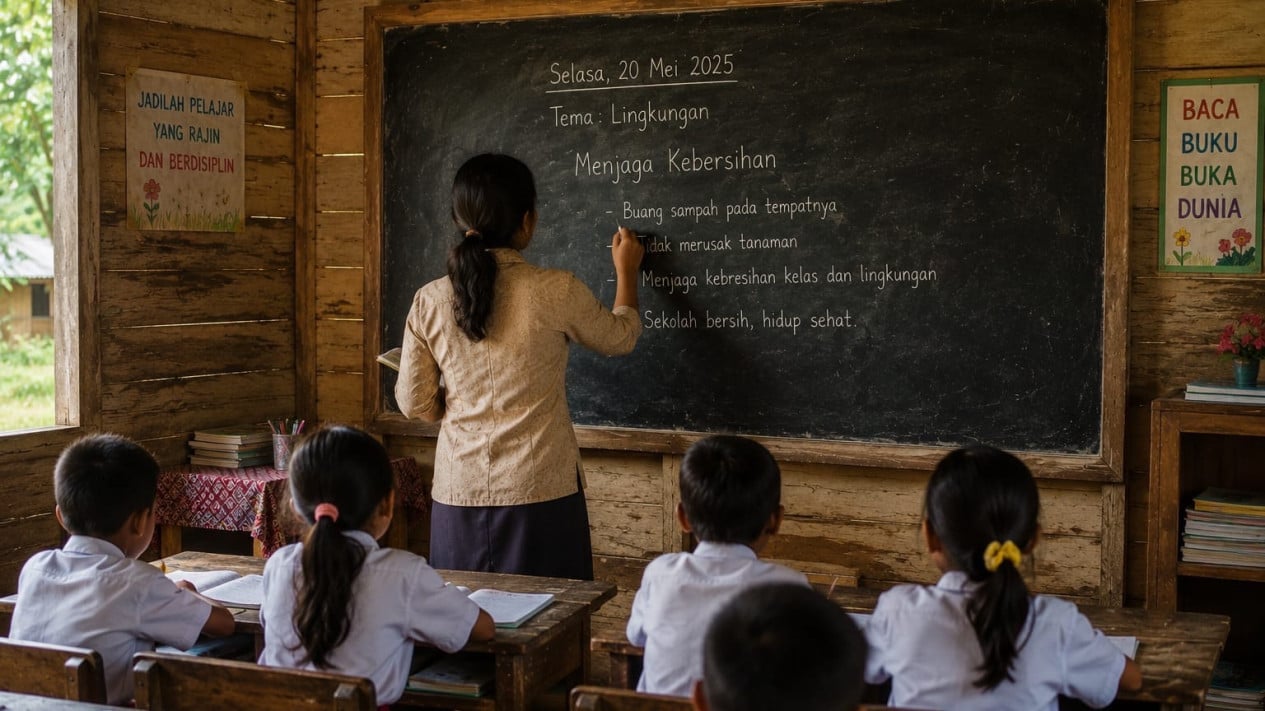
Deputy Chair of House Commission X, Esti Wijayati, has urged the government to immediately address the shortage of educators across the country, especially in disadvantaged, frontier, and outermost (3T) regions. However, she cautioned that opening teacher vacancies on a massive scale would be futile if not accompanied by genuine improvements in welfare.
Esti made these remarks to Parlementaria after leading a working visit by the Working Committee for the Draft Law on the National Education System (RUU Sisdiknas) of House Commission X. According to Esti, social security and decent wages are the main keys to restoring the appeal of the teaching profession in the public eye.
‘People will be reluctant to become teachers when their level of welfare is ignored. Therefore, the right of teachers to receive a decent salary and social security is a crucial point that must be fulfilled so that the public is once again interested in pursuing this profession,’ Esti said in her statement, quoted on Sunday, 12 July 2026.
Esti revealed the shocking fact that the educator crisis is not only plaguing remote areas but has also spread to regions that have long held the title of national education barometer. ‘The Special Region of Yogyakarta, which is known as an education city, is still short of 1,600 teachers at the provincial level alone. We can imagine how severe the conditions are in other regions. Because of this, the government has no choice but to open vacancies according to real needs on the ground,’ she said.
Responding to this phenomenon, House Commission X plans to send a request for official data regarding the number of teachers who have resigned in recent years. This step is being taken because the wave of resignations is suspected to be a strong indicator that the teaching profession is losing its prestige due to unresolved welfare issues.
Furthermore, the legislator from the PDIP faction assessed that the government cannot apply uniform rules between urban schools and schools in 3T regions. The extreme characteristics of these areas demand policy flexibility. ‘In 3T regions, we cannot demand the same number of students per class as in normal areas. A class might only have three students because of its very remote location. Therefore, the handling of 3T regions must be given special treatment,’ she asserted.