
PDIP Criticises SPPG System, Pushes for School Canteen Empowerment in Free Meals Programme
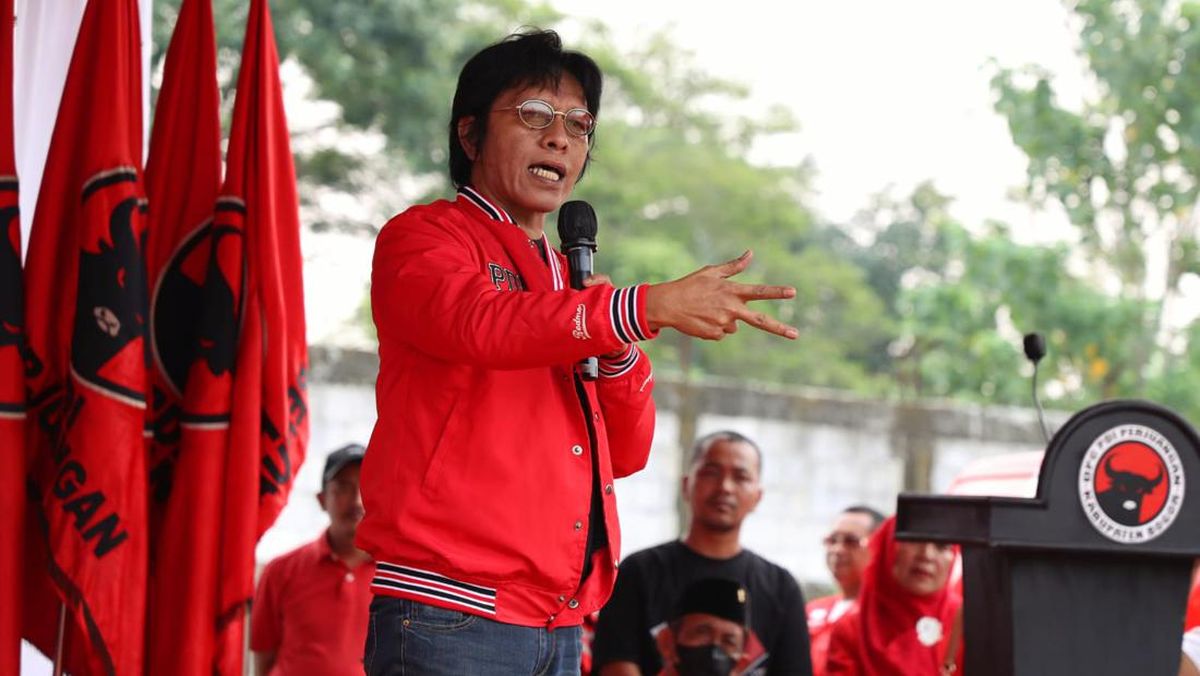
PDIP politician Adian Napitupo has criticised the mechanism of the Free Nutritious Meals (MBG) programme managed through the Nutrition Fulfilment Service Units (SPPG). Instead of creating SPPGs which incur large costs, Adian questioned why school canteens are not being empowered. “From the start we have said, why create SPPGs? Just utilise the school canteens,” Adian said on CNN Indonesia TV’s Head to Head with Elvira programme on Wednesday evening (17/6). The member of House Commission X said that if school canteens managed the MBG, it would positively impact the income of the canteen vendors. He noted that based on the initial concept, around 400,000 schools would receive MBG. Adian gave an example, if each school has three to eight canteens, then at least 1.2 million canteens would be affected. He added that this would also reduce the cost of building SPPGs, which he claims is not cheap. “These MSMEs will be impacted. Why not just let them cook? There is no need to build large buildings costing billions,” he said. Adian also touched on the number of food poisoning cases among MBG beneficiaries. He argued that if MBG management were handed over to school canteens, it could also reduce the number of poisoning incidents. “So that when it is evaluated later, it will be good,” he said. Since the programme was first launched on 6 January 2025, SPPG kitchens serving MBG have numbered more than 27,000 across Indonesia, according to BGN data. This was conveyed by BGN Deputy Head Agustina Arumsari after a closed meeting with House Commission X at the Parliament complex in Jakarta on Monday (15/6). The detailed figure at that time, she said, was 27,820 SPPG kitchens. Following the uproar over a corruption case within BGN under the previous leadership of Dadan Hindayana, an evaluation was conducted. Several evaluation points include the involvement of school canteens and the fact that not all schools will have their students uniformly provided with MBG. BGN Head Nanik S Deyang said this step is part of efforts to achieve budget efficiency while expanding the reach of the MBG programme without having to build new kitchens in every location. She said the use of school canteens can be applied in underdeveloped, frontier, and outermost (3T) regions of Indonesia. “We don’t have to build new kitchens. That is the principle. We can use existing kitchens, for example school canteens, because in 3T areas there are only 200, 81, or 47 students,” Nanik said in a press conference at the BGN office in Central Jakarta on Thursday (4/6). Separately, Minister of Primary and Secondary Education Abdul Mu’ti confirmed there will be adjustments to MBG provision, including the possible involvement of school canteens. However, he said this would remain under the coordination and supervision of BGN. Mu’ti stated that around 43.4 million out of 53.5 million students in Indonesia, or about 80.94 percent, currently receive MBG, and most expect the programme to continue. He said data on MBG recipients has now been integrated with the Basic Education Data (Dapodik) system, giving the government complete information on beneficiary students by name, address, and school. While the programme will continue, the government will adjust the distribution scheme to be more targeted. Schools deemed less in need of MBG assistance may no longer receive the programme, while those with students in greater need will be prioritised.