
PDIP Criticises Government Over Sudden Non-Subsidised Fuel Price Hike
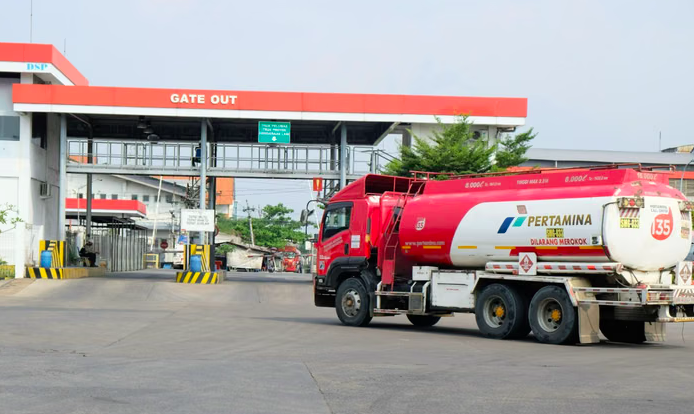
A member of Commission VI of the Indonesian House of Representatives (DPR) from the PDI Perjuangan faction, Mufti Anam, has criticised the government’s decision to raise the price of non-subsidised fuel. According to him, the policy not only has the potential to add to the burden on the public, whose purchasing power remains depressed, but also demonstrates poor government communication in making decisions that directly impact the public. Mufti highlighted the decision-making process, which he considered to have been carried out suddenly without adequate public dissemination. He admitted that the DPR, which has an oversight function and is a government partner in the energy sector, never received any information nor was invited to discussions before the policy was announced. “Even the DPR, as an institution that carries out an oversight function, never received any information or was invited to discuss it beforehand,” Mufti said in his statement on Thursday. According to him, this pattern of policy-making is not the first time this has happened. Commission VI of the DPR, he continued, has repeatedly reminded the government to be more open in formulating strategic policies in the energy sector. Mufti also assessed that the current increase in non-subsidised fuel prices is quite significant and was announced without a complete explanation to the public regarding the reasons or the basis for the calculation. “This quite significant increase happened suddenly, without adequate socialisation, without a complete explanation to the public,” he said. He emphasised that fuel is not just an ordinary commodity. Changes in fuel prices, he said, have a domino effect on various sectors, ranging from transport costs, business activities, and goods distribution, to the prices of basic necessities. Therefore, every policy related to fuel should be carried out transparently, with full caution, and by considering the economic conditions of the public who are still facing various pressures. “Fuel has a very broad impact on people’s lives. Therefore, policies concerning fuel must be carried out transparently, carefully, and with full empathy for the people’s conditions,” he said. In addition, Mufti also touched on a viral video linked to the Minister of Energy and Mineral Resources, Bahlil Lahadalia. According to him, the video is not merely praise, but a form of expression of the public’s hopes to the government. “That is the people’s way of conveying their hopes politely to the government. There is a message to be conveyed that the people want the government to be present, work harder, and keep the prices of people’s needs under control,” said Mufti. He assessed that the government needs to be more sensitive in reading the aspirations developing in society, especially when economic conditions have not fully recovered and business actors are still facing various challenges. Furthermore, Mufti urged the government and PT Pertamina to openly explain the reasons behind the increase in non-subsidised fuel prices. According to him, the public has the right to know the factors causing the price change as well as the mitigation measures the government has prepared to reduce the impact. He also asked the government to explain the strategy to be pursued so that the fuel price increase does not trigger a rise in the cost of living and further depress people’s purchasing power. “What often disappoints the public is not only that prices go up, but because they feel they are not being spoken to and are not given an adequate explanation. Suddenly the price changes, while purchasing power is still depressed and business fields are still facing various challenges,” Mufti said. According to him, transparency and good communication are an important part of any public policy-making, especially for policies concerning the basic needs of the people. Mufti hopes the government will be more open in the future when drafting and announcing strategic policies so that the public and the DPR can understand the reasons behind every decision taken and participate in overseeing its implementation constructively.