
PDIP Approves Police Bill for Second-Level Talks with Key Caveats
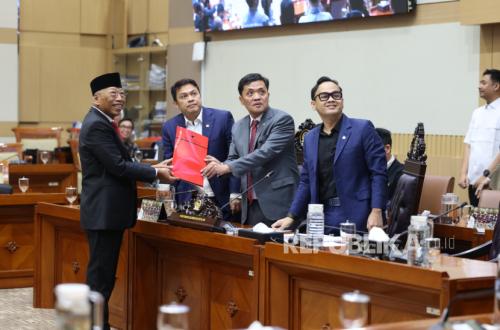
The PDI Perjuangan faction has announced its approval of the Bill on the Third Amendment to Law Number 2 of 2002 concerning the National Police of the Republic of Indonesia (RUU Polri) to proceed to Level II Discussions.
However, this approval is accompanied by several important notes deemed crucial for maintaining the professionalism, independence, and accountability of the police institution.
Dr I Wayan Sudirta, a member of Commission III of the Indonesian House of Representatives (DPR RI) from the PDI Perjuangan faction, emphasised that amendments to the National Police Law must remain grounded in the principles of the rule of law, civilian supremacy, apparatus neutrality, respect for human rights, and the strengthening of public accountability.
“Amendments to the National Police Law must not eliminate the spirit of police reform. The National Police must remain a professional and independent state instrument, as mandated by MPR Decree Number VII/MPR/2000,” said Wayan Sudirta while delivering the final views of the mini-faction at the DPR Building, Jakarta, on Tuesday (7/6/2026).
He noted that in carrying out their duties and service to the nation and state, every member of the National Police is obliged to place the interests of the people as the top priority.
He stated that the National Police must side with the interests of the people, especially the ‘wong cilik’ (the common people) who are often the most vulnerable to injustice.