
PDIP: 5 Per Cent Parliamentary Threshold is Ideal
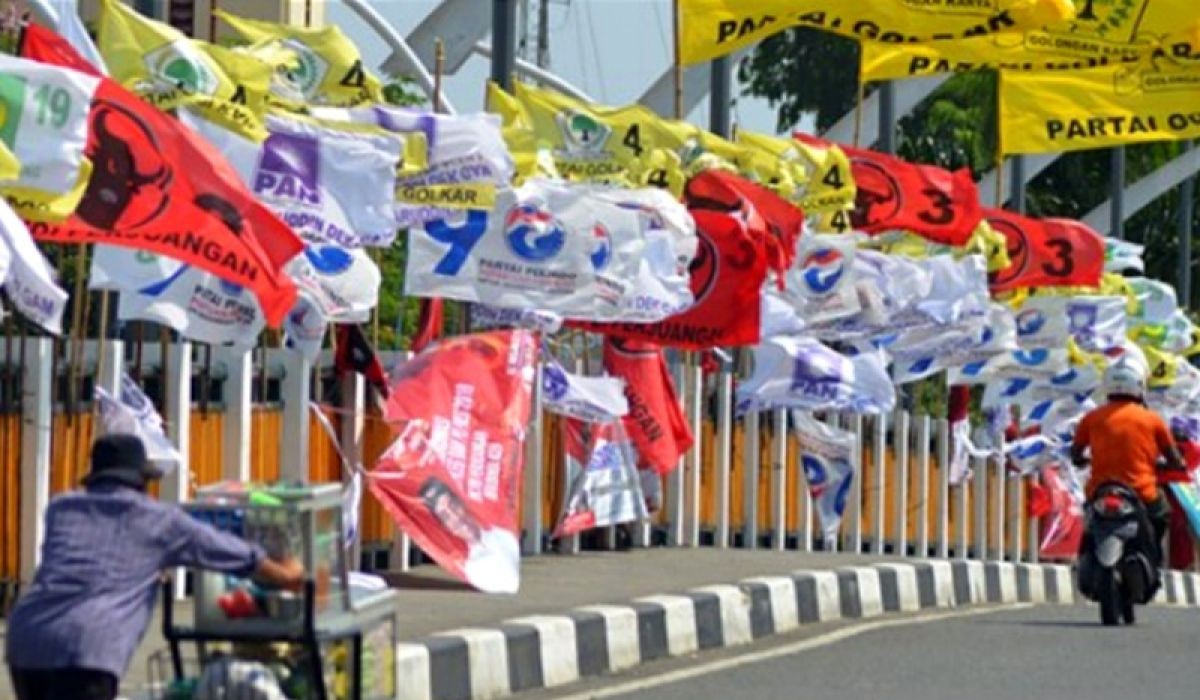
Komarudin Watubun, a central official of PDI Perjuangan, stated that a 5% parliamentary threshold could serve as one of the ideal options in the discussions regarding the revision of the General Election Law. However, he emphasised that this figure remains a proposal and must be discussed while considering the rulings of the Constitutional Court (MK) and the principle of public representation.
Komarundin noted that discussions regarding the parliamentary threshold cannot be based solely on agreements between political party elites or coalitions. He argued that the General Election Law is a public regulation, therefore its formulation process must consider the interests of the wider community.
“If we are talking about what is ideal, it is approximately around that. The 5% figure is somewhat ideal,” Komarudin told reporters in Jakarta on Wednesday.
According to him, considerations of government effectiveness and efficiency must be weighed when determining the size of the parliamentary threshold. Simplifying the number of political parties in parliament is seen as a way to ease the process of power and government consolidation. However, Komarudin warned that Indonesia’s political system must also provide space for minority groups. Therefore, determining the threshold cannot solely pursue party simplification.
“So, the more political parties are simplified, the easier it is for power consolidation, right? But in the concept of a country with minority groups, everyone must be accommodated,” he said.
On that basis, he believes the parliamentary threshold must account for the balance between government effectiveness and political representation. The 5% figure, according to him, can be discussed as a starting point but cannot yet be considered a final decision.
Komarudin also reminded the House of Representatives (DPR) to be cautious in drafting new election regulations. He emphasised the importance of using the Constitutional Court’s decisions as a primary reference, as the rulings of that institution are final and binding.
“The DPR must be careful, whether it is a coalition or whoever; we must refer to the MK in those discussions,” he added.
He expressed that he does not want the discussions on the General Election Law to result in provisions that are subsequently overturned by the Constitutional Court. According to Komarundin, the DPR needs to learn from previous experiences when several provisions in the law were challenged and decided upon by the MK.
Komarudin stated that while the DPR possesses the authority to form laws, that authority must be exercised in consideration of the constitution and the interpretations provided by the MK.
“Because the MK’s decisions are final and binding. Why should many DPR decisions in making laws be discussed so exhaustively only to be struck down there? That must not be allowed to happen again,” Komarudin remarked.
Regarding discussions among several coalition parties that have pointed towards the 5% figure, Komarudin viewed this as a valid part of the political process. However, agreements between parties do not automatically make that figure the final decision. He insisted that the 5% threshold must still be debated during the official revision process of the Election Bill. He noted that civil society, pro-democracy groups, and parties without seats in parliament also have the right to express their views.
“This is a public law; it belongs to the people. Therefore, the people, pro-democracy groups, and others will certainly come to provide opinions, suggestions, and input,” said Komarudin.
Internally within PDIP, Komarudin stated that the discussion of the Election Bill is being conducted by following the development of public will. He mentioned that one issue of concern is the system for the direct election of regional heads. He reminded that discussions on changing the election system should not ignore the history of the Reformation, which opened wider democratic spaces for the community. He hopes that all political forces, whether in or out of the coalition, will continue to consider the principles of democracy and national unity.