
PDI-P's RedTalks: A Platform for Youth Political Aspirations, Not Tokenism
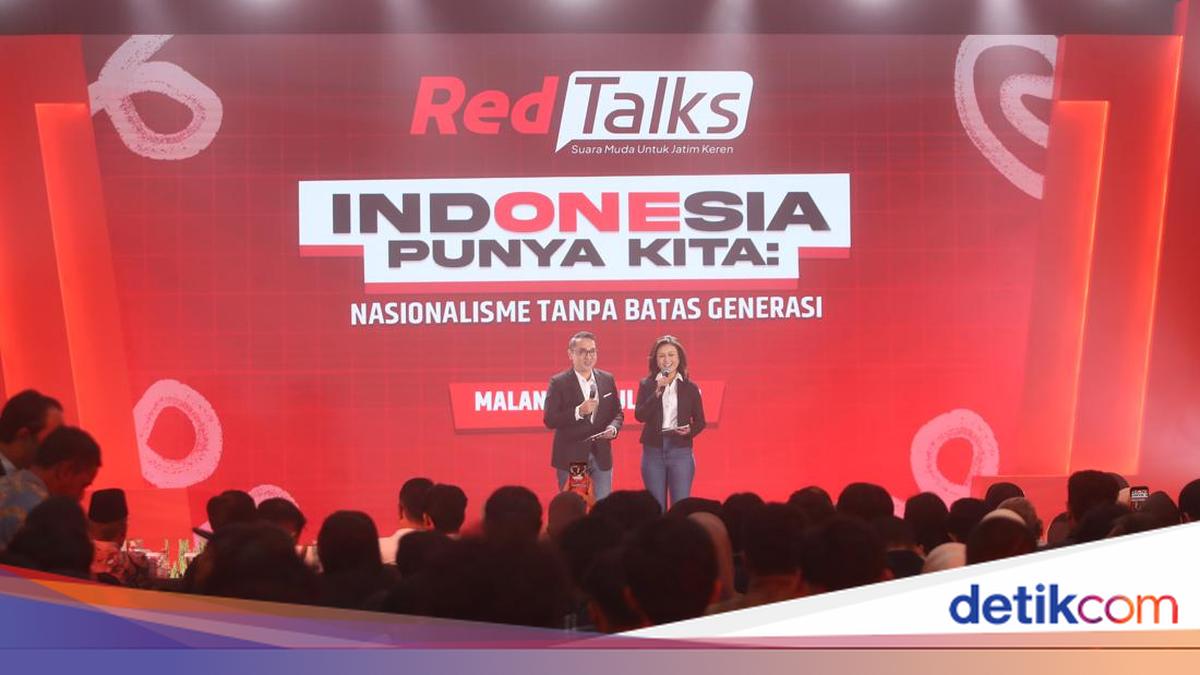
The Indonesian Democratic Party of Struggle (PDI-P) has stated that its RedTalks programme is a concrete effort to accommodate the aspirations of young people, ensuring they are not merely used as political tokens. Qintharra Ulya Yassifa, Deputy Head of the Creative Economy and Digital Economy Division for PDI-P East Java, explained that the event, held in collaboration with detikcom at the Malang Creative Center, serves as a platform for the youth to express their concerns regarding politics and government policy. “According to me, RedTalks is an event that accommodates and listens to the voices and criticisms of young people,” Qintharra said on Saturday (25/7/2026). She detailed that the party has prepared various activities to engage the youth, including the Soekarno Cup, a football tournament aimed at scouting young talent, and support for MSMEs through creative design and merchandise sales at the Mega Bhakti Cooperative. Qintharra stressed that youth participation in politics should not be measured solely by the presence of young figures in the public eye. The more critical question is whether they are genuinely heard and involved in decision-making. She noted that many young people remain sceptical of politics, feeling they are merely used as tokens of representation without substantive roles, a concept she linked to sociologist Rosabeth Moss Kanter’s theory of tokenism. In contrast, Qintharra asserted that PDI-P builds leadership regeneration through real involvement, with young cadres holding responsibilities at the sub-district, district/city, and provincial levels. “Young people in PDI-P are not just there as a formality. They are involved at all levels of the organisation,” she stated. The RedTalks event was designed as a dialogue space for the younger generation to convey their ideas, criticisms, anxieties, and hopes. Qintharra added that providing such a platform is part of the party’s political education function, as mandated by Law No. 2 of 2008 on Political Parties, as amended by Law No. 2 of 2011.