
PDI-P Views KPK's Proposal on Party Cadre Supervision as Too Intrusive into Political Parties
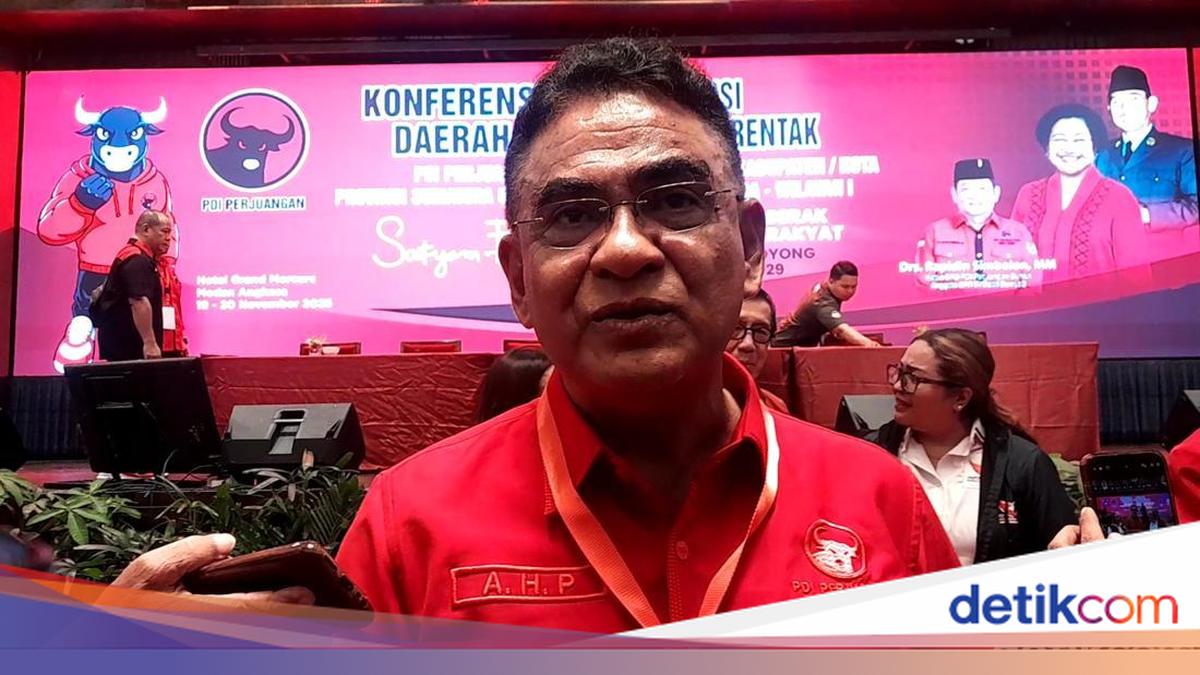
PDI-P Deputy Chairman Andreas Hugo Pareira has responded to the KPK’s proposal regarding the establishment of a supervisory body for political party (parpol) cadre development. Hugo views the idea as potentially intervening in internal party authority.
“Cadre development is the party’s authority domain. This proposal goes too far in intervening in the party’s authority domain,” Andreas told reporters on Tuesday (28/4/2026).
Andreas admitted he does not understand the KPK’s proposal. Because, according to him, cadre development is the party’s domain.
“I don’t understand what is meant by the Political Party Cadre Supervision Agency. Because cadre development is the political parties’ authority domain,” he said.
This Deputy Chairman of DPR Commission XIII explained that PDI-P has internal mechanisms to prevent corruption practices through the cadre development process. One of them, he said, is providing anti-corruption training to cadres.
“In the PDI Struggle, our cadre development process also includes discussions on corruption and anti-corruption themes for cadres. We also invite external parties, including the KPK, to deliver materials on corruption prevention,” he explained.
Meanwhile, PDI-P Deputy Chairman and DPR Commission II member Deddy Sitorus views the KPK’s proposal as legitimate. However, he reminded that every proposal should be accompanied by in-depth and independent studies.
“It’s a proposal, so go ahead, but if a state institution gives a proposal or recommendation, it should be accompanied by in-depth and independent studies,” he said.
According to him, corruption practices actually occur a lot in public institutions, not in internal political parties. Therefore, he believes supervision should be focused on institutions that manage public finances and policies.
“Corruption occurs due to bad character, materialistic culture, opportunities, and a system that does not truly make people afraid to commit corruption. Corruption happens in many places, even in institutions that produce law enforcement apparatus,” he explained.
“As long as the system is bad and provides opportunities, and society is still permissive towards corrupt behaviour, corruption will continue to occur. So I suggest that the KPK focus on systemic, conceptual, and institutional matters,” he added.
Previously, the KPK proposed the establishment of a supervisory body for political party (parpol) cadre development. The body aims to suppress political patronage practices that serve as entry points for corruption by officials.
KPK Spokesperson Budi Prasetyo explained that in a study conducted by the Monitoring Directorate in 2025, one highlighted issue was the absence of an integrated roadmap for political education between the government and political parties. The KPK assesses that the weak integration between recruitment processes and party cadre systems also triggers political patronage practices.
“The unavailability of a special supervisory body in the cadre development process, political education, and party financial management increases the risk of deviations,” Budi told reporters on Saturday (25/4).
Budi said that supervision of cadre development is closely related to the process of every candidate from political parties facing elections. The KPK views that the high costs in facing elections often become the initial gateway to corruption, thus requiring supervision of political party cadre development.
Source: jawawa.id (https://jawawa.id/newsitem/pdi-p-views-kpks-proposal-on-party-cadre-supervision-as-too-intrusive-into-political-parties-1777373699)
Originally published by detikcom (https://news.detik.com/berita/d-8465507/pdip-anggap-usul-kpk-soal-pengawas-kaderisasi-terlalu-intervensi-parpol), translated from Indonesian