
PDI-P: Environmental activists’ communities must continue caring for the homeland
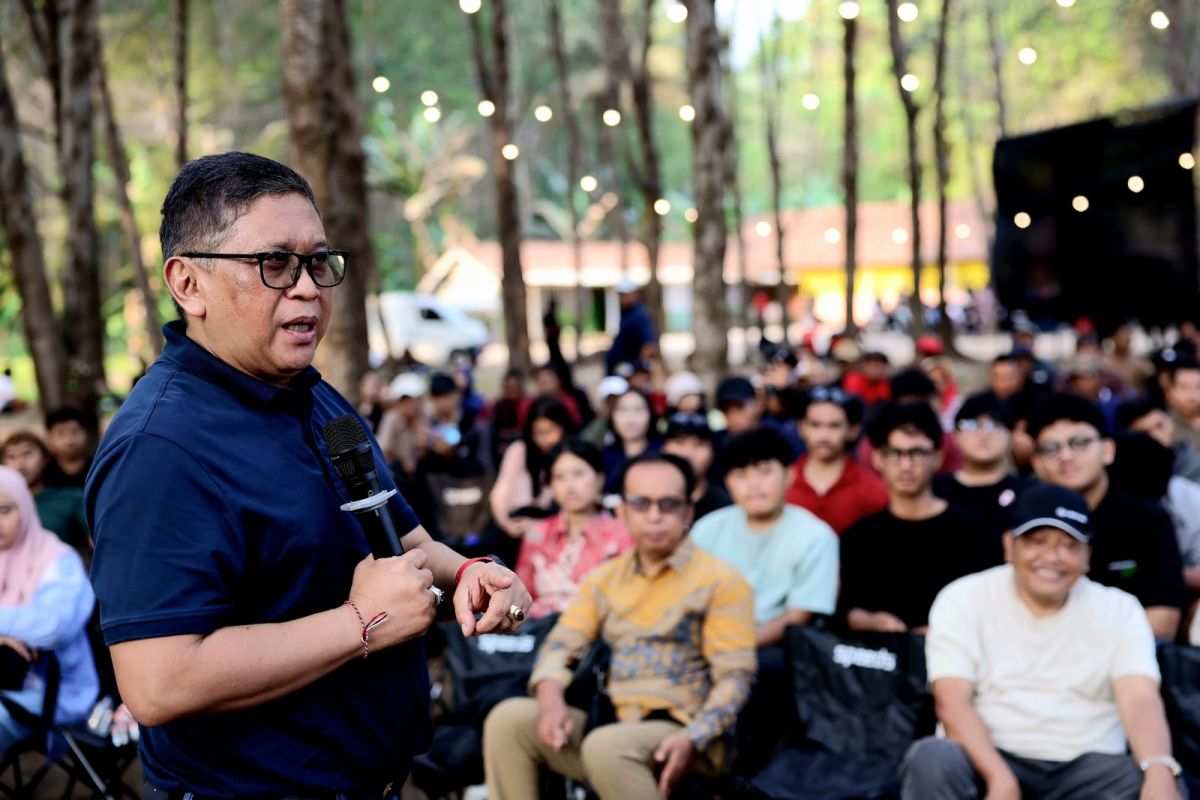
PDI-P’s cadres plant an average of 234,000 trees a year.
Jakarta (ANTARA) – PDI-P Central Board Secretary-General Hasto Kristiyanto stressed that the party’s “caring for the homeland” movement goes beyond planting trees. It also seeks to establish community groups of environmental activists who will continue the work of protecting the environment.
According to Hasto, such communities can help mangrove-related economic potential reach markets that have traditionally demanded large-scale production.
“For PDI-P, we have held our ‘caring for the homeland’ programme almost every year, planting mangroves and greening areas. On average, PDI-P cadres plant 234,000 trees a year,” Hasto said in a written statement in Jakarta on Friday.
The event opened in South Malang. Hasto and his party then travelled to Asmara Bay Beach, where hundreds of residents, including fishers and small-business owners, were waiting.
A workshop for three community groups was held in the coastal area. Young people took part in workshops on preparing for carbon trading, waste processing and making souvenirs from waste wood. Women attended a workshop on processing seafood, while fishers took part in workshops on silvofishery and floating net cages.
Hasto said the most important thing was for communities to be able to develop their activities independently and through mutual cooperation, because that was how economic benefits would emerge.
“But the most important part of this story is the idea that we can work independently and cooperatively with our local communities to do something useful for the environment, and that this can also bring benefits that improve people’s livelihoods,” he said.
Hasto said the community-based movement could create jobs without damaging the environment. “So we imagine that we can create jobs on a mass scale for the people without harming the environment,” he added.
The model is seen as relevant amid the need to create jobs. The government has set a target of 19 million new jobs, and the Manpower Minister is optimistic that it can be achieved by 2029.
In South Malang, the proposed route is different: jobs created by caring for the environment, from tour guiding and mangrove propagation and maintenance to waste processing, souvenir production and silvofishery. The latter is a sustainable coastal aquaculture system that combines fish-farming activities—such as cultivating milkfish, prawns or crabs—with the planting and preservation of mangrove forests in the same area.
“They then asked about Nvidia, one of the world’s largest AI companies, and Tencent asked whether there were no community-based initiatives in Indonesia,” he said.
Andreas said the answer was to bring small communities together. “Because if it is just a question of scale, then these small groups become large when they are brought together,” he said. He added that the area’s carbon value had never been paid for. “One tonne of CO2 is currently valued at a minimum of 20 dollars,” he said.
Saptoyo, an organiser with Clungup Mangrove Conservation (CMC), described the history of the Clungup Beach area. It was severely damaged by logging between 1998 and 2003, and restoration began in 2005 through a volunteer initiative. He said ecotourism had significantly accelerated the land’s recovery.
“If we had only rehabilitated the area by planting, we would have managed 5.5 hectares a year. Then young people intervened, and over the following ten years we were able to complete 10.3 hectares a year by involving tourism,” he said.
Saptoyo said mangrove planting across 81 hectares was completed in 2026. “Now we just have to wait for them to grow and look after them. The focus is on care; the planting is finished,” he said.
A 2021 carbon-absorption calculation conducted with Gadjah Mada University recorded 3,856 tonnes above ground, while a collaboration with Brawijaya University recorded 5,285.26 tonnes below ground.
The programme continues on Saturday (17 October) with the declaration of the Mangrove Environmental Activists’ Community, an open discussion with young people, fishers and women, a webinar for environmental activist communities, and mangrove planting and rubbish collection around the CMC area.
Source: jawawa.id (https://jawawa.id/newsitem/pdi-p-environmental-activists-communities-must-continue-caring-for-the-homeland-1792216241)
Originally published by Antara (Indonesian) (https://www.antaranews.com/berita/5792937/pdip-komunitas-pegiat-lingkungan-harus-terus-merawat-pertiwi), translated from Indonesian