
PDI-P Criticises Proposal to Relocate Women's KRL Carriages: Women and Men Are Equal
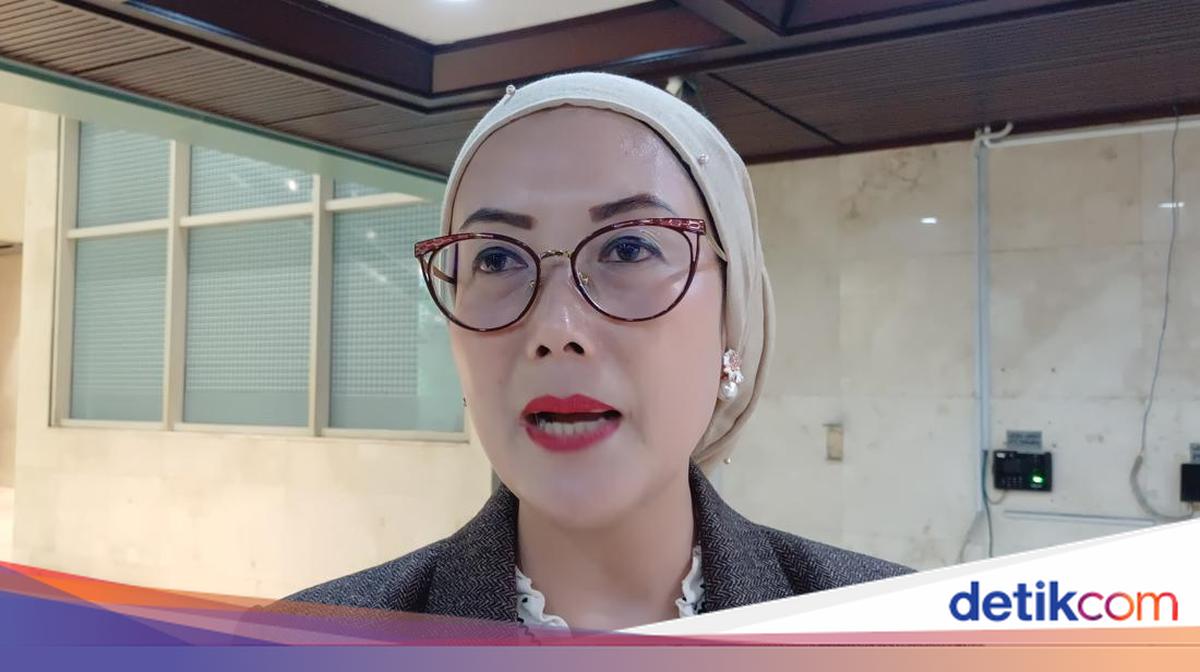
The proposal by the Minister of Women’s Empowerment and Child Protection to relocate the women’s carriage to the middle of the train set following the Bekasi Timur tragedy should first be understood as a quick response based on risk mitigation, not as a final solution to public transport safety issues. That proposal arose because in that incident, the carriage in the vulnerable position was indeed the most severely impacted,” said Selly in opening her opinion on Wednesday (28/4/2026).
Selly stated that the solutions presented by the government must not stop at mere relocation of the carriage. She does not want the impression to arise that women’s protection is built on the sacrifice of others.
“However, if asked whether this is a truly effective and sufficient solution? I believe it must not stop at carriage relocation alone. Because the root of the problem is not the position of women at the end or in the middle, but the railway safety system that must guarantee all passengers, women and men alike, are equally protected,” said Selly.
“I view that policy approaches must not place women’s safety as if it can only be obtained by ‘transferring vulnerability’ to other groups. Do not let the impression arise that women’s protection is built on the logic of sacrificing others. Public safety must not be based on who is positioned as a risk shield,” she added.
PDI-P also proposes three measures in response to the fatal accident between the Argo Bromo train and the KRL at Bekasi Timur Station. One of them is a total evaluation of the transport safety system.
“The focus should be on the safety of the signalling system, collision mitigation, emergency procedures, train set resilience, and passenger protection design during accidents. If the system is safe, the carriage position will not be the main issue,” she said.
As for the second proposal, Selly emphasised that protection for women must be present without counterproductive segregation. She stated that women’s carriages are provided to give a sense of security, not the opposite.
“Women’s carriages are formed to provide a sense of safety from harassment and violence in public spaces; that is an important affirmation. But this affirmation should not be translated merely into moving the physical position of the carriage, but rather into strengthening overall security standards: panic systems, quick response officers, evacuation designs, and gender-based safety protocols,” she said.
She assessed that what is needed now is not just moving the women’s carriage to the middle of the train set. Selly emphasised improvements to the system at PT KAI.
“What is needed is not just moving the women’s carriage to the middle, but ensuring that no carriage becomes a high-risk zone. The ends are safe, the middle is safe, the entire train set is safe,” said Selly.
“That proposal can be read as a temporary mitigation step, but it is not yet sufficient to be called a comprehensive solution. The real solution is to fix the system, not just move passenger positions,” she continued.
Previously, Minister of Women’s Empowerment and Child Protection Arifah Fauzi proposed placing the women’s KRL carriage in the middle of the train set. That proposal stemmed from the fatal train collision in Bekasi Timur.
“But with this incident, we propose that if possible, the women’s one should be placed in the middle,” said Arifah to reporters after visiting victims at Bekasi City Hospital on Tuesday (28/4).
Source: jawawa.id (https://jawawa.id/newsitem/pdi-p-criticises-proposal-to-relocate-womens-krl-carriages-women-and-men-are-equal-1777427542)
Originally published by detikcom (https://news.detik.com/berita/d-8466198/pdip-sentil-usulan-pindah-posisi-gerbong-krl-wanita-dan-pria-setara), translated from Indonesian