
PBNU: Shariah economy seen as opportunity to absorb additional jobs in ASEAN
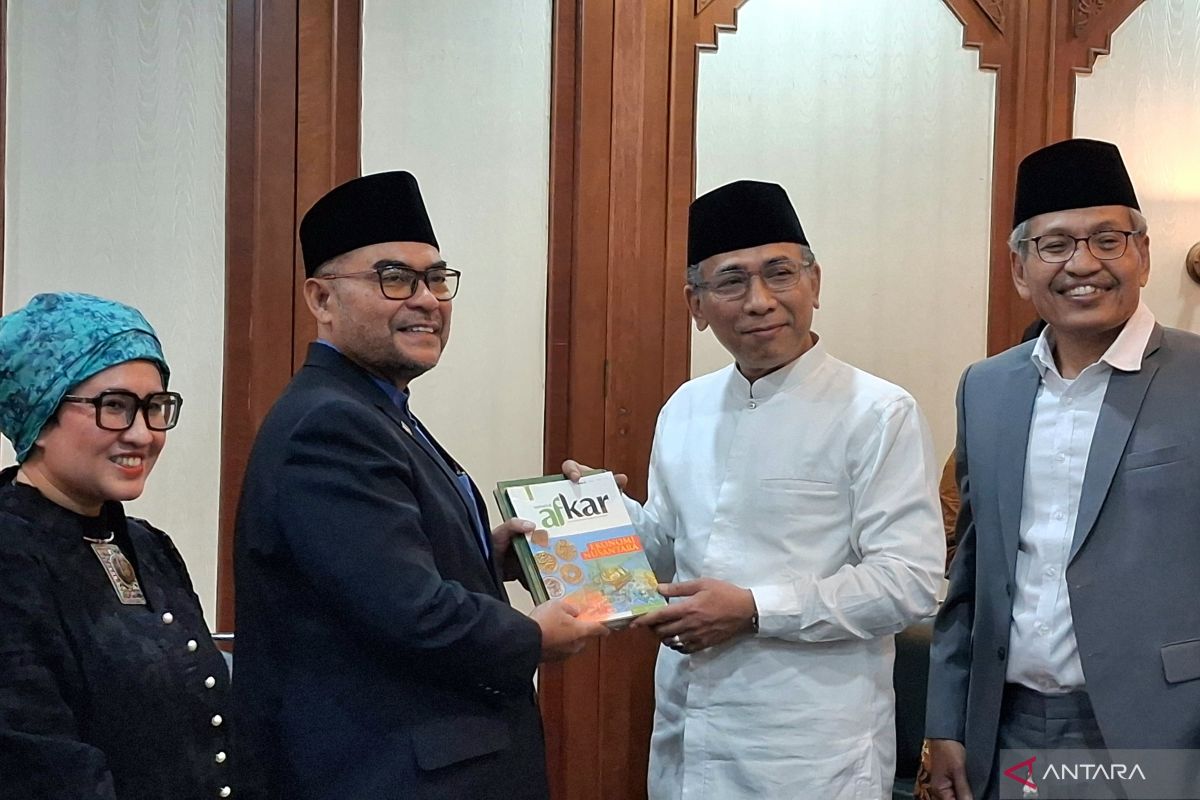
The Nahdlatul Ulama Executive Board (PBNU) sees stronger Indonesia–Malaysia cooperation in the Islamic economy as creating opportunities to absorb additional workers in Southeast Asia, particularly through the development of the food sector, micro, small and medium enterprises (MSMEs), and the halal industry.
PBNU Chairman KH Yahya Cholil Staquf, while receiving a Malaysian delegation to explore Islamic economy and halal business cooperation, said that worker absorption could be optimised through a grassroots economy.
“The NU mass base, extending to the village level, is a crucial asset to support government strategic agendas while also creating new economic activity in communities,” he said at a press conference in Jakarta on Friday.
He noted that the Malaysia–Indonesia collaboration is being pursued on a sustainable basis, with involvement of grassroots communities. The two countries will share knowledge and technology to help realise the government’s priority agenda targets, which will be more easily achieved through collaboration and public support.
He explained that the collaboration includes the development of food production, mentoring for MSMEs, support for community investment, and the enhancement of international business literacy.
PBNU also emphasised that all cooperation will be implemented within a Shariah-compliant framework, thereby strengthening the regional halal industry.
The Malaysian Senate delegation, led by Mujahid bin Yusof Rawa, said Southeast Asia has great potential to become a new global economic power because the region is relatively stable and peaceful, with cultural and societal diversity that provides a major opportunity for halal business development.
“The next step is to transform regional stability into economic prosperity that can be felt by the broad public. We want to raise this peace to prosperity, the economic well-being of society,” he said.
According to him, strengthening cross-border Islamic economy will create a ripple effect on people’s welfare, including job creation and the expansion of halal trade activities.
“We are also opening opportunities for cooperation in Islamic finance and Islamic banking. This initiative is part of a people-to-people approach that complements ASEAN intergovernmental ties that have been in place,” he said.