
PBNU Rejects Three Draft Tobacco Regulations, Citing Threat to National Ecosystem
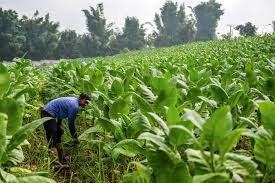
The Muslimin Indonesia Cultural Arts Institute of the Nahdlatul Ulama Executive Board (Lesbumi PBNU) has declared its rejection of three draft tobacco control regulations being prepared by the Ministry of Health. Lesbumi assesses that policies concerning the limitation of nicotine and TAR levels, the prohibition of several additive substances in tobacco products, and the discourse on standardising tobacco product packaging (plain packaging) risk destroying the national tobacco ecosystem and threaten the economic, social, and cultural sustainability of the community.
The rejection was set out in a petition submitted to the Ministry of Health. In the petition, Lesbumi requests the government cancel the three draft regulations because they are deemed to have a broad impact on millions of people who depend on the tobacco sector for their livelihoods.
In addition to the Ministry of Health, Lesbumi also sent the petition to President Prabowo Subianto, Vice President Gibran Rakabuming Raka, the Speaker of the House of Representatives, the Coordinating Ministry for Human Development and Culture, the Chief of the Presidential Staff, and the chairs of House Commissions IX, IV, XI, and VII, as well as the associations of provincial, regency, and city governments throughout Indonesia.
Lesbumi PBNU Chairman Jadul Maula stated that these regulations have not necessarily been proven effective in supporting health aspects, but will almost certainly have implications for the survival of communities that have long depended on the tobacco industry.
"This regulation is unfair to the people when our economy is in decline. When coupled with this rule, it will actually weaken the people’s spirit to survive. Therefore, we request that this draft regulation be cancelled because its social, economic, and cultural impacts are far greater," he said, as quoted from an official statement on Monday (6/7).
Jadul explained that Lesbumi PBNU’s rejection is not solely based on economic considerations, but also because tobacco and kretek have become part of the archipelago’s historical and cultural journey. According to him, the existence of tobacco in Indonesia has long historical roots and has been integrated into the life of the community for centuries.
"If we look at its history, tobacco is not merely an economic commodity. It has become part of history, including the journey of Nahdlatul Ulama. Therefore, we view that policies targeting the tobacco industry must also consider these matters," he explained.
In its petition, Lesbumi rejects three draft regulations: the Draft Coordinating Minister for Human Development and Cultural Affairs Regulation on nicotine and TAR content limits, the Draft Minister of Health Regulation on additives in tobacco and electronic cigarette products, and the regulation on health warnings and information on tobacco and electronic cigarette products that leads to standardised or plain packaging.
Besides assessing that limiting nicotine and TAR levels is difficult to apply to the characteristics of local tobacco, Lesbumi also believes that the prohibition of several additive substances and packaging regulations could weaken the competitiveness of the national kretek cigarette industry and threaten the livelihoods of Nahdliyin farmers and labourers. This is deeply worrying.
In agreement, Deputy Chairman of the Central Executive Board of the Muslimin Indonesian Labour Union Confederation (DPP K-Sarbumusi) Soeharjono stated that the impact of the regulation would not only be felt by the cigarette industry but also by millions of workers in related sectors.
"Based on data from the Ministry of Manpower, at least 6 million people will be affected if this regulation is enforced. Not only tobacco farmers or labourers, but also workers in derivative industries and small traders. Therefore, the government must consider the employment impact before setting this policy," he said.
According to him, the impact of the regulation will not only be felt by workers inside cigarette factories. The tobacco products industry has a long supply chain, ranging from tobacco farmers, clove farmers, hand-rollers, distributors, to creative industry workers and grocery stall traders who rely on income from tobacco product sales.
Soeharjono also reminded that policies with the potential to suppress production in the tobacco products industry could increase the risk of layoffs amidst economic conditions that have not fully recovered. He urged the government to ensure that every health policy is drafted proportionally so as not to create new social problems.
"What we hope is not that the government ignores health aspects. We support efforts to improve public health, but these policies must also consider the sustainability of workers, farmers, and business actors. Do not let the goal of protecting health create new problems in the form of rising unemployment and weakening community economy," he concluded.