
PBNU Promotes Reproductive Health Education to Protect Islamic Boarding School Students from Sexual Violence
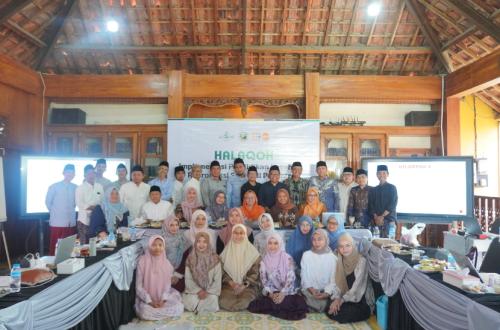
REPUBLIKA.CO.ID, JAKARTA — The Nahdlatul Ulama Executive Board (PBNU) is encouraging the implementation of reproductive health education in pesantren (Islamic boarding schools) as part of efforts to create safe educational environments and prevent sexual violence against santri (students).
The commitment was conveyed through the Nahdlatul Ulama Family Maslahat Movement (GKMNU) at the Halaqah on the Implementation of Reproductive Health Education for Santri, held at the KHAS Kempek Pesantren in Cirebon, West Java, on Monday (20/7/2026). The event was attended by pesantren leaders from West Java and Central Java.
Alissa Qatrunnada Wahid, Head of PBNU’s Community Welfare Division, said the rising number of violence cases in pesantren environments, including sexual violence, was one of the key reasons for holding the halaqah.
“We want to anticipate and prepare the pesantren ecosystem as soon as possible so that understanding of reproductive health improves, enabling us to address the problem of sexual violence occurring in pesantren,” said Alissa.
According to Alissa, preventing sexual violence cannot be done through rule enforcement alone. Such efforts must be accompanied by education that builds santri’s understanding of their bodies, health, personal boundaries and reproductive functions from an early age.
She noted that many people still understand reproductive health in narrow terms. The term is often assumed to relate only to sexual behaviour, whereas its scope also covers adolescent health, anaemia, maternal and infant safety, and readiness for parenthood.
“There has been a great deal of misunderstanding about reproductive health. People think reproductive health is solely about sexual behaviour, when in fact it also concerns maternal, infant and child mortality rates,” said Alissa.
“It also addresses anaemia among young people, which will affect their reproductive processes later when they marry,” she continued.
Alissa stressed that reproductive health education is closely linked to efforts to improve the health quality of the younger generation. Such education can, among other things, prevent anaemia, prepare adolescents to become healthy prospective parents, and reduce the risk of maternal and infant mortality.
She therefore hopes discussions about reproductive health will no longer be considered taboo in pesantren environments. On the contrary, such education should become part of the endeavour to build pesantren that are healthy, safe and capable of protecting santri from all forms of violence.