
PBNU: Lack of Registration Is Not Proof of Pesantren Involvement in Terrorism
JAKARTA — KH Ahmad Fahrurrozi, a member of the Syuriah Council of Nahdlatul Ulama’s Central Board (PBNU), has criticised a repressive approach to dealing with pesantren. He said administrative shortcomings at Islamic educational institutions should be resolved through verification and guidance, not actions that could threaten students’ safety and psychological wellbeing.
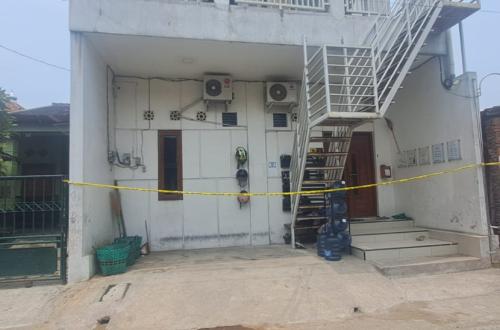
His remarks followed a raid on a pesantren in Sukoharjo that caused public concern. During the incident, armed officers carrying long-barrelled weapons reportedly arrived at and forced their way into a building housing female students in the early hours of the morning.
Kiai Fahrur said law enforcement must be respected, but the use of force by officers must be accountable and proportionate.
“How serious was the situation at the pesantren that such action had to be taken? Was there really a serious threat requiring the deployment of armed officers?” he said.
He also raised the issue of the pesantren’s operating status, which was said to be unregistered with the Ministry of Religious Affairs. A pesantren without a Pesantren Statistical Number (NSPP), he said, cannot automatically be classed as illegal or considered to have committed a crime.
Kiai Fahrur compared a pesantren without an NSPP to a couple married in an unregistered religious ceremony. Such a marriage may be valid under religious law if its conditions and requirements are met, even without official state registration, although the couple may have limited administrative protections.
“The same applies to pesantren. The existence of a religious educational institution in a community does not automatically constitute a crime simply because it does not yet have a statistical number or has not completed state administration,” he said.
He explained that Law No. 18 of 2019 on Pesantren sets out five essential elements: a kiai, resident students, a boarding house or dormitory, a mosque or prayer room, and the study of classical Islamic texts or Islamic studies following the muallimin education model.
This means a pesantren’s identity has a substantive basis in the tradition of Islamic education and is not determined solely by a piece of administrative paperwork.
Nevertheless, Kiai Fahrur acknowledged the importance of registering pesantren with the ministry, as required under the Pesantren Law. Administration is needed for data collection, guidance, oversight, student protection, and access to government services and assistance.
However, he said, this administrative requirement must not automatically be interpreted as authority to shut down religious education through repressive action.
If a pesantren is unregistered, the government should prioritise verification, guidance, support and help with registration in accordance with the law, he said.
If there is evidence of a suspected criminal offence, meanwhile, law enforcement can pursue it professionally on the basis of evidence. He urged authorities not to conflate alleged criminal activity with administrative issues concerning pesantren.
“Not having an NSPP is not proof of terrorism. Not being registered with the Ministry of Religious Affairs is not proof of committing a crime,” he said.
Kiai Fahrur noted that pesantren had existed and educated communities long before the modern state established a licensing system. The state should therefore regulate, guide and protect pesantren, rather than treat religious education as an enemy.
“Enforce the law against crime, address administrative shortcomings through guidance, and protect students’ rights. A piece of paperwork must not become a justification for disproportionate action,” he said.
Source: jawawa.id (https://jawawa.id/newsitem/pbnu-lack-of-registration-is-not-proof-of-pesantren-involvement-in-terrorism-1793613135)
Originally published by Republika (https://news.republika.co.id/berita/tnv9f0393/pbnu-tak-berizin-bukan-bukti-pesantren-terlibat-terorisme), translated from Indonesian