
PBNU Issues Guidelines for 2026 National Santri Day: Simultaneous Assemblies, Pilgrimages, and Prayers for Palestine
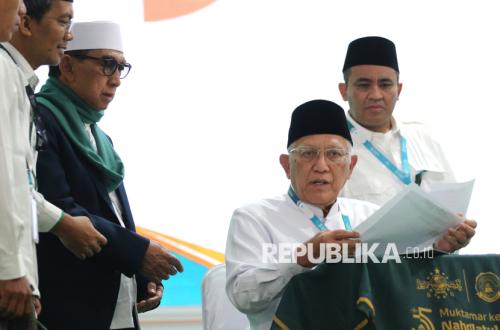
The Executive Board of Nahdlatul Ulama (PBNU) has issued the Implementation Guidelines for the 2026 National Santri Day. This year’s commemoration adopts the theme “Strengthening Traditional Roots, Preserving National Integrity” and is designed to go beyond mere ceremonial activities, focusing instead on strengthening traditions, community service, and humanitarian solidarity for Palestine.
The guidelines are detailed in PBNU Circular Letter Number 3/PB.01/A.II.10.47/99/10/2026, dated 1 October 2026. The letter is addressed to the Regional Boards (PWNU), Branch Boards (PCNU), and Special Branch Boards (PCINU) of Nahdlatul Ulama.
The General Chairman of PBNU, KH Abdul Hakim Mahfudz, also known as Gus Kikin, stated that NU’s attention to Palestine has deep historical roots inherited from the organisation’s founders. He reminded that support for the Palestinian people has been voiced by Hadratussyekh KH Hasyim Asy’ari since before Indonesia’s independence and continues to be nurtured today, including through the recitation of Qunut Nazilah at the Tebuireng Islamic Boarding School.
“This is a very long journey and relationship between Indonesia and Palestine,” said Gus Kikin on Saturday (3/10/2026).
In the 2026 Santri Day guidelines, PBNU requests that all series of activities be carried out with principles of solemnity, simplicity, and an orientation towards serving the congregation and members of NU.
One of the main agendas is the 2026 National Santri Day Assembly, to be held simultaneously on Thursday, 22 October 2026. Male participants are to wear dark-coloured sarongs, white tops, and black songkoks (peci). Female participants are to wear white-themed Muslimah attire with appropriate lower garments.
Assemblies may be centred at the NU secretariat premises corresponding to each level of management, or within the environments of Islamic boarding schools, hospitals, clinics, schools, madrasas, and Nahdlatul Ulama universities. During these assemblies, the NU Jihad Resolution text may also be read by the Tanfidziyah or NU Autonomous Bodies.
PBNU has also instructed that the Santri Day series begin with pilgrimages to the graves of scholars, saints, and the pioneers of Nahdlatul Ulama within their respective areas of service. Pilgrimage is positioned as an effort to maintain the continuity of tradition and to remember the struggles of preceding scholars.
Specifically, PBNU has made humanitarian solidarity for the people of Palestine a core part of the 2026 Santri Day programme.
All levels of NU management are requested to organise a “Humanitarian Mujahadah for Palestine” through istighotsah assemblies, the recitation of salawat, communal dhikr, or other prayer gatherings. PBN_U described these activities as part of spiritual discipline (riyadhah bathiniyyah) as well as a manifestation of humanitarian solidarity with the Palestinian nation.
This commitment aligns with the sentiments expressed by the Supreme Leader (Rais Aam) of PBNU, KH Miftachul Akhyar, when receiving several Palestinian figures at the Miftachussunnah Islamic Boarding School, Surabaya, on Sunday (27/9/2026). The meeting was attended by individuals including the Religious Advisor to the President of Palestine, Mahmoud S.A. Al-Habash; the Grand Imam of Al-Aqsa Mosque, Sheikh Mohammad A.M. Hussein; and the Palestinian Ambassador to Indonesia, Abdulfattah A.K. Al-Satar.
“Welcome to your own home and among your brothers,” said Kiai Miftach upon receiving the delegation.
During the meeting, Kiai Miftach also prayed for the safety and peace of the Palestinian people. He expressed hope for a path to open for Muslims to worship at Al-Aqsa Mosque in a state of freedom and dignity. The meeting discussed issues regarding the Muslim community, humanity, education, and world peace.