
PBNU Deputy Chair Urges Kiai and Academics to Revive Tradition of Writing Islamic Scholarly Works
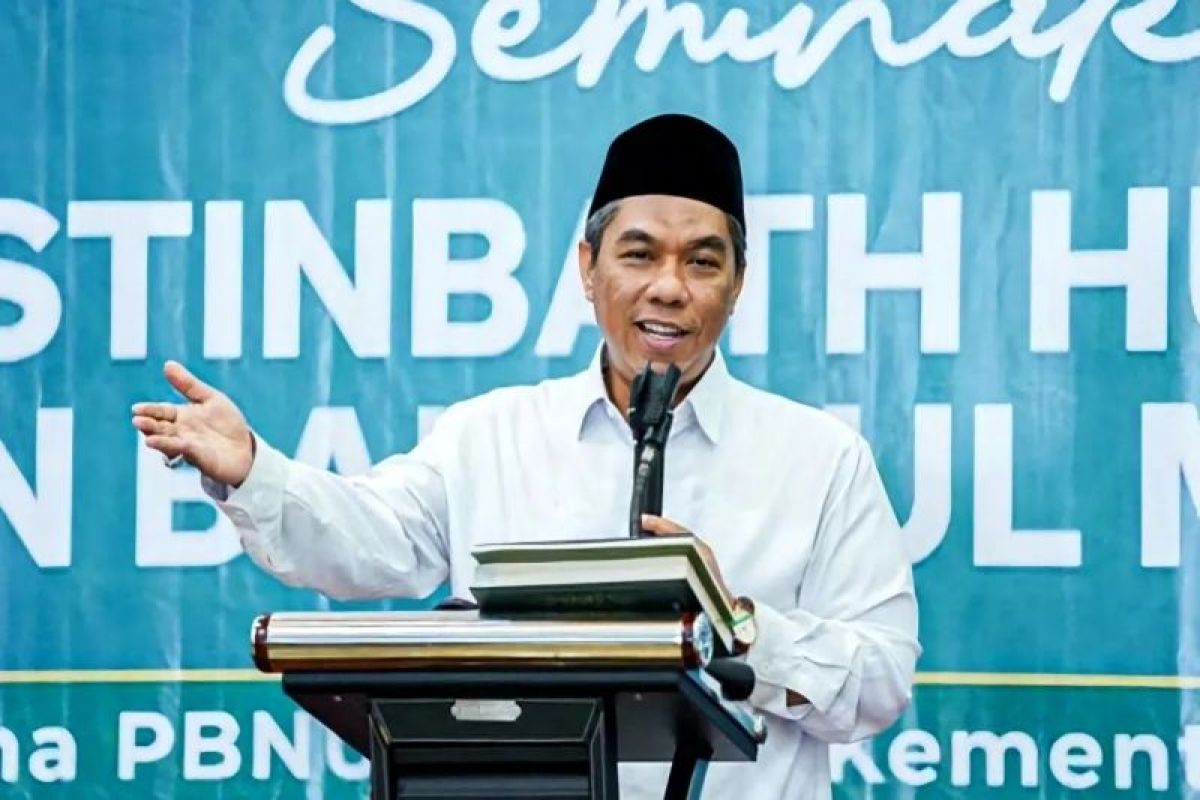
Jakarta (ANTARA) – Zulfa Mustofa, Deputy Chairman of the central board of Nahdlatul Ulama (PBNU), has urged ulama, kiai, academics and pesantren circles to revive the tradition of writing kitab as part of the effort to safeguard the continuity of knowledge and build Islamic civilisation.
“The tradition of the ulama is a tradition of knowledge. And a tradition of knowledge will not be firmly established without a tradition of writing. That is why the ulama of the past not only educated their students, but also left behind kitab as an intellectual legacy for the ummah,” said Kiai Zulfa in Jakarta on Wednesday.
According to him, from the early era of Islam through its development in the Indonesian archipelago, the progress of civilisation has been sustained not only by the emergence of learned and virtuous ulama, but also by the scholarly works they left behind.
The kitab of the ulama became a bridge connecting knowledge across generations, and remain alive even hundreds of years after their authors have passed away.
Pesantren, he said, have long been known as centres for the transmission of Islamic knowledge through the study of kitab kuning. Yet pesantren must also continue to produce new works in response to the developments of the times and the dynamics of society.
The challenges facing the ummah today, he said, are increasingly complex, ranging from technological developments and social change to national and humanitarian issues. All of these require scholarly answers from ulama who understand tradition whilst also being able to read present realities.
“It is indeed important and necessary for us to read, study and scrutinise the kitab of the ulama of the past. But ulama also bear a moral responsibility to produce works that can serve as references for future generations. That is where the relay of scholarship continues,” said Kiai Zulfa.
He stressed that writing kitab is not merely an academic activity, but part of dakwah and service to the ummah. Through written works, knowledge can be passed on, studied, developed, and reach society far beyond space and time.
In Kiai Zulfa’s view, history shows that the great ulama are remembered not only for the breadth of their knowledge or the number of their students, but also for the works they left behind. A kitab is proof of scholarly authority and an intellectual legacy that continues to benefit people across the ages.
“Lectures can move hearts in their own time. But a kitab keeps knowledge alive through the ages. That is why every scholar needs to have the spirit to leave behind works as part of the ongoing charitable legacy of scholarship,” he said.
He expressed hope that the spirit of producing Islamic scholarly works would grow once again within Nahdlatul Ulama, whether in pesantren, universities, or bahtsul masail institutions.
According to him, the tradition of reading must go hand in hand with the tradition of writing so that the treasury of Indonesian Islamic scholarship continues to develop and contribute to the world.