
PB IPSI Leader Gus Nabil Promotes Modernisation of Pencak Silat Governance
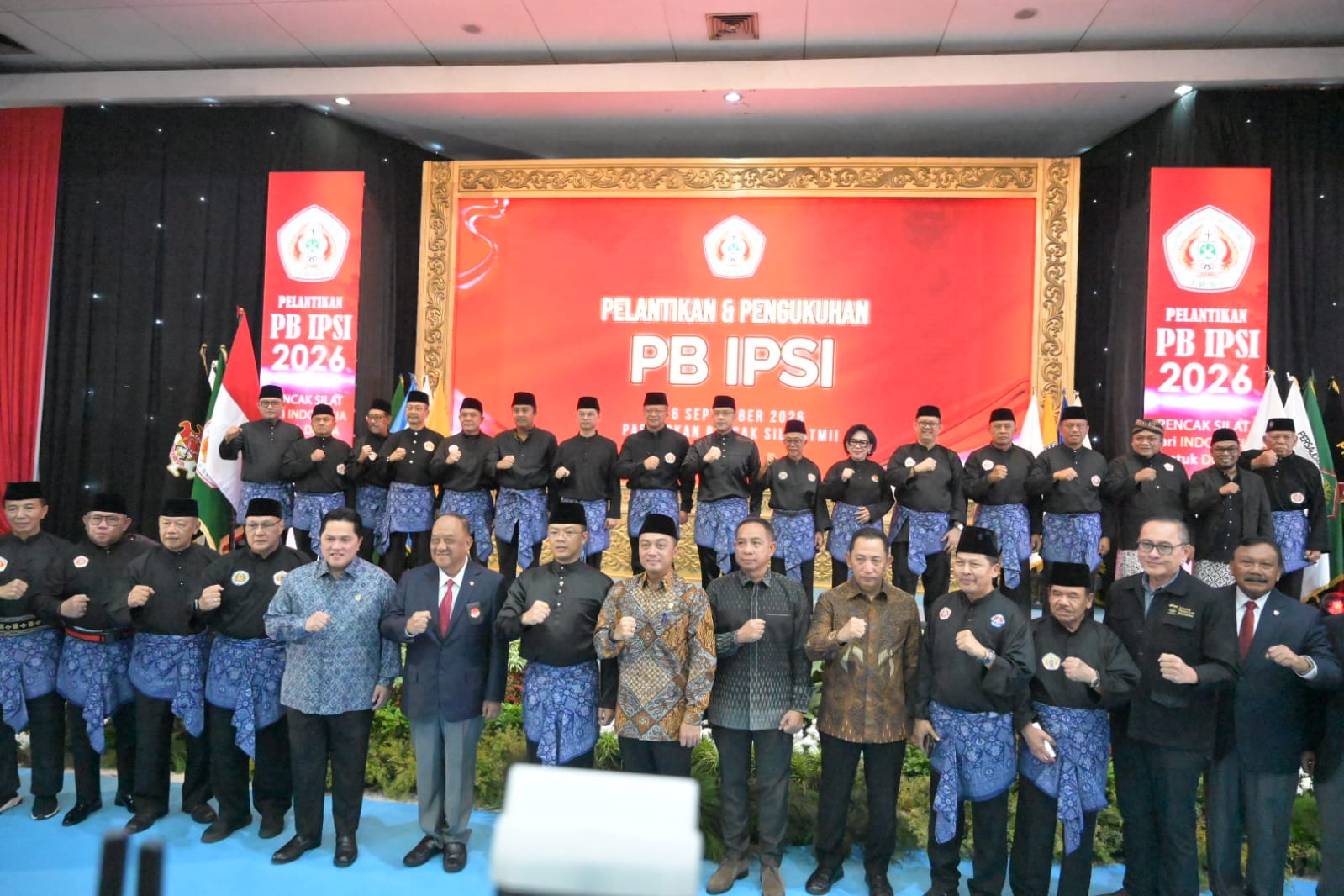
The management of the Indonesian Pencak Silat Association (PB IPSI) for the 2026–2030 term needs to utilise organisational consolidation and the modernisation of training as a foundation to increase the competitiveness of Indonesian pencak silat.
Through a statement today, the Vice Chairman of PB IPSI, Muchamad Nabil Haroen, stated that pencak silat cannot be managed solely through routine competitions. It requires training based on science, high-quality competitions, professional human resources, and measurable governance.
“The 2026–2030 period must be a period of both consolidation and acceleration,” said Gus Nabil following the inauguration of the PB IPSI Executive Board at the Indonesian Pencak Silat Training Centre, Taman Mini Indonesia Indah (TMII), East Jakarta, on Saturday (5/9/2026).
According to him, consolidation is needed to unite all schools, regional boards, athletes, coaches, and referees under a single policy direction. Meanwhile, acceleration is necessary so that pencak silat can keep pace with the development of modern sports and increase its competitiveness on the international stage.
Gus Nabil emphasised that all board members are working within a single vision under the leadership of the PB IPSI Chairman, Sugiono. Every official is responsible for translating organisational policies into concrete programmes according to their respective fields.
“All officials are in one line to translate and succeed in the vision of the PB IPSI Chairman. The mandate given to each official must become a collective strength to bring Indonesian pencak silat further forward,” he said.
During the event, Gus Nabil appeared in his signature style, wearing a blangkon and batik sarong. This appearance represented his closeness to the traditions and culture of the Archipelago, which serves as the root of Indonesian pencak silat.
Strengthening the Ecosystem
Within the framework of realising the PB IPSI agenda, Gus Nabil stated his readiness to support the strengthening of standardisation and professional certification, the development of athlete ranking systems, the enhancement of science and technology-based training, and the development of the pencak silat industry.
Standardisation and certification are required to increase competence and provide professional recognition to coaches, referees, and other human resources within the pencak silat ecosystem.
Meanwhile, an athlete ranking system is needed to support the processes of training, selection, and performance evaluation in an objective, transparent, and measurable manner from the regional to the national level.
“We must not be satisfied with what has been achieved. Athlete training must be increasingly based on science and technology. Competitions must become higher quality. The professionalism of coaches and referees must be strengthened,” said Gus Nabil.
He added that the pencak silat industry needs to be seriously developed to create sustainable competition and better economic prospects for athletes, coaches, schools, competition organisers, and related business actors.
According to Gus Nabil, efforts to increase professionalism must not eliminate the fundamental values of pencak silat. Modernisation must remain rooted in cultural identity and the noble character inherited from predecessors.
“We inherit pencak silat from our ancestors not just as a martial arts technique, but as a way of human formation,” he remarked.
He stated that pencak silat contains courage without arrogance, strength controlled by morality, and brotherhood that transcends differences in schools or regions.
Therefore, the responsibility of PB IPSI is not only related to matches and winning medals. Pencak silat must also play a role in character building for the younger generation, the strengthening of culture, and Indonesian diplomacy.
As the Chairman of the Central Leadership of Pagar Nusa, Gus Nabil stated he is ready to optimise the potential of approximately three million members spread across Indonesia to support the implementation of PB IPSI programmes.
This network can contribute to athlete training, increasing coach competence, character education for the youth, organisational strengthening, and expanding public participation in pencak silat.
“Pagar Nusa, with around three million members, is ready to take part and work together to succeed in the PB IPSI agenda,” he said.
Gus Nabil ensured that this support is not directed towards the interests of a single school. The potential of Pagar Nusa will be placed as part of the collective work of the entire Indonesian pencak silat family.
“This is not the agenda of one school, but a joint effort of the entire pencak silat family to bring Indonesia to greater achievements and respect on the world stage,” he asserted.
According to him, the diversity of schools is an important social and cultural asset. However, every school must be able to place national interests above group interests.
“We may come from different schools, wear different colours, and grow from different traditions. But when the Red and White (Indonesian flag) is raised, we are one: Indonesian pencak silat,” he said.
Olympic Target
The Chairman of PB IPSI, Sugiono, placed the struggle to bring pencak silat to the Olympics as one of the major targets for the 2026–2030 management period.
“Pencak silat is not just a cultural heritage, but an identity and an instrument of national diplomacy. Our main target is clear: to bring pencak silat onto the Olympic stage and make it part of the character of the Indonesian younger generation through formal education,” said Sugiono.
Gus Nabil expressed his support for this target. However, he reminded that the struggle towards the Olympics requires a long-term strategy, consistency, and the involvement of all stakeholders.
“This is not the work of one chairman, one management, or one period. This is the long-term work of all Indonesian pencak silat practitioners,” he said.