
Pavilion Named After Sodik Mudjahid Inaugurated at Pusdai West Java Complex
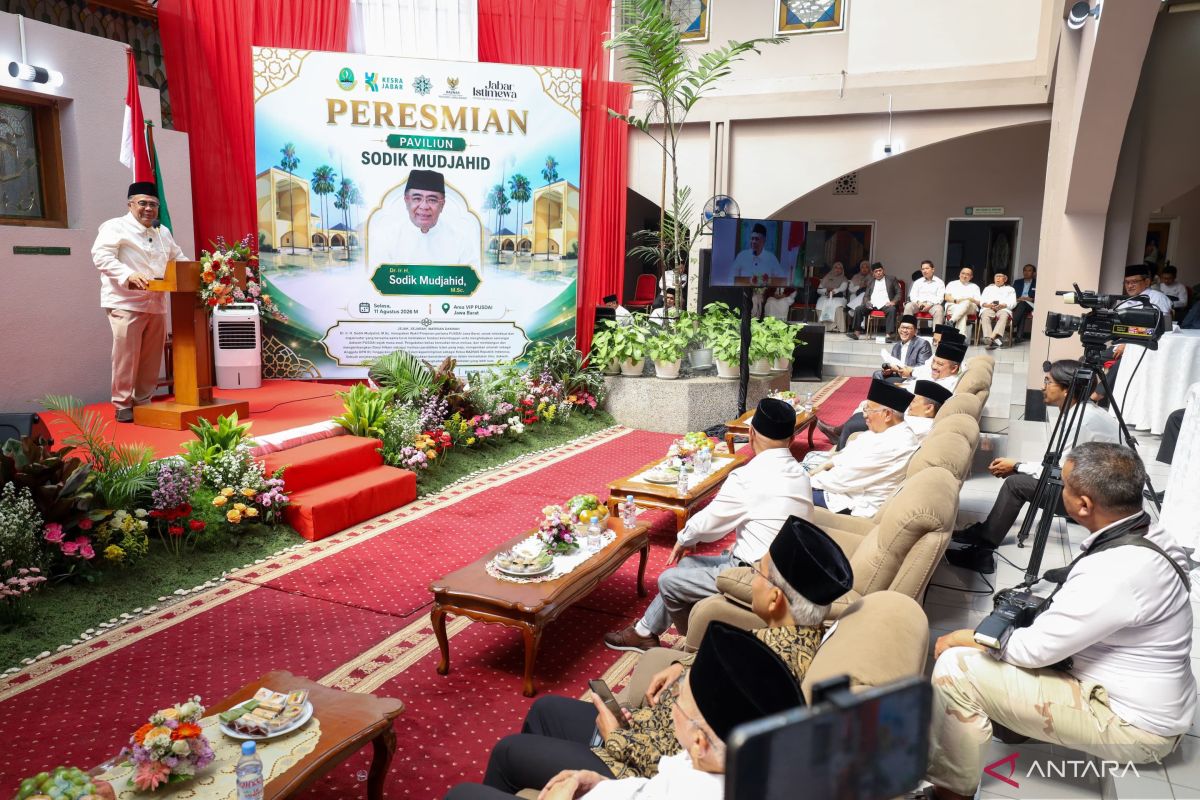
The West Java Islamic Propagation Centre (Pusdai) has inaugurated the Sodik Mudjahid Pavilion as a form of appreciation for his record of service that has shaped the development of the institution at the Pusdai Jabar Complex in Bandung on Tuesday (11/8).
Chairman of the National Zakat Agency (Baznas) Sodik Mudjahid said the existence of Pusdai Jabar was designed from the outset to strengthen the role of a professional Islamic institution with broad impact on society.
“Pusdai was built with four main functions: as a facilitator, coordinator, dynamiser and innovator of the Muslim community’s movement. The combination of the maturity of senior figures and the professionalism of young people is the key to advancing this institution,” he said.
Sodik assessed that the early progress of Pusdai Jabar could not be separated from the combination of knowledge and scholarship of senior figures such as Prof KH Miftah Faridl, together with the professional spirit of the young, which were brought together to drive the development of the Islamic institution.
On the same occasion, the Miftah Pavilion was also inaugurated to appreciate the contribution of the Bandung Muslim scholar and intellectual Miftah Faridl in laying the foundations for the establishment of Pusdai Jabar.
Meanwhile, Miftah Faridl expressed his emotion and humility at the honour bestowed upon him, while recalling the hard work of the first generation of administrators in building the Islamic institution.
He also advised the younger generation to continue maintaining their commitment to the propagation of Islam and service to the nation, and to regard ijtihad (independent reasoning) in various fields as a means of attaining Allah’s pleasure.
“Whether inside or outside Pusdai, let us make it great because this is a legacy from the elders and officials in West Java,” said Miftah.
Chairman of the Pusdai West Java Mosque Prosperity Council (DKM), Jujun Junaedi, said the naming of the two facilities was a form of respect for the track record, scholarship and example of the institution’s founders.
“We inscribe the names of great people on these pavilions so that future generations will see and learn about the history of the struggle and the existence of these two figures,” said Jujun Junaedi.