
Pausing Briefly at Crossings to Safeguard the Safety of Many Journeys
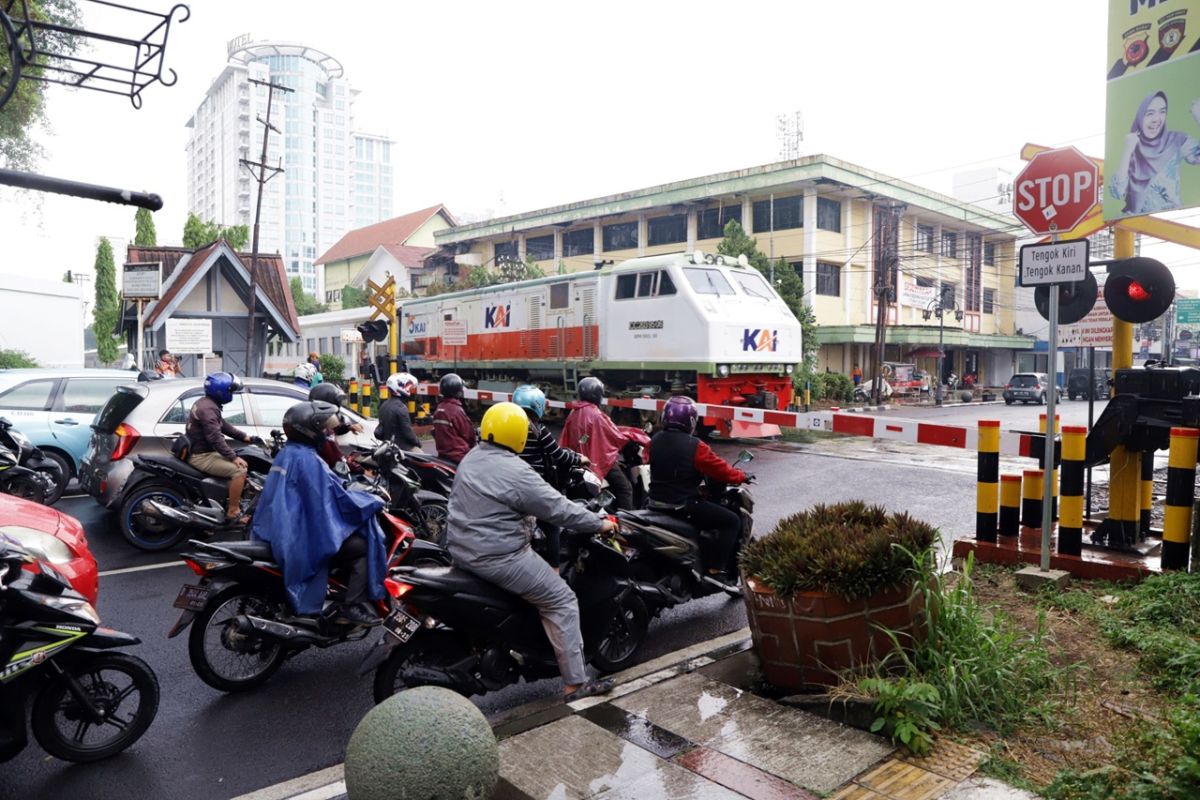
Jakarta (ANTARA) - There are a few seconds that often feel brief on the road but hold great significance for the safety of many people. One of them is when crossing a level crossing.
Pausing briefly, looking to the right and left, ensuring the track is clear, and then continuing the journey after the train has passed is a simple habit that helps maintain collective safety.
KAI Vice President of Corporate Communication, Anne Purba, stated that safety at level crossings requires the concern of all road users to protect each other’s journeys.
“Level crossings bring together the journeys of many people at the same time. When road users are willing to pause briefly, assess the surroundings, and cross orderly, that is where safety is maintained collectively,” said Anne.
From 2021 to April 2026, KAI, together with stakeholders, has closed 1,329 illegal crossings as part of risk control at vulnerable points. In detail, in 2021 there were 324 closures of illegal crossings, in 2022 there were 292 closures, in 2023 there were 107 closures, in 2024 there were 289 closures, in 2025 there were 273 closures, and from January to April 2026 there were 44 closures.
These steps are taken to help create a safer travel space and reduce the potential for accidents at crossings.
KAI also notes that there are currently 3,674 level crossings in Indonesia. Of this number, 1,810 points are the focus of gradual safety improvements. 172 crossings are directed for arrangement and closure due to limited road conditions, while the other 1,638 crossings are prioritised for safety facility enhancements.
KAI data shows that around 80 percent of incidents at crossings occur at unguarded points. In the period from 2023 to 2026, there were 948 casualties in various incidents at level crossings. The biggest factor is behaviour such as forcing through, not stopping, or failing to pay attention to the surroundings before crossing.
According to Anne, a few seconds to stop before crossing often becomes a crucial decision that helps protect the safety of road users as well as the train journey carrying hundreds or even thousands of passengers.
“Trains run on their tracks and require safe space in every journey. Therefore, road users need to stop first, look left and right, and ensure the conditions are truly safe before crossing,” explained Anne.
As part of safety improvements, KAI will continue to strengthen various measures at level crossings through the installation of sirens and warning lights, CCTV, panic buttons, enhanced guarding, and coordination with central and local governments.
Anne added that a culture of order at crossings will have a significant impact on the daily safety of public journeys.
“Safety often starts with simple actions. Pausing briefly before crossing is a form of care so that every journey can proceed safely and without incident,” concluded Anne.