
"'Patron' of American Communists Angry with Trump, Issues War-Invasion Warning"
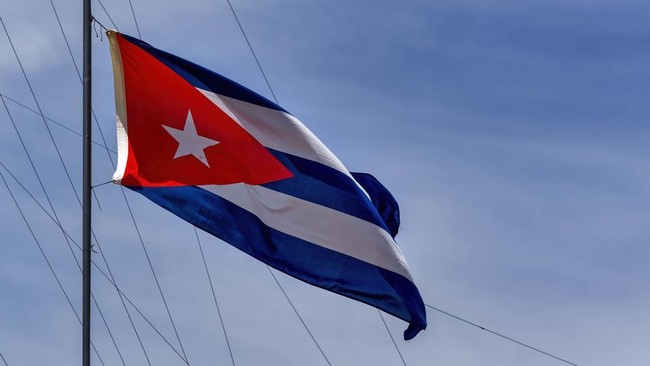
Miguel Diaz-Canel, the President of Cuba, issued a stern warning to the United States that any military action against the country would end in bloodshed. The fresh tensions are expected to have consequences for peace and regional security across the area. Citing Reuters on Monday 18 May 2026, the warning was delivered by Diaz-Canel in response to a classified intelligence report published by Axios last Sunday. The report accuses Cuba of acquiring hundreds of military drones and discusses plans for air strikes to target the US Navy base at Guantanamo Bay, US warships, and up to Key West in Florida. The Cuban government immediately rejected the allegations, accusing the United States of fabricating them to smooth an invasion plan. Through his official X account, the Cuban President stressed that his country is not a threat to Washington. “Cuba does not represent a threat,” Diaz-Canel said in a post on the platform X, quoted by Reuters. Although Cuba is currently suffering severe economic hardship, a wave of resistance continued to be voiced by civilians on the streets of Havana. The energy blockade imposed by the United States since the arrest of Venezuela’s president in January has left Cuba short of fuel and left the country with electricity for only one or two hours a day. A Havana resident said that the Cuban people have a strong willingness to take up arms and will not allow the US military to come in without resistance. “I know Cuba is a strong country. Cubans are very brave and they will not find us unprepared,” said Sandra Roseaux, 57, to Reuters. Roseaux also asserted that hunger caused by economic sanctions would not deter them from defending their homeland’s sovereignty. “If they come, they must fight, because Cuba will retaliate. My country, whether hungry or in any way, will retaliate. It is better they not come because there will be fighting,” Roseaux added. The two countries’ diplomatic ties, strained since the Cold War, have further heated up after reports that US prosecutors plan to indict former Cuban leader Raul Castro for the downing of two humanitarian flights in 1996. The indictment plan against the 94-year-old man is seen as the most aggressive political pressure by the Donald Trump administration. Cuban Foreign Minister Bruno Rodriguez immediately offered international law and said his country has full right to defend itself. “Cuba, like every nation in the world, has the right to legitimate self-defence against external aggression under the UN Charter and international law,” Rodriguez said in a post on social media. Meanwhile, some elderly Havana residents urged both sides to pursue diplomacy rather than unilateral military action. “It is not right for the United States to invade Cuba, nor is it right for Cuba to invade the United States,” said Ulises Medina, 58, of Havana. Medina urged both leaders to sit down together to de-escalate the armed conflict that could be damaging to both sides. “They must reach an agreement and talk and negotiate. Cuba, however, will defend itself because this country will not be relinquished,” Medina explained. Nevertheless, the revolutionary spirit of 1959 seems to burn in the memories of Havana’s senior residents who insist that the people will not allow foreign intervention on even an inch of their land. “The Cuban people will not allow anyone to meddle with their land,” said Jorge Villalobos, 87, to Reuters. Villalobos believed that the lack of modern weapons would not prevent locals from repelling US troops. “Cubans know how to defend themselves, even with sticks and stones,” Villalobos stressed.