
Patriot Expedition Team Reactivates 22 Fish Ponds in Klamono
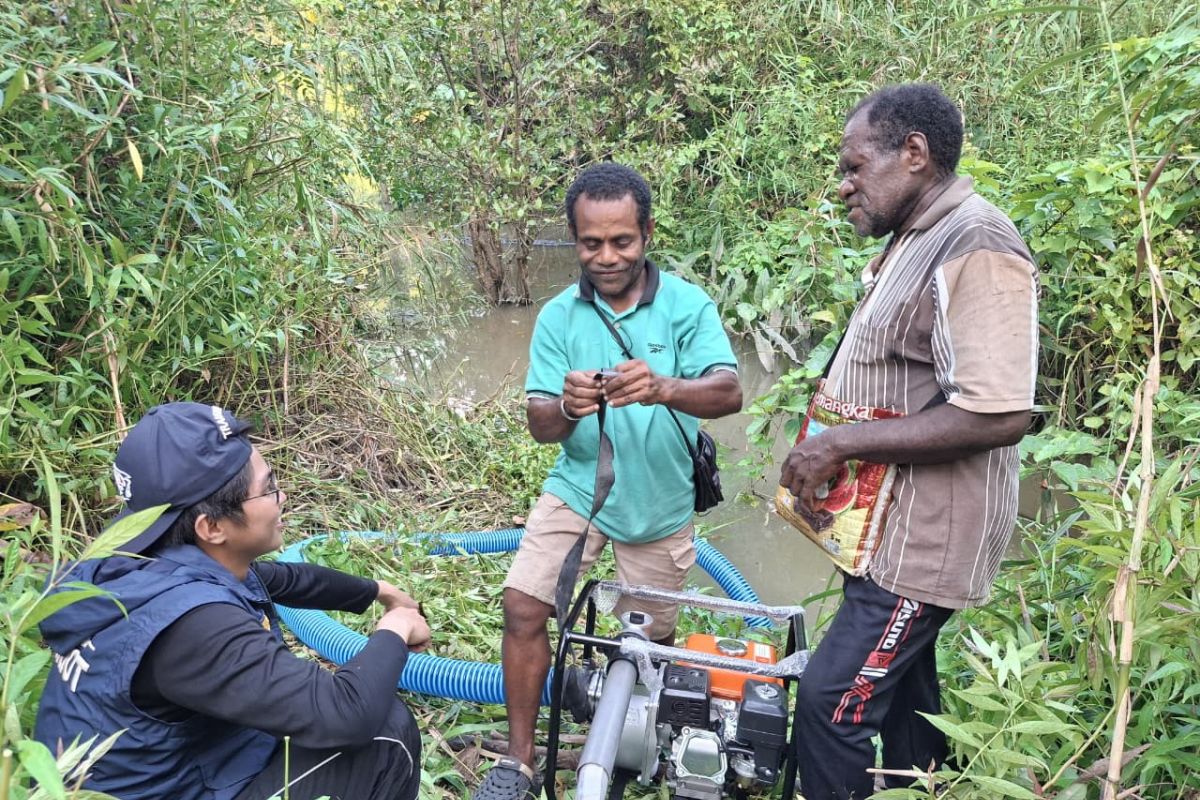
Water availability has been a major obstacle in the development of fish farming in Klamono.
The Patriot Expedition Team (TEP) from Brawijaya University, alongside local residents, has reactivated 22 fish farming ponds in the Klamono District, Sorong Regency, Southwest Papua, by providing water irrigation facilities. The Ministry of Transmigration noted that the ponds, managed by several fish farming groups (Pokdakan), previously faced supply shortages during the dry season as residents relied solely on rainwater and rivers.
“Water availability is a major constraint in developing fish farming in Klamono. With these pumps, we hope the community can more easily access and divert water from the nearest sources to the farming ponds,” said Alda Frida, Chairperson of Pokdakan, in a statement received in Jakarta on Tuesday.
To address these limitations, the Brawijaya University TEP, together with Pokdakan and the local community, provided water pumps and hoses spanning approximately 300 to 400 metres. These facilities are used to divert water from the Klasafet River to the residents’ farming ponds, which previously lacked adequate water flow.
According to the Ministry of Transmigration, the provision of these irrigation facilities allows 22 ponds owned by various Pokdakan groups to be reused for farming activities. Previously, when rainfall decreased during the dry season, residents used the river as an alternative source for their ponds. However, the distance between the water source and the ponds meant that farmers required specialised equipment to transport water to the farming sites.
Gilang Nur, a member of the Brawijaya University TEP, stated that this solution was chosen after the team consulted with several farming groups and identified water availability as the primary hurdle. “We previously discussed this with several Pokdakan, and indeed, the main issue was water. Therefore, we provided water pumps equipped with hoses of about 300 to 400 metres,” said Gilang.
This activity is part of the Brawijaya University TEP’s field intervention in the Klamono-Segun Transmigration Area, following the identification of local community needs. Klamono-Segun is one of ten transmigration areas in Papua designated as priority locations for the 2026 TEP, with Brawijaya University serving as the partner university for the region.
A total of 1,476 TEP 2026 participants, organised into 246 teams from 10 partner universities, have been deployed across 53 transmigration areas. The Ministry of Transmigration has directed TEP 2026 participants not only to map the problems and potential of these areas but also to develop practical solutions that can be implemented alongside the community.
The Minister of Transmigration, Muhammad Iftitah Sulaiman Suryanagara, previously requested that TEP participants provide tangible contributions to the community during their assignment. “Move every day. Our time is limited, only four months. Give your totality and do your best while in the transmigration areas. There must be something accomplished that creates an impact and provides benefits,” Iftitah said during the TEP send-off on 31 July 2026.