
Patriot Expedition Team develops fish farming on Simeulue Island
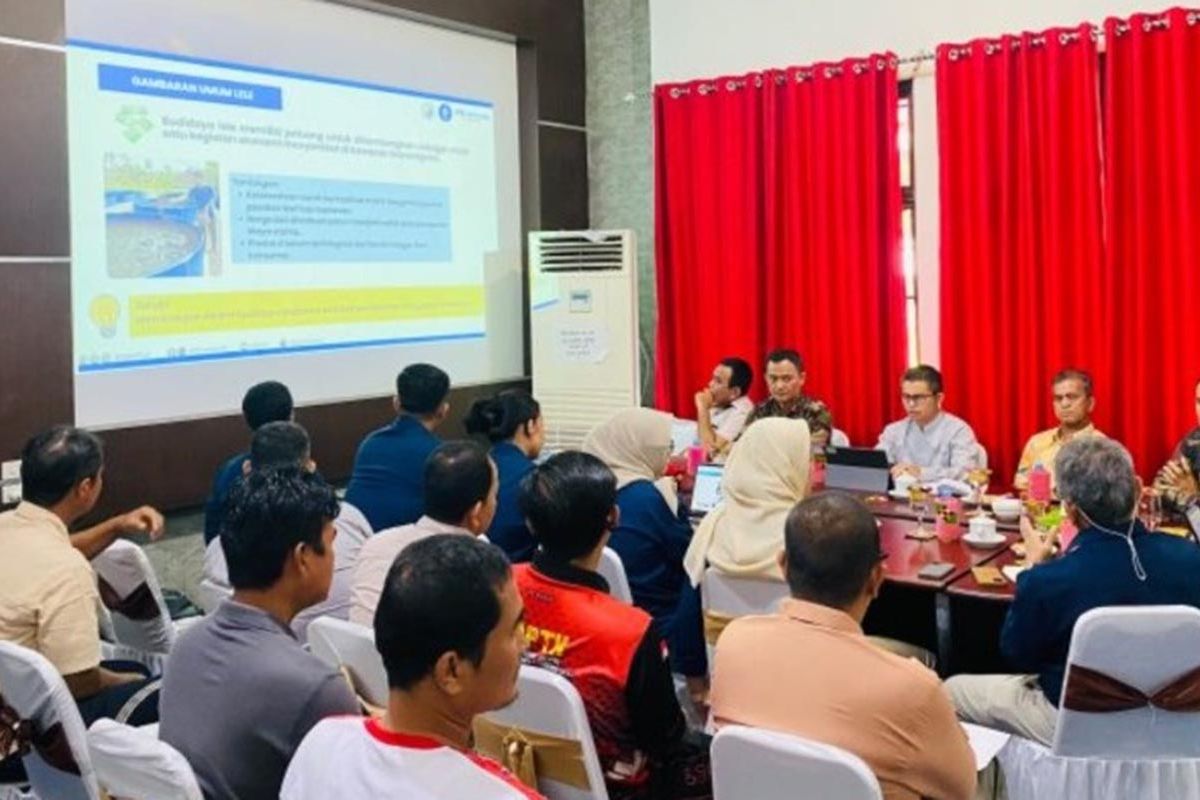
The Patriot Expedition Team (TEP) from IPB University, together with the Simeulue Regency Government, is studying the development of freshwater aquaculture and mariculture in the transmigration area of Simeulue Island, Aceh Province.
TEP leader Irzal Efendi said in Simeulue on Sunday that freshwater fish farming is important for strengthening the availability of protein sources for the people of Simeulue Island.
“As an archipelagic region, fish supplies on Simeulue Island can face obstacles at certain times, especially during extreme weather in the west monsoon and transitional seasons. Freshwater fish farming is important for strengthening the availability of protein sources for the people of Simeulue Island,” he said.
TEP is a programme of the Ministry of Transmigration that sends graduates, master’s degree holders, doctoral degree holders, and young professors from various universities to transmigration areas to conduct research, provide assistance, and take concrete action to encourage the economic growth of transmigrants.
He said the freshwater aquaculture and mariculture programme is expected not merely to become a pilot project, but to serve as a step towards building a new economic chain based on local fisheries potential in the island regency.
The development is a follow-up to the results of the 2025 TEP IPB University study. The findings are now being translated into action research on a farming business scale.
“According to the TEP IPB University study, catfish and tilapia commodities are considered to have fairly strong market prospects in Simeulue,” said Irzal Efendi.
Irzal Efendi said catfish development is designed in an integrated manner, from hatchery and nursery to grow-out. The technology used includes tarpaulin-lined ponds and round tanks.
“We are also planning to use superior broodstock brought in from Banda Aceh as well as developing feed independently,” he said.
In addition to freshwater aquaculture, Irzal Efendi said the marine sector in Simeulue is also an important focus of the programme, especially lobster development. The waters of Simeulue have long been known as one of the areas in the supply chain for puerulus or clear lobster seed.
This potential is considered to need further development so that its economic value does not stop at raw commodities, but can provide greater benefits for the local community.
The development offered is lobster nursery rearing to a size of around 10–50 grams per individual. The aquaculture development is also considered relevant to policy changes regarding the trade in clear lobster seed.
Land-based aquaculture technology allows nursery activities to be carried out on land using tanks with a recirculating aquaculture system (RAS).
“Meanwhile at sea, development can be carried out through floating net cages, submerged nets, or seabed net cages. This opens up opportunities for Simeulue to become a production area for high-economic-value fishery commodities,” said Irzal Efendi.
The Expert Staff to the Simeulue Regent for Economic, Financial and Development Affairs, Kasirman, welcomed the development of freshwater aquaculture and lobster farming.
“We hope that the development of lobster and freshwater fish farming will not stop as a pilot project, but will develop into an economic chain that provides direct benefits to the community,” he said.
He said the fisheries aquaculture development could become a sustainable economic tap for the community, especially in transmigration areas on Simeulue Island.
“We hope that the development of transmigration areas will not merely relocate centres of economic activity to new regions, but that the community needs to be equipped with knowledge, technology and institutional capacity so they are able to manage resources independently and sustainably,” said Kasirman.