
Patriot Expedition Team Converts Cow Manure into Biogas in South Manokwari
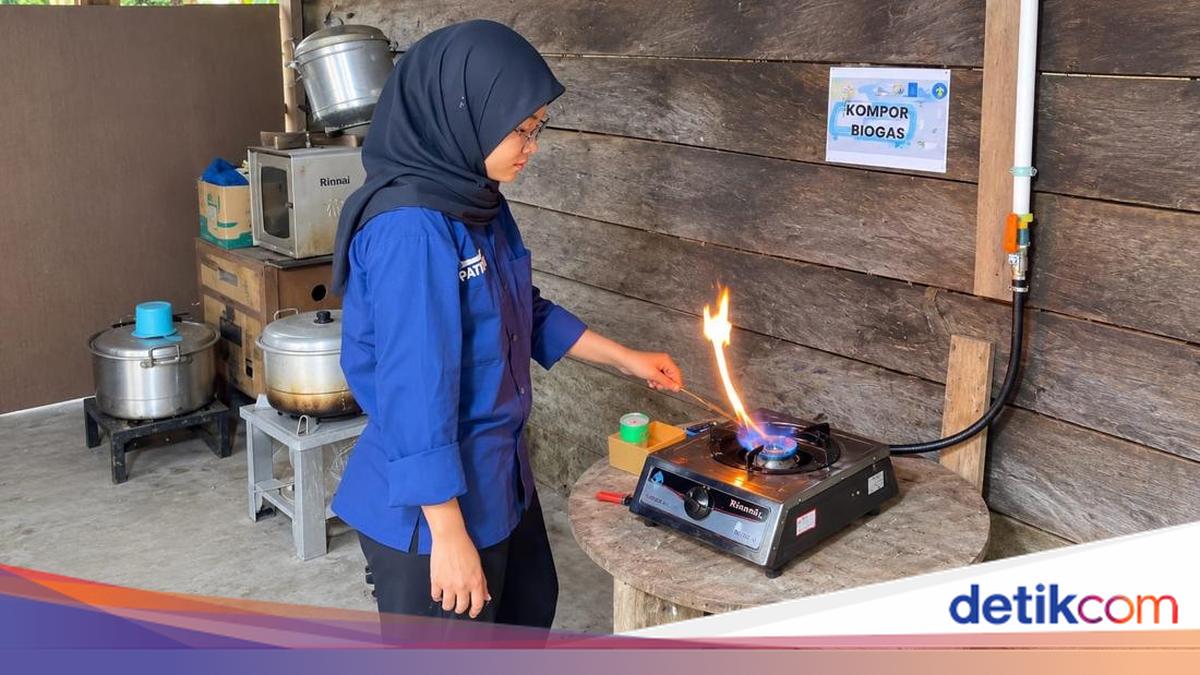
For a long time, cow manure has been a problematic waste issue in Margorukun Village, Oransbari District, South Manokwari, West Papua. Simultaneously, local residents have faced difficulties due to receiving an allocation of only 20 litres of kerosene per month.
This dual problem is being addressed by the Patriot Expedition Team (TEP) 08 from the Sepuluh Nopember Institute of Technology (ITS) through the innovation of biogas stoves. Now, residents can cook more freely, while cow manure levels are reduced and can be utilised as fertiliser.
The benefits are already being felt directly by the community. Aswati, one of the biogas users, stated that using the biogas stove is not much different from the stoves usually used.
“It is the same as a regular stove, though we are still adapting as we are used to using kerosene stoves. The flame produced is stable and burns perfectly,” Aswati said in a written statement on Thursday (7/10/2026).
Meanwhile, Jinan, a member of ITS TEP 08, explained that biogas begins to be produced after the process of introducing cow manure into the reactor lasts for about three weeks. The gas is then distributed to the biogas stoves and has been utilised for cooking.
“The flame produced is stable, can be increased or decreased, and contains no odour at all. The team even tested boiling eggs, which were cooked perfectly,” said Jinante.
This programme was developed to address household energy issues while utilising the livestock potential in Margorukun. Some residents raise cattle using a free-range pattern, while cooking needs still depend on kerosene, which is often in limited supply, or non-subsidised LPG, which is relatively expensive.
The Chairman of TEP 08 ITS, Arief Abdurrakhman, explained that the biodigester with a capacity of 12 cubic metres (12 m³) built by the team is capable of processing manure from approximately 10 cows to meet the cooking needs of three households.
Utilising biogas has the potential to save energy costs by approximately Rp50,000 per month for residents. Danun, one of the beneficiaries, stated that the scarcity of kerosene is one of the important reasons for alternative energy such as biogas.
“Kerosene is now scarce up to twice a month, while each household is only allowed to receive four jerry cans or about 20 litres,” he said.
In addition to producing biogas, the fermentation process of cow manure also produces bioslurry that can be used as organic fertiliser. This utilisation has the potential to reduce farmers’ dependence on chemical fertilisers from outside the village. In the future, bioslurry could also be developed into products marketed through the Village-Owned Enterprise (BUMDes).
The use of biogas is also aimed at generating electricity. Arief explained that with the availability of approximately 20 cows, the biogas produced has the potential to be converted into 2,000 watts of electricity for five hours per day.
Meanwhile, the Minister of Transmigration, Muhammad Iftitah Sulaiman Suryanagara, who inspected the site on 12 September 2026, encouraged that the use of biogas should not stop at cooking needs.
“The electricity conversion must be realised immediately,” said Iftitah.
The utilisation of livestock waste into biogas and organic fertiliser is a tangible form of energy transformation in transmigration areas. Livestock waste, which was previously unutilised, is now being processed into an energy source while supporting the community’s agricultural needs.
This step aligns with the message from the Coordinating Minister for Infrastructure and Regional Development, Agus Harimurti Yudhoyono, regarding the importance of energy transformation that is not only technology-oriented but also provides benefits to the community.
“Transforming energy means enhancing not just technology, but also humanity,” concluded Agus Harimurti Yudhoyono.