
Patriot Expedition Team Assists 39 Jayapura Teachers in Using Digital Interactive Boards
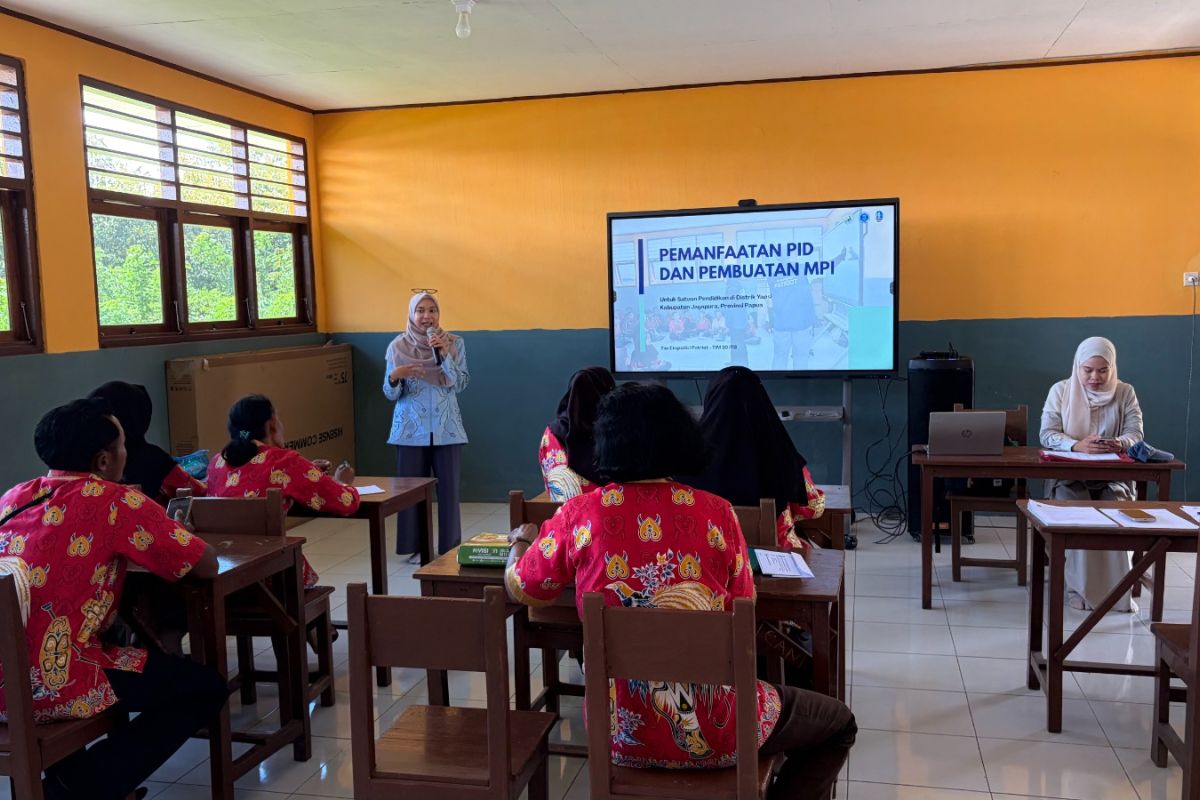
Jakarta (ANTARA) - The ITB (Institut Teknologi Bandung) Patriot Expedition Team (TEP) is assisting 39 primary school teachers in the Yapsi District, Jayapura Regency, Papua, in utilising Digital Interactive Boards (PID) for educational activities.
Maria, a teacher at SD Inpres SP 6 Yapsi, stated that the assistance helps teachers understand how to operate the PID and utilise the device despite limited internet connectivity. “This assistance is very beneficial because it helps those of us who initially did not know how to use the PID to better understand its operation,” Maria said in an official statement received in Jakarta on Thursday.
Maria noted that limited internet access should not be an obstacle for teachers in using digital devices to create more engaging learning activities for students.
The capacity-building programme aims to reach 1-5 schools in the Yapsi District. To date, 39 teachers from five schools have participated in the training and practised using the PID. These schools include SD Negeri Bundru, SD Inpres SP 3, SD Inpres SP 4, SD Inpres SP 2, and SD Inpres SP 6.
The training materials include PID operation, the use of screen annotation features, and the creation of Interactive Multimedia Learning (MPI), including the use of Artificial Intelligence (AI) in learning media.
Hilarius Donatus Hun, a member of ITB’s TEP Team 10, said the team continues to reach target schools despite facing long travel distances and rocky road conditions in the remote Yapsi region.
In addition to teacher training, the team plans to distribute 15 laptops to the 15 target schools to support technology-based learning. The team has also scheduled a workshop themed “Deep Learning” with academics from Cenderawasih University on 19 September 2026 as a follow-up to the teacher capacity-building programme.
The Ministry of Transmigration noted that this activity is part of the support for the equitable use of educational technology, particularly in regions still facing limited digital access. President Prabowo Subianto previously emphasised the use of interactive panels as an effort to expand student access to learning materials across Indonesia and improve the quality of the learning process through digital technology.
According to data from the Ministry of Primary and Secondary Education as of July 2026, the 2025 learning digitalisation programme has reached 288,865 educational units with PID and supporting devices. Additionally, 8,265 educational units have gained internet access, and 2,389 units have received electricity support.
During the same period, 33,156 teachers and educational personnel participated in training for digital learning utilisation. Specifically in underdeveloped, frontier, and remote (3T) regions, the programme reached 13,838 schools, including internet support for 4,316 schools and electricity for 49 schools. The government has also distributed 30,285 laptops and external storage devices to support digital learning in 3T areas.
The Minister of Transmigration, Muhammad Iftitah Sulaiman Suryanagara, previously stated that TEP participants are expected not only to bring knowledge but also to be able to help resolve real problems encountered by the community. “Indonesia needs more young people who not only possess knowledge but are also capable of solving real problems within society. Young patriots must be problem solvers,” said Iftitah.
The Coordinating Minister for Infrastructure and Regional Development, Agus Harimurti Yudhoyono, assessed that the empirical findings of the TEP in the field can serve as important input to align academic studies with strategic government policies, ensuring that development interventions are more effective and aligned with community needs.