
Passenger and Freight Vehicle Lanes at Ketapang Port to Be Separated, But When?
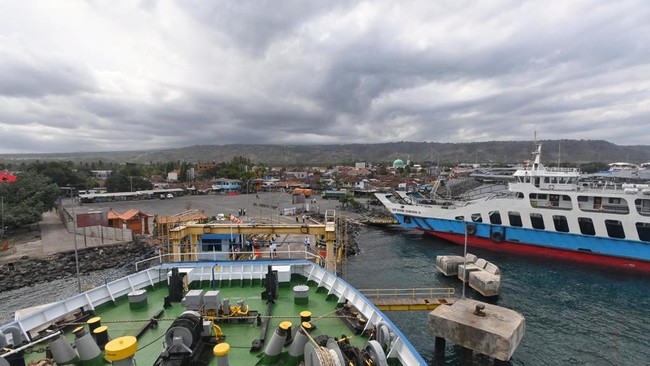
The government is preparing a long-term strategy to tackle the recurring congestion at Ketapang Port. Most recently, a traffic jam stretching up to 7 kilometres occurred at the port at the end of June, following queues of tens of kilometres during the middle of last year.
Minister of Transportation Dudy Purwagandhi stated that freight and passenger services will be separated. The separation is expected to be implemented no later than before the 2027 Eid transport period, thereby smoothing vehicle flow as freight and passenger activities will no longer be concentrated at a single port. Ketapang Port’s capacity will also be increased in stages to accommodate the growth in vehicle and logistics traffic.
“We want to separate freight and passenger transport services, as we have done at Merak-Bakauheni, and we will do it at Ketapang-Gilimanuk. The hope is that with this separation, traffic will not be concentrated in just one port,” Dudy told the media.
Dudy explained that the recent long queues on the Ketapang-Gilimanuk crossing were triggered by disruptions to the operation of large vessels. This situation caused some journeys to be diverted to the port managed by PT ASDP Indonesia Ferry, resulting in limited service capacity.
“The congestion at Ketapang-Gilimanuk occurred because a large ship was damaged, so journeys were diverted to the port managed by ASDP. One of the obstacles is limited capacity. We have asked ASDP to immediately coordinate with the East Java Provincial Government so that equipment repairs can be carried out promptly and the facilities can be used again,” Dudy said.
Meanwhile, ASDP President Director Heru Widodo said his party has coordinated with the East Java Provincial Government to accelerate several required works while also planning port development up to 2029. The plan includes increasing the capacity of several piers, optimising the Bulusan area as a buffer zone for logistics vehicles, constructing connecting access roads, and building new piers to strengthen operational smoothness on the Ketapang-Gilimanuk crossing.
“Pier capacity increases will also be carried out in stages starting this year as part of strengthening services on the Ketapang-Gilimanuk route. The plan is designed to meet current traffic needs while anticipating the growth in vehicle flow in the coming years,” Heru said in a statement.
Heru added that port infrastructure development is not sufficient if it only involves adding pier capacity. The arrangement of ship operating patterns, provision of buffer areas, and traffic management outside the port area must also be carried out in an integrated manner to keep pace with increasing public mobility and logistics distribution. “Ketapang Port is not just a crossing gate for Java-Bali, but a strategic node that supports national connectivity. Therefore, its development requires synergy from all stakeholders,” Heru concluded.