
Pasar Minggu Sub-district Develops Community-Based Circular Economy
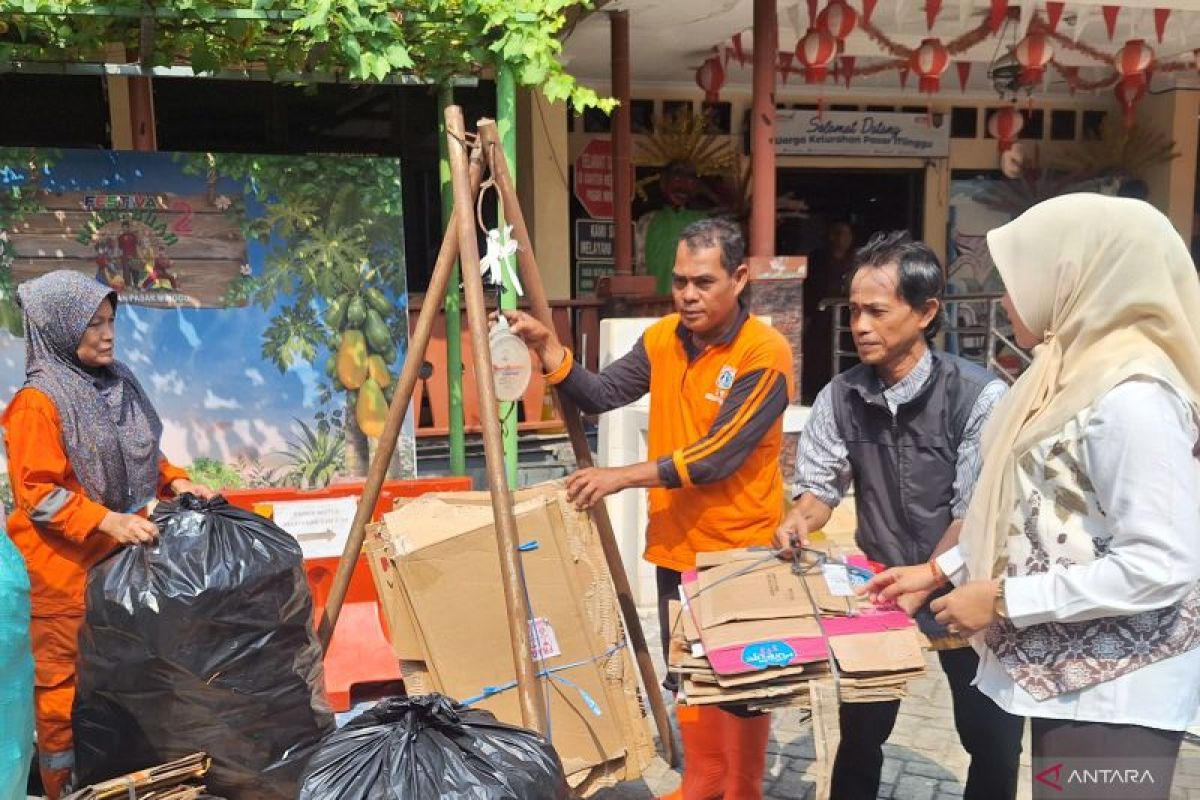
Jakarta (ANTARA) - The Pasar Minggu sub-district in South Jakarta is developing a community-based circular or sustainable economy concept through waste management at the source, food security, and the utilisation of household waste to create added economic value.
“We have a grand design for a circular economy in Pasar Minggu, where everything we do for nature can actually generate monetary value,” said the Head of Pasar Minggu Sub-district, Meilidation Paramanandana, when met at the Pasar Minggu Sub-district Office, Jakarta, on Thursday.
Meilita stated that this concept is realised through the development of waste banks, composters, kitchen waste containers (losida), food cultivation, and the collection of used cooking oil.
According to her, these various innovations stem from ideas proposed by residents, which are then facilitated by the sub-district government alongside various stakeholders.
She noted that there are currently 12 active waste banks across 10 community units (RW) that routinely weigh inorganic waste every month. In June 2024, the volume of inorganic waste collected reached over 800 kilograms in a single weighing session, and several RWs have already conducted two weighings per month.
Additionally, several RWs are developing composters and compost shredding machines to process organic waste into fertiliser.
“Everything we do for nature can actually generate monetary value,” she said.
The Pasar Minggu sub-district is optimistic that this circular economy concept can be applied across all RWs in the area as an effort to protect the environment while simultaneously increasing community welfare.
Through integrated management, residents are encouraged to sort waste at home into three types: organic, inorganic, and residual.
Organic waste is processed into compost to support urban farming in community parks (RPTRA) and local gardens. The results include vegetable harvests and the development of nutritional ponds used for interventions for toddlers suspected of stunting.
Meanwhile, inorganic waste is channelled through waste banks for recycling or sale, providing additional income for the community. Residual waste is transported to final processing facilities.
The programme involves various community elements, including neighbourhood heads (RT and RW), PKK cadres, Posyandu (integrated healthcare centres), PPSU (urban community service workers), FKDM (community disaster management forum), Dasawisma, and environmental communities, all collaborating on waste management and food security development.
The implementation of this circular economy generates economic value from urban farming, waste banks, and used cooking oil management, with a total potential reaching approximately Rp231.2 million per year.
Currently, the Pasar Minggu sub-district in South Jakarta is preparing for the Outstanding Sub-district Competition at the DKI Jakarta Provincial level, which will take place in the coming days.