
Party Defeats in Two States: Is Chancellor Merz's Position Under Threat?
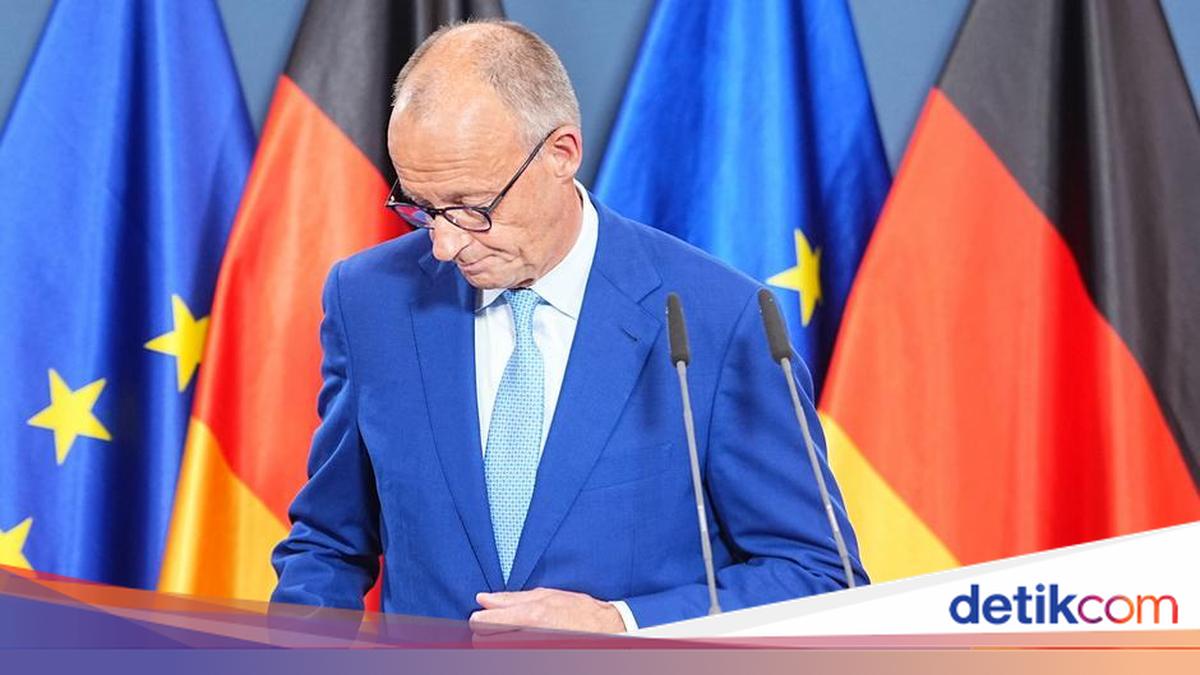
Berlin and Mecklenburg-Vorpommern have just concluded their political cycles. Two of the 16 states in Germany’s decentralised federal system have elected new parliaments. For Chancellor Friedrich Merz, the results of these local elections represent another severe blow amidst a period of intense national and international turbulence.
In the north-east, Merz’s Christian Democratic Union (CDU) is on the brink. According to late-night rapid counts, the conservative party is at risk of failing to meet the five per cent parliamentary threshold—a historical tragedy that could potentially oust the party from the state parliament for the first time.
Meanwhile, in the capital of Berlin, the CDU’s vote share has shrunk drastically, collapsing by almost a third to fall below 20 per cent.
Friedrich Merz: “This is a disaster”
Merz responded swiftly just minutes after the initial projections were announced, while his party’s vote share was still hovering just above five per cent. “We cannot sugarcoat the results in Mecklenburg-Vorpommern—this is a disaster,” he said bitterly. However, looking at his party’s destruction in Berlin, he attempted to remain resilient by describing it as a “decent result.”
For the CDU, this marks their third election defeat within two weeks. Previously, in the Saxony-Anhalt state elections on 6 September, the CDU trailed far behind the Alternative for Germany (AfD)—a party classified by the domestic intelligence agency, Verfassungsschutz, as far-right extremist. This string of poor debuts has left Merz, who has served as Chancellor since 2025, appearing deeply shaken.
AfD Multiplies in Mecklenburg-Vorpommern
At the federal level, Merz shares power with the Social Democratic Party (SPD) in a governing coalition. However, the SPD also navigated the election night with mixed emotions. In Mecklenburg-Vorpommern, the SPD, led by incumbent Prime Minister Manuela Schwesig since 2017, was forced to settle for second place with approximately 36 per cent of the vote, narrowly overtaken by the AfD. The hard-right party successfully garnered 38 per cent of the vote, more than doubling its performance from the 2021 election.
The SPD’s fate in Berlin was far more tragic. Their vote share shrank by a third to around 12 per cent. Conversely, the AfD surged into third place with a convincing share of over 16 per cent. The biggest surprise, however, came from the Left Party (Die Linke), which skyrocketed to become the new dominant force in the capital, securing 25 per cent of the vote.
Die Linke managed to replicate the success pattern of the AfD in Mecklenburg-Vorpommern, doubling its vote share. This political landscape opens the possibility for the socialists—who are frequently accused by the CDU of being radical leftists and anti-Semites—to form a “Red-Red-Green” coalition alongside the SPD and the Green Party.
Berlin Shifts Left
If this coalition is realised, Die Linke’s leading candidate, Elif Eralp, will make history as Berlin’s first Mayor from her party. Before the election, the politician of Turkish descent shared her vision in an interview with Deutsche Welle (DW). “My vision for Berlin is an affordable city. A place where everyone, regardless of origin, religion, language, or income, can live well and with dignity.”
Opportunities for a “Red-Red-Green” coalition are also open in Mecklenburg-Veralpommern based on rapid counts, though this time under the command of the SPD. Manuela Schwesig has expressed her readiness to form a “stable democratic government.” On the other hand, the Federal Chair of the AfD, Alice Weidel, immediately declared the collapse of the “firewall”—the policy of political isolation built by the CDU to contain extremist parties. Speaking to the ZDF television channel, Weidel emphasised her party’s direction: “Our target is, of course, to build long-term coalition talks with the CDU.”
Peripheral Currents Overwhelm the Centre
The results in both states serve as a clear reflection of widespread public dissatisfaction with Chancellor Merz and his governing coalition with the SPD. Deutschlandtrend, a periodic polling barometer, shows that the Merz administration has lost its majority at the national level. The AfD remains firmly at the peak of popularity, while the SPD now leads only slightly above Die Linke.
Parties on the fringes of the political spectrum are now gaining much greater platform and support at both federal and state levels, outperforming the governing parties which are constantly beset by internal conflict. This friction is often triggered by the offensive of reforms initiated by Chancellor Merz several months ago. These policies were undertaken to curb the massive surge in costs for health insurance, long-term care insurance, and pension funds.
“Reform must proceed”
Despite being hit by successive election defeats, Merz refuses to back down and remains committed to his political path. “Reform must continue. Of course, this places us all in a difficult situation. However, we are taking this responsibility. I am taking this responsibility.”
In the health reform sector, the governing coalition has actually reached an agreement after exhausting debates. The implication is that life for German citizens will become more expensive: the price of medicines and dental care will soar, alongside restrictions on family insurance schemes. These unpopular measures are deemed to have failed to win public sympathy.
The situation is similar to the pension insurance reform, which is still being debated, where the government is encouraging citizens to strengthen their pensions through private investment.
“I want this country to progress”
Merz does not deny that this wave of change brings a heavy burden and new uncertainty for many. However, he remains optimistic. “I want to bring our country forward. I fully believe that the success of these reforms will not only improve our collective lives but also restore our sense of identity and our reputation.”
Source: jawawa.id (https://jawawa.id/newsitem/party-defeats-in-two-states-is-chancellor-merzs-position-under-threat-1789992084)
Originally published by detikcom (https://news.detik.com/dw/d-8672805/partainya-kalah-di-2-negara-bagian-posisi-kanselir-merz-digoyang), translated from Indonesian