
Partner or Ally? What Vance’s Statement Means for Ukraine’s Future
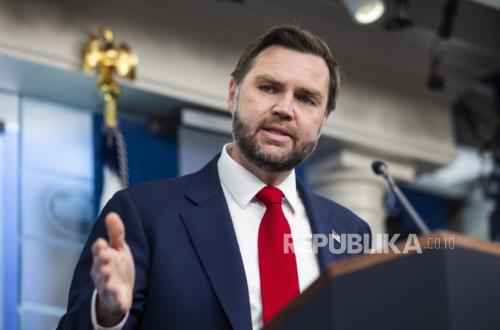
US Vice-President JD Vance has stressed that Ukraine is not a formal ally of Washington and openly called on Kyiv to stop attacks on Russian diesel-production facilities. His remarks have added to tensions between the two countries amid President Donald Trump’s policy shift towards Moscow and growing Ukrainian concerns about the future of US military support.
Vance said Washington and Kyiv have a partnership, but that their interests do not always align. He specifically questioned Ukraine’s attacks on Russian energy infrastructure, saying they also place a burden on American consumers.
Vance made the remarks in an interview with the programme 2WAY TONIGHT, as reported by Ukrinform and European Pravda on Tuesday (20 October 2026).
“They are certainly partners in some respects. But I think our interests sometimes differ,” Vance said.
He then referred to Ukraine’s military operations against Russian diesel-production facilities.
“Do I think they should be bombing Russian diesel-production facilities that increase energy costs for the American people? No,” Vance said.
When the interviewer asked whether being a partner was different from being an ally, Vance stressed that Washington and Kyiv had no formal defence alliance.
“To the best of my knowledge, we do not have a formal alliance with Ukraine. They are not a member of NATO. I also do not think they should be a member of NATO,” he said.
Nevertheless, Vance described Ukraine as an impressive country with an extraordinary people. He said the US would continue working with Ukraine on some issues, while the two countries could also take opposing positions.
“We will work together on some things, but on other things we will also have opposing positions,” he said.
Vance then reiterated his demand that Kyiv stop attacks on Russian diesel-production facilities.
The remarks come as Ukrainian President Volodymyr Zelensky faces pressure from the Trump administration to halt attacks on Russian energy infrastructure, while Moscow continues its military operations in Ukrainian territory.
Ukraine is not a NATO member
Legally, Vance’s statement that there is no formal defence alliance between the United States and Ukraine is consistent with Ukraine’s NATO membership status.
Ukraine is a NATO partner, but not a member of the defence alliance. It therefore does not receive the collective defence guarantee under Article 5 of the North Atlantic Treaty.
That provision requires NATO member states to provide assistance if one of their members comes under armed attack, in accordance with the treaty’s mechanisms.
However, Ukraine’s non-member status does not mean its defence cooperation with the United States and NATO lacks strategic significance.
Since Russia launched its full-scale invasion in February 2022, the United States has been one of Ukraine’s key providers of defence assistance, including weapons deliveries, training support and intelligence-sharing.
NATO has also maintained a political decision on Ukraine’s future membership. The alliance says an official invitation to join can be issued when all member states reach agreement and the specified conditions are met.
Vance’s view that Ukraine should not join NATO is therefore a political position he has expressed; decisions on membership remain subject to the alliance’s collective process.
For Kyiv, NATO membership is closely linked to its efforts to secure long-term security guarantees after the war with Russia ends.
Trump strikes diesel deal with Putin
Tensions between Washington and Kyiv have risen further after Trump announced a diesel supply deal with Russian President Vladimir Putin.
On Friday (9 October 2026), Trump said Russia had agreed to supply more than 300,000 tonnes of diesel to the US and global markets.
Trump also announced plans for an additional 500,000 tonnes to be delivered in November, followed by one million tonnes in a subsequent shipment.
The deal was announced as the Trump administration sought to address high domestic energy prices ahead of the US midterm elections on 3 November.
The policy drew criticism from Zelensky and several members of the US Congress.
Zelensky said purchases of Russian fuel could increase Moscow’s revenues while it continues to fund military operations in Ukraine.
He also questioned Washington’s decision to reopen energy trade with Russia, given that the US had previously used economic sanctions as one means of pressuring Moscow.
The dispute continued when Trump announced on 11 October that Russia and Ukraine had agreed to stop attacks on each other’s energy infrastructure.
However, neither Kyiv nor Moscow confirmed the agreement as announced by Trump.
The Financial Times, citing a senior Ukrainian official close to Zelensky, reported that Kyiv had no information about the energy ceasefire agreement.
Ukraine then halted attacks on several Russian oil facilities for three days.
On 15 October, however, Zelensky said Ukraine would resume its attacks after Russia continued striking Ukrainian energy infrastructure.
According to Zelensky, there had been no halt in Russian attacks that would provide a basis for Kyiv to maintain the pause.