
Parliament Reveals Reasons Why Andrie Yunus Case Cannot Be Brought to General Court
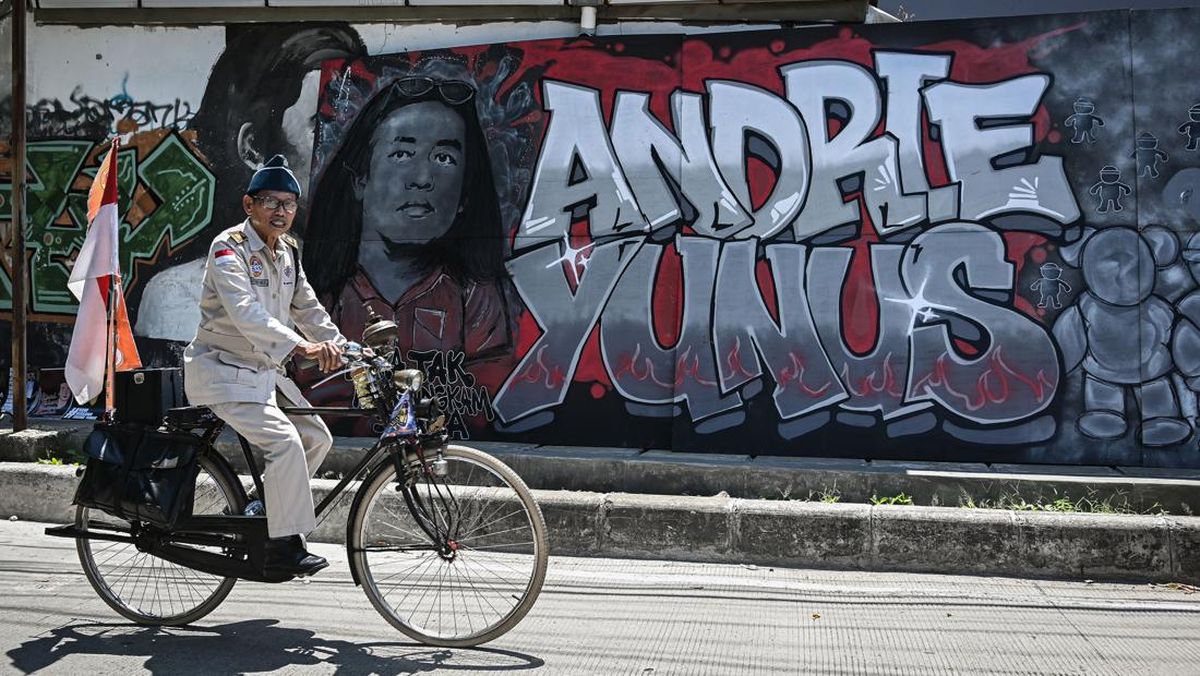
Member of Commission I of the House of Representatives, Yulius Setiarto, has revealed the reasons why the acid attack case against Vice Coordinator of KontraS, Andrie Yunus, cannot be brought to the general court. The Military Court II-08 Jakarta will hold the first hearing of the case on 29 April, despite calls from various parties to move the process to the general court. Yulius explained that the legal polemic in this case stems from a norm conflict between Law No. 31 of 1997 on Military Judiciary and Law No. 34 of 2004 on the TNI. According to him, the Military Judiciary Law still adheres to the principle of absolute jurisdiction based on the legal subject, where every soldier is subject to the military court regardless of the type of criminal offence. “This construction creates a form of legal exceptionalism that separates the military from the general judicial system,” Yulius stated when contacted on Sunday (19/4). Although Article 65 of the TNI Law explicitly stipulates that active TNI soldiers are subject to the general court in general criminal cases, that provision has never been effectively implemented because it is hindered by Article 74 of the Military Judiciary Law, which requires the establishment of a new Military Judiciary Law as a prerequisite for implementation. “As a result, for more than two decades, that provision has become a kind of dead letter, and the prevailing practice still places soldiers committing civilian crimes under the military court,” he said. Article 65 of the TNI Law states, “Soldiers are subject to military judicial authority in cases of military criminal law violations and subject to general judicial authority in cases of general criminal law violations as regulated by law.” However, based on Article 74 of the Military Judiciary Law, the provisions of Article 65 only apply after a new law on Military Judiciary is revised. Article 74 of the Military Judiciary Law generally regulates the authority of Ankum (Superior with Punitive Authority), which includes investigation, receiving reports, receiving case files, and detention of subordinate soldiers. “This situation shows the lack of strong political will from the House of Representatives and the Government to resolve the security sector reform agenda, particularly in the military judiciary aspect. Even the latest TNI Law revision does not touch on this issue, so the dual jurisdiction remains maintained without a clear solution,” he said. Yulius acknowledged that, from a constitutional perspective, the dominance of the military court in handling general criminal offences contradicts the principle of equality before the law as guaranteed in Article 27 paragraph (1) of the 1945 Constitution. Because when perpetrators are tried in a different system from civilians, while the victim comes from the general public, there is potential for power imbalance in the relationship. Therefore, Yulius urges a clear boundary between the authority of the military court and the general court. According to him, the jurisdiction of the military court should be strictly limited only to criminal offences directly related to military functions, duties, and discipline. “The Andrie Yunus case becomes an important momentum to conduct a comprehensive evaluation of the existing system, while also pushing for the acceleration of the revision of the Military Judiciary Law to align with the spirit of reform and the rule of law,” he said.