
Parliament Questions BI-Government Fund Flow Mechanism: Like 'Ping-Pong'
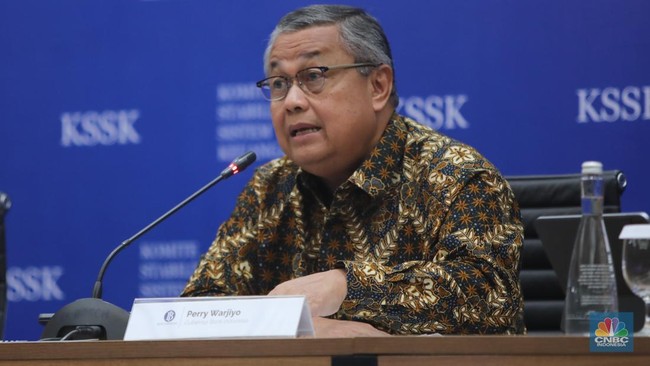
Indonesia’s House of Representatives (DPR) has spotlighted the dynamics of fund flows between Bank Indonesia (BI) and the government, which appear akin to a ‘ping-pong’ game.
This arose during Commission XI’s questioning of BI’s excess capital ratio surpassing the limit. BI stated it would deposit funds with the government related to the capital ratio, while the government would also have obligations to BI that would be settled. This creates the impression of funds circulating back and forth between BI and the government.
Based on the presentation at the meeting with Commission XI of the DPR, BI reported a capital ratio of 12.27% in 2025, above the 10% threshold.
BI Governor Perry Warjiyo explained that the surplus would be returned to the government. However, part of the deposited funds would flow back to BI as settlement of the government’s obligations.
BI recorded the surplus at Rp85 trillion in 2025 (unaudited). From this amount, BI will deposit Rp15 trillion as an advance payment in December 2025.
“If the surplus is above, we will indeed deposit it with the government. In December last, the government requested part of it as an advance payment, so this Rp15 trillion is the advance payment we convey to the government,” said BI Governor Perry during the working meeting with Commission XI of the DPR at the Parliament Building in Jakarta, Wednesday (8/4/2026).
On the other hand, the government still has a Rp45 trillion obligation to BI stemming from Bank Indonesia Rupiah Securities (SRBI).
“The government still has the old debt. From the old SRBI, not the current SRBI. Rp45 trillion. So later we deposit first,” Perry stated.
Thus, BI will receive back Rp45 trillion from the government as settlement of the obligation.
This fund flow process was then responded to by the Chairman of Commission XI of the DPR, Mukhamad Misbakhun, who called it like ‘ping-pong’.
“So the money will be ping-ponged like that? The excess is placed or returned to the government, the government is told to pay back the debt, right?” said Misbakhun.
Perry clarified that this scheme occurs due to two concurrent obligations, not ‘ping-pong’.
“It’s not (ping-pong), because this is until the debt is settled, Sir. Now the remaining debt is Rp45 trillion, so next year the debt will be finished,” Perry explained.