
Parliament and Komnas HAM Criticise Activist Advisory Team Idea, Pigai Clarifies
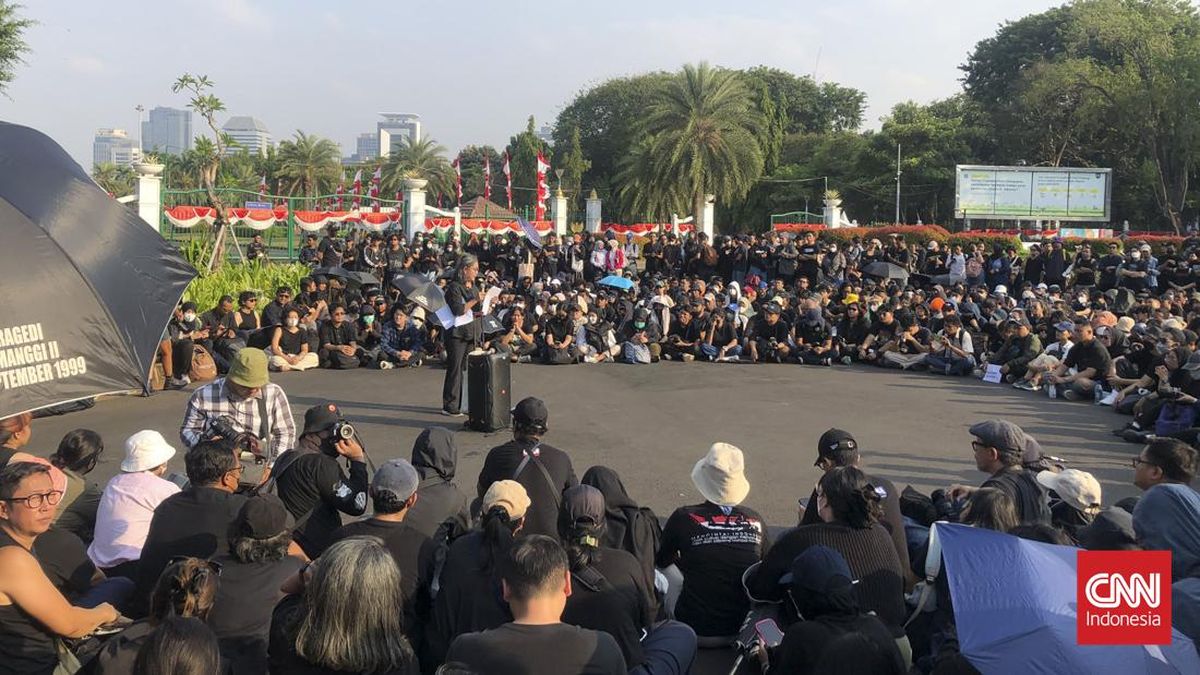
Human Rights Minister Natalius Pigai was reported midweek to be preparing the formation of an advisory team to ensure legal protection is only granted to parties fulfilling the function of human rights defenders, namely human rights activists.
“There will be a team, an advisory team. The advisory team will then determine whether this person is an activist or not,” said Human Rights Minister Natalius Pigai in an exclusive interview with Antara in Jakarta on Wednesday (29/4).
He stated that the mechanism is designed to filter activist claims and prevent the misuse of status in legal processes.
Pigai explained that the assessment is based on strict criteria evaluating the context of an individual’s actions at the time of the incident, rather than mere status or self-identification.
“So, it could be that a human rights activist, at a certain time, the advisory team finds that they are working, even though their status is as a human rights activist, when they are working for payment, that cannot be considered a human rights activist,” he said at the time.
Recently, Pigai’s plan has been criticised by civil society organisations, Komnas HAM, and the Indonesian House of Representatives (DPR RI).
Komnas HAM
Komnas HAM views the plan put forward by Pigai as vulnerable to conflicts of interest.
“In response to the statement by Human Rights Minister Natalius Pigai regarding the Ministry of Human Rights’ plan to form an advisory team to assess and designate someone as a human rights defender, Komnas HAM believes that the plan is vulnerable to conflicts of interest,” said Komnas HAM Commissioner Pramono Ubaid Tanthowi in his statement on Saturday (2/5), quoted from detik.com.
Pramono revealed the reason his side considers the discourse prone to conflicts of interest due to complaints received by Komnas HAM over time.
“Because based on complaints received by Komnas HAM, threats against human rights defenders, or commonly called activists, often involve rogue officials or state institutions, in addition to corporate parties,” he added.
He also highlighted the position of the Ministry of Human Rights. He questioned whether the Ministry of Human Rights can be objective if a human rights defender is threatened.
“Meanwhile, the Ministry of Human Rights is part of the executive government. The question is, can the Ministry of Human Rights confront the state/government objectively when threats against human rights defenders involve rogue officials or government institutions?” he said.
“Komnas HAM believes that being an activist or taking a critical stance towards the exercise of state power is a basic freedom and the right to participation of every citizen. The state is obliged to respect and protect it,” he added.
According to him, in respecting this basic freedom, the state has a passive obligation (non-interference). This means the state does not engage in much intervention, either to regulate, select, or limit the enjoyment of that right by citizens. In that context, he said, certification of activists by the government has the potential to violate the basic principle of respect for human rights.
“Komnas HAM believes that the Ministry of Human Rights can support the existence of human rights defenders through strengthening regulations, including in the planned revision of the Human Rights Law, by including recognition and guarantees of protection for human rights defenders,” he emphasised.
DPR
Member of DPR RI Commission XIII Marinus Gea also criticised the discourse of the Ministry of Human Rights led by Pigai to form an advisory team to determine the status of human rights activists, which has the potential to disrupt the basic principle of civil liberties.
“Human rights activists have one of their main functions to oversee power, including the government. If the government is present to select who is worthy or not to be a human rights activist, then this is logically flawed. It gives the impression that the government wants to select who will oversee it,” said Marinus in his statement in Jakarta on Friday (1/5), quoted from Antara.
He explained the main function of human rights activists as overseers of power, including the government itself.
True human rights activists, he said, arise from individual awareness and freedom of expression, not the result of state selection. According to him, if the state determines who qualifies as an activist, there is a shift in meaning from a right to something that is limited.
Marinus assessed that this approach actually has the potential to create conflicts of interest, because the government is in the position being overseen, yet also wants to determine its overseers.
He emphasised that becoming a human rights activist does not require state legitimisation. He also warned that if the process must go through selection, the state has the potential to unilaterally limit citizens’ rights.
“The state does not need permission to become a human rights activist. If the government’s logic is that it must be selected, it means the state is changing a right into a privilege. So, it’s up to the government, today it’s given, tomorrow it’s revoked,” he said.
Marinus stated that democracy requires the courage of citizens to correct power. Without criticism, he said, power has the potential to lose direction.
“We don’t need activists who obey power. We need activists who dare to correct power, because without criticism, power will lose direction, and without citizens’ courage, democracy is just a slogan,” he said.
According to him, protection is only given to parties defending public interests, especially vulnerable groups, without personal or commercial interests.
Civil Society
Criticism also came from civil society elements, one of which is from Amnesty International Indonesia.
“This plan is a dangerous backward step that injures the basic principles of human rights. The state has no moral or legal legitimacy to determine who may or may not be called a human rights defender. When the government unilaterally takes over this authority, what happens is not protection but control and monopoly of civil space,” said Deputy Director of Amnesty International Indonesia, Wirya Adiwena, in his statement on Thursday (30/4).
“This policy plan by the Human Rights Minister resembles the spirit of screening or special research programmes (Lits
Source: jawawa.id (https://jawawa.id/newsitem/parliament-and-komnas-ham-criticise-activist-advisory-team-idea-pigai-clarifies-1777739534)
Originally published by CNN Indonesia (https://www.cnnindonesia.com/nasional/20260502195630-32-1354470/dpr-hingga-komnas-ham-kritik-ide-tim-asesor-aktivis-pigai-klarifikasi), translated from Indonesian