
Paris Protests Turn Violent, Ending in Looting; 1,200 Arrested
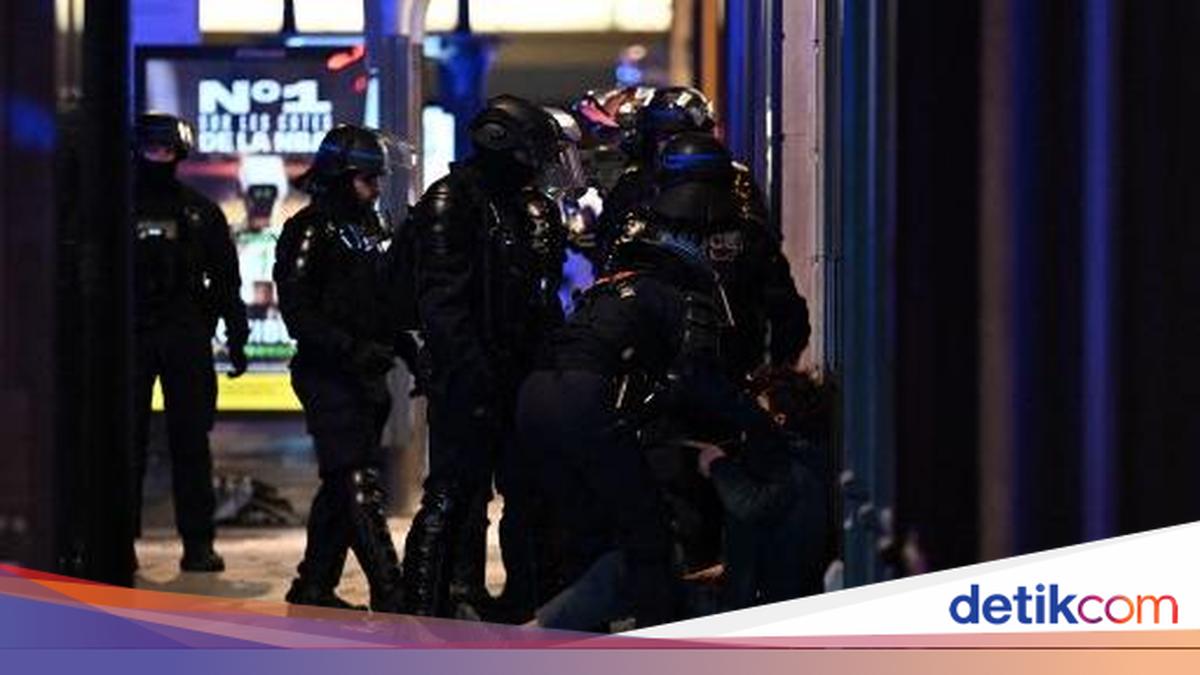
Thousands of people have been arrested following demonstrations that turned violent in Paris and several other French cities. Clashes between police and protesters, followed by looting and arson, left 150 officers injured.
French Prime Minister Sébastien Lecornu condemned the “extreme intensity” of the violence. A total of 1,200 people were arrested and 150 police officers injured in the incidents.
“It is a miracle that the number of casualties is not higher,” Lecornu said as he visited officers deployed in central Paris after the clashes and looting, AFP reported on Sunday, 18 October 2026.
By this morning, streets were left in ruins after clashes between police and protesters, mass looting and fires across France. Demonstrations over the rising cost of living escalated into extreme violence.
The unrest spread after weeks of student protests and comes just six months before elections to replace President Emmanuel Macron.
“All the streets in Paris have been devastated,” said Paris Deputy Mayor Emmanuel Grégoire.
Violence broke out during demonstrations over the cost of living in Paris and other French cities. The Interior Ministry said 550,000 people took part, while the CGT trade union, which joined the protests, put the figure at 800,000.
Police used tear gas and water cannon against demonstrators who threw objects and fired fireworks at officers.
A 17-year-old boy lost his right hand when a crowd-control grenade exploded in Saint-Étienne in southern France.
Looting
During the demonstrations, groups of young people roamed city streets, at times confronting police. They also set fires and attacked closed shops, breaking in and emptying them.
Dozens of shops were looted in Paris, Marseille, Nice, Nantes, Bordeaux, Limoges, Lille, Toulouse and Strasbourg. They included supermarkets, pharmacies, luxury boutiques, clothing shops, opticians, cosmetics outlets and electronics stores.
AFP reported that groups of around six young men carried out organised attacks on shops in Paris. Wearing masks and gloves, they first disabled security cameras before smashing windows to get inside.
The looting added to a wave of destruction and vandalism that day. Municipal government offices in several parts of France were also targeted.
A senior local official said the municipal offices in Limoges were damaged by a fire deliberately set by masked people who broke in. The building, which is more than 140 years old, reportedly suffered extensive damage.
In Marseille and Lille, other municipal offices were also broken into and damaged. A police complex in Bordeaux was vandalised, while in Lyon protesters set fire to a tourist information office.
The violence drew international attention. In the United States, Vice-President JD Vance blamed immigration for the unrest.
“Western liberals bring the Third World to France and other countries in the name of diversity and compassion. They ignore the fundamental questions of assimilation and compatibility,” he said on X.
President Macron, meanwhile, said that “those who commit acts of vandalism, attack administrative offices or businesses, or engage in looting, including at municipal offices, will be prosecuted and punished”.
Politicians competing to replace Macron in the presidential election in April and May sought to capitalise on the turmoil.
Right-wing candidate Marine Le Pen condemned “the rioters” and claimed that her left-wing rival Jean-Luc Mélenchon’s party had “legitimised this violence”. She pledged to protect the French people “from the violence of the extreme left”.
Mélenchon, who had previously voiced strong support for the demonstrations and the student protests that preceded them, urged protesters to avoid all forms of looting, calling it “contrary to our methods”.