
Paris Now Hotter Than Mecca: The Science Behind Europe's Extreme Heatwave
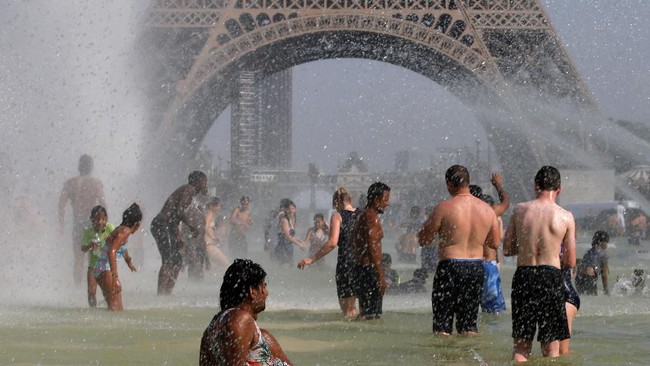
A severe heatwave has engulfed much of Europe, with temperatures in major cities now exceeding those in traditionally hot regions such as Mecca in Saudi Arabia. According to a temperature comparison by Al Jazeera on 24 June 2026, Paris recorded a high of 41 degrees Celsius, compared to 40 degrees Celsius in Mecca. Meanwhile, Madrid hit 39 degrees Celsius, hotter than Bandar Abbas, Iran, which recorded 38 degrees Celsius.
The scorching heat has prompted governments in several countries, including the UK, France, Spain, and Italy, to issue red alerts, the highest level of warning. Authorities have cautioned about increased risks of health problems, wildfires, and disruption to transport due to the extreme temperatures.
The primary cause of the heatwave is a phenomenon known as a ‘heat dome’. This is an area of high pressure that has stalled over Western Europe, trapping hot air and resulting in clear skies, weak winds, and prolonged exposure to intense sunshine. The situation has been worsened by a flow of hot air from North Africa moving northwards, further intensifying the extreme conditions across the continent.
Additionally, sea surface temperatures around the UK, Ireland, France, and the western Mediterranean are significantly warmer than usual. This has kept coastal areas hot, particularly at night, with Spanish port authorities reporting record-high coastal water temperatures. Data from Copernicus indicates that the most affected areas, including western France, England, and Wales, have experienced daily average temperature spikes of more than 12 degrees Celsius above the 1991-2020 average.
Scientists view this early-season heatwave as part of a broader global warming trend. Europe is the fastest-warming continent, with temperatures rising by approximately 0.56 degrees Celsius per decade since the mid-1990s, more than double the global average. Climate change is making heatwaves more frequent, more intense, and longer-lasting. The continent is particularly vulnerable to such extreme weather because most of its buildings and infrastructure were not designed to withstand prolonged high temperatures, and only about 20% of European homes are equipped with air conditioning.