
Pari Island Coast Faces Abrasion Threat, 1,000 Mangroves Planted
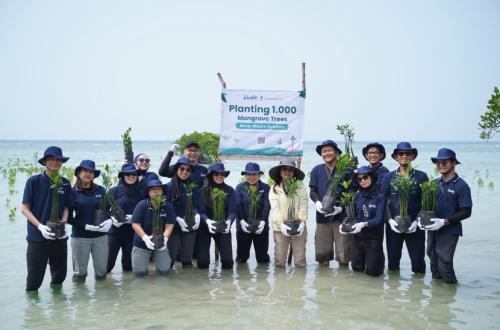
Abrasion and changing coastal ecosystem conditions have become significant challenges for residential areas and community life on Pari Island, Thousand Islands. Efforts to protect the coastal area were carried out through the planting of 1,000 Rhizophora mangrove seedlings on Pari Island on Saturday (12/9).
The planting was conducted by Bank Aladin Syariah alongside PT Lindungi Bumi Nusantara (LindungiHutan) and the local farmer group, Forum Peduli Pulau Pari. The mangroves were planted to help reduce the risk of abrasion, limit the intrusion of seawater into residential areas, and restore the biodiversity functions of the coastal region.
For areas such as Pari Island, the presence of mangroves serves as a natural protector of the coastline as well as a habitat for various coastal biota. Therefore, the sustainability of the programme depends not only on planting but also on maintenance and the involvement of the surrounding community.
Head of Corporate Secretary at Bank Aladin Syariah, Ratna Wahyuni, stated that environmental programmes are a form of the company’s contribution to society and coastal areas.
“The planting of 1,000 mangroves on Pari Island is not merely a handover of aid, but a real effort by us alongside the local community to fortify the coast against abrasion and support the reduction of national carbon emissions,” Ratna said in a press release on Sunday (20/9/2026).
The 1,000 Rhizophora trees planted are estimated to have a potential carbon absorption capacity of up to 118.44 kg CO2eq. The programme is also linked to contributions towards the Sustainable Development Goals (SDGs), specifically Goal 13 regarding climate action and Goal 14 regarding life below water.
Bank Aladin Syariah recorded a net profit of Rp38.3 billion up to the second quarter of 2026. During the same period, total assets reached Rp15.1 trillion with more than 3.9 million registered customers.
Ratna noted that the company views sustainability as an integral part of business development that must also consider social and environmental impacts.
“For us, sustainability means ensuring that the growth we build today can provide long-term benefits. Therefore, we want to continue developing various initiatives that connect business strength with the real needs of society and the environment,” Ratna continued.
Collaboration with local community groups is a key factor in the implementation of this programme. Community involvement is necessary to ensure that mangrove planting does not end as a ceremonial activity but continues through the maintenance of the coastal ecosystem.
The programme on Pari Island demonstrates that coastal restoration efforts require a combination of vegetation planting, area maintenance, and local community engagement. The sustainability of the impact will depend on the management of the area following the planting process.
Source: jawawa.id (https://jawawa.id/newsitem/pari-island-coast-faces-abrasion-threat-1-000-mangroves-planted-1789894397)
Originally published by Republika (https://esgnow.republika.co.id/berita/tlnacq416/pesisir-pulau-pari-hadapi-ancaman-abrasi-1000-mangrove-ditanam), translated from Indonesian