
Parents in Pontianak Request School Closures Amid Thick Haze from Forest and Land Fires
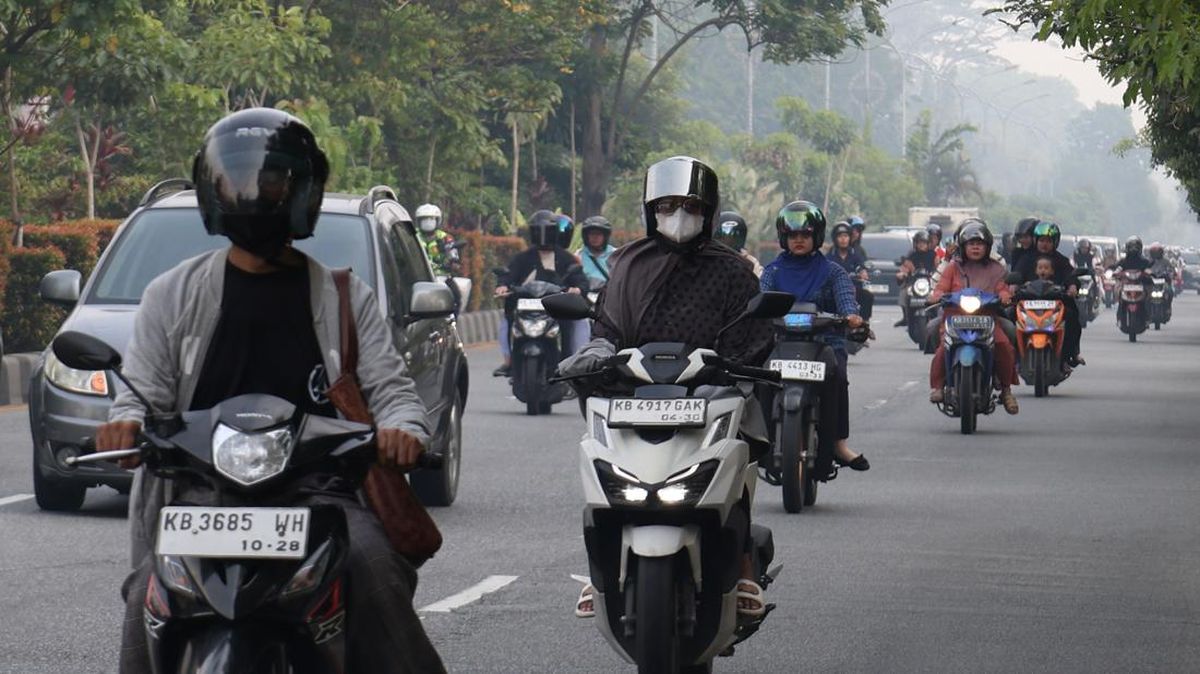
Parents of students in Pontianak, West Kalimantan, are hoping the local education authority will close schools or implement online learning as the haze in the city has thickened once again. Rahmawati, a parent of a second-grade pupil at MIN 4 Pontianak, said on Friday (21 August) that the haze has become dense over the past three days. She expressed hope that schools would be closed or that children could study from home online if conditions worsen again.
She said she is worried about her child’s health if they continue attending school amid the thick haze. She believes the poor air quality could put children at risk of acute respiratory infections and other illnesses. She noted that children at school are likely to play outside and may not fully understand the dangers of the haze, and therefore urged the Pontianak city government, through the relevant agencies, to issue a policy temporarily closing schools or shifting to online learning.
In August 2026, haze began affecting several areas in West Kalimantan, including Pontianak, as a result of land fires in various regions. A total of 3,759 hotspots were detected across West Kalimantan based on monitoring on 20 August 2026 from 00.00 to 23.00 WIB. The data came from the West Kalimantan Regional Disaster Management Agency (BPBD) based on monitoring by the Meteorology, Climatology and Geophysics Agency (BMKG).
The same data source showed that of the total hotspots detected, 224 had a high confidence level, 3,389 had medium confidence, and 146 had low confidence. Ketapang Regency recorded the highest number of hotspots with 1,795, followed by Sanggau with 466, Landak with 268, Kubu Raya with 254, North Kayong with 200, and Melawi with 190. Sekadau recorded 150 hotspots, Kapuas Hulu 126, Sintang 111, Bengkayang 95, Sambas 59, Mempawah 44, and Singkawang one. Pontianak city itself did not record any hotspots during the monitoring period.
Hotspot detection was carried out using VIIRS and MODIS sensors installed on several satellites, namely NOAA-20, S-NPP, Terra, and Aqua. These satellites detect temperature anomalies compared with surrounding conditions. Meanwhile, air quality in Pontianak was monitored at a very poor level. Based on IQAir data, the air quality index (AQI US) in Pontianak reached 491 at 09.00 WIB on Thursday, 21 August 2026. This figure falls into the hazardous category, meaning air quality is not only a concern for vulnerable groups but also has the potential to affect the health of the general public.
According to the IQAir data, PM2.5 was the main pollutant, with concentrations reaching 321 micrograms per cubic metre. PM2.5 consists of very small pollution particles that can be inhaled deep into the respiratory tract. Exposure to high levels of fine particles can increase the risk of respiratory problems and affect heart health. The public is advised to pay closer attention to air quality before undertaking outdoor activities. Reducing strenuous outdoor physical activity, especially when air quality is very poor, can help reduce exposure to pollution.
Source: jawawa.id (https://jawawa.id/newsitem/parents-in-pontianak-request-school-closures-amid-thick-haze-from-forest-and-land-fires-1787298837)
Originally published by CNN Indonesia (https://www.cnnindonesia.com/nasional/20260821134421-12-1394882/orang-tua-di-pontianak-minta-sekolah-libur-imbas-asap-pekat-karhutla), translated from Indonesian