
Parasite Threat to Komodo Dragons: UGM Researchers Discover Endemic Tapeworm
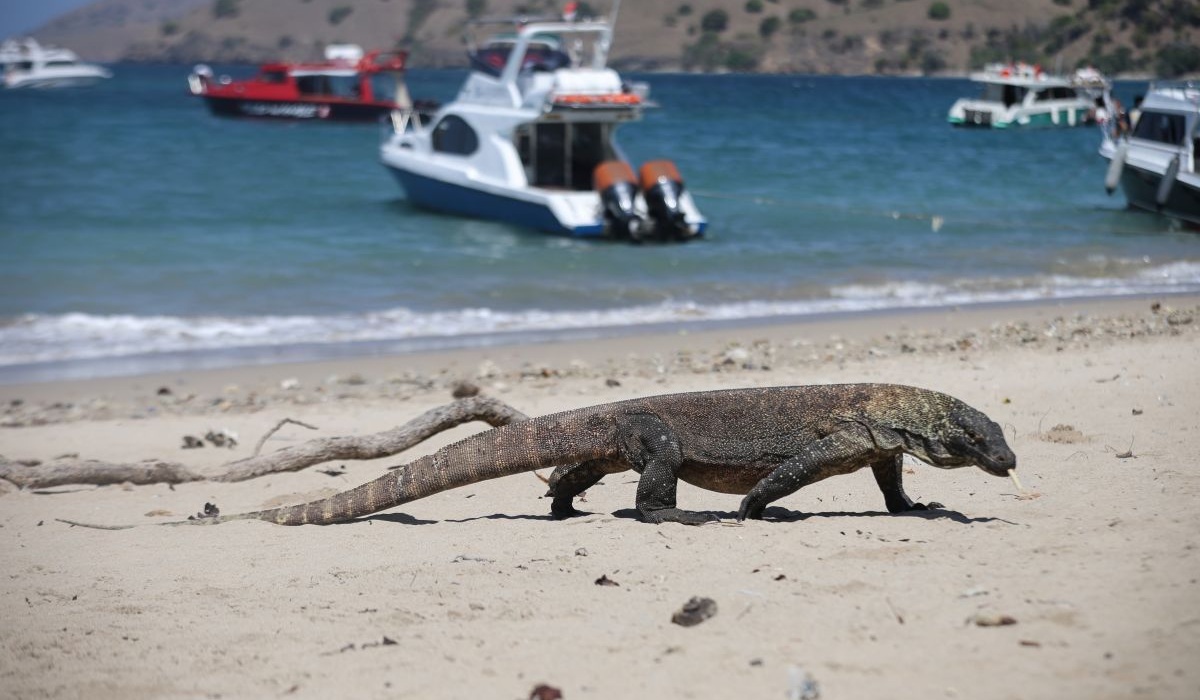
KOMODO (Varanus komodoensis), the world’s largest lizard inhabiting East Nusa Tenggara, is facing new challenges in its conservation efforts. Until now, the protection of this vulnerable endemic species has focused primarily on population dynamics and habitat ecology. However, recent research highlights a previously understudied health aspect: the threat of parasitic diseases in their natural habitat.
A research team from the Faculty of Veterinary Medicine (FKH) at Universitas Gadjah Mada (UGM) has successfully identified the presence of an endemic tapeworm, Kapsulotaeyenia sandgroundi, with a prevalence reaching 6.67 per cent in wild Komodo dragon populations. This parasite possesses a unique feature: a double protective capsule on its eggs, an evolutionary adaptation that allows it to survive in extreme semi-arid savannah environments.
Professor Wisnu Nurcahyo, a Professor of Parasitology at FKH UGM, emphasised that this finding is a significant milestone for wildlife veterinary medicine. According to him, parasites should not merely be viewed as causes of disease, but also as indicators of ecological integrity.
“Parasites are not just pathogens, but indicators of ecological integrity. The explosion of ectoparasite populations and their interactions with the environment and humans necessitates more strategic biosecurity management,” stated Prof. Wisnu in a press release on Thursday.
This research is part of the doctoral dissertation of Dr Aji Winarso, M.Sc., a PhD student at FKH UGM, under the supervision of Prof. Wisnu Nurcahyo, Dr Dwi Priyowidodo, M.P., and Assoc. Prof. MVDr. Ivona Foitová, Ph.D., from Masaryk University, Czech Republic. The study integrates classical parasitology, molecular taxonomy, and landscape ecology within the ‘One Health’ framework.
Aji Winarso explained that the primary objective of this research is to establish baseline pathogen data to detect disease threats early. This is crucial given the increasing interaction between Komodo dragons and humans due to tourism activities within the Komodo National Park (TNK) area.
The research process was conducted under strict legal procedures, ranging from ethical clearance to permits for accessing genetic resources from the Ministry of Forestry. The team collaborated with the Komodo National Park Authority to collect biological samples, including faeces, blood, and ectoparasites from wild Komodo dragons, which were then identified morphologically and molecularly for high accuracy.
While the presence of intestinal worms and ticks on the skin is a common condition in the wild, Aji warned that an increased parasite load due to environmental stress or habitat changes could threaten the survival of the Komodo dragons. One of the most concerning findings was the discovery of Komodo ticks biting humans on Rinca Island.
These ticks have the potential to act as vectors for various pathogenic microorganisms. Aji emphasised that there is a real risk of ‘spillover’ or disease transmission if interactions between Komodo dragons, prey animals (such as deer and pigs), and humans in tourist zones are not strictly controlled.
With appropriate mitigation measures, it is hoped that the survival of these ancient dragons in their natural habitat can be protected from these invisible disease threats.
Source: jawawa.id (https://jawawa.id/newsitem/parasite-threat-to-komodo-dragons-ugm-researchers-discover-endemic-tapeworm-1782985853)
Originally published by Media Indonesia (https://mediaindonesia.com/nusantara/906699/ancaman-parasit-pada-komodo-peneliti-ugm-temukan-cacing-pita-endemik), translated from Indonesian