
Papuan USD Students Teach Primary School Children to Use Gadgets Wisely Through Puppet Fairytales
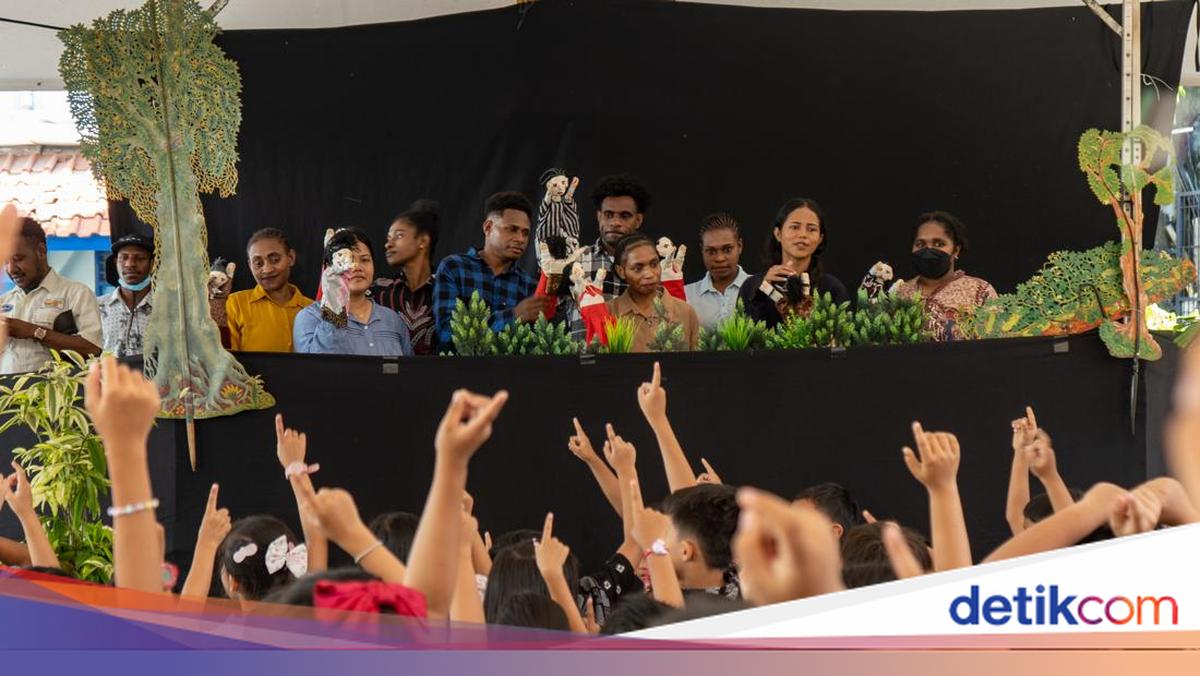
Hundreds of students at Kanisius Sengkan Primary School in Sleman enthusiastically followed a puppet fairytale performance presented by students from the Primary School Teacher Education study programme at Sanata Dharma University originating from Papua. Through a story titled ‘Adi dan Gadgetnya’, these prospective teachers encouraged children to understand the importance of using devices wisely. The performance was held on Tuesday (9/6/2026) as part of a learning project for the Edupreneurship course taught by FX Murti Hadi Wijayanto, familiarly known as Romo Murti. In the activity, the students not only acted as storytellers. They also wrote the story, designed characters, made hand puppets, prepared stage properties, and performed live in front of the pupils. A simple stage decorated with a backdrop of a house, trees, and various puppet characters successfully brought the atmosphere to life. The children were seen laughing, answering the storytellers’ questions, and actively engaging in the story’s progression. The fairytale told of a child named Adi who was addicted to gadgets. The habit of playing with devices late into the night caused Adi difficulty waking up, frequent lateness to school, a lack of focus in studying, and declining grades. Seeing this condition, a guidance and counselling teacher called both of Adi’s parents. After discussion, Adi’s family agreed to implement a ‘Gadget Fast’ every day from 6:00 PM until 9:00 PM Western Indonesian Time. Notably, the rule applied not only to Adi but also to all family members. The time usually spent playing with gadgets was replaced by studying together, reading books, and chatting with the family. Through this story, the Sanata Dharma University student teachers aimed to invite children to understand the importance of managing technology use time while demonstrating the family’s role in supporting the learning process. Romo Murti stated that the activity is part of efforts to shape prospective teachers capable of delivering creative learning that is close to children’s worlds. ‘Teachers not only teach knowledge but also cultivate humanity. Children need space to imagine, express themselves, and learn through experiences close to their lives,’ said Romo Murti in a written statement. According to him, education does not always have to be delivered through conventional classroom methods. Stories, art, games, and enjoyable experiences can also be effective means to instil character values in children. This puppet fairytale project simultaneously provides a foundation for the student teachers from Papua who will later teach in various regions. They are trained to create creative, contextual learning methods capable of attracting student interest. ‘Through stories and puppets, children not only learn to understand moral messages but also learn to imagine, empathise, and see the world in a more humane way,’ he concluded.