
Papuan Students in Bali Demand 'Bloody Kembru' Case Be Classified as Gross Human Rights Violation
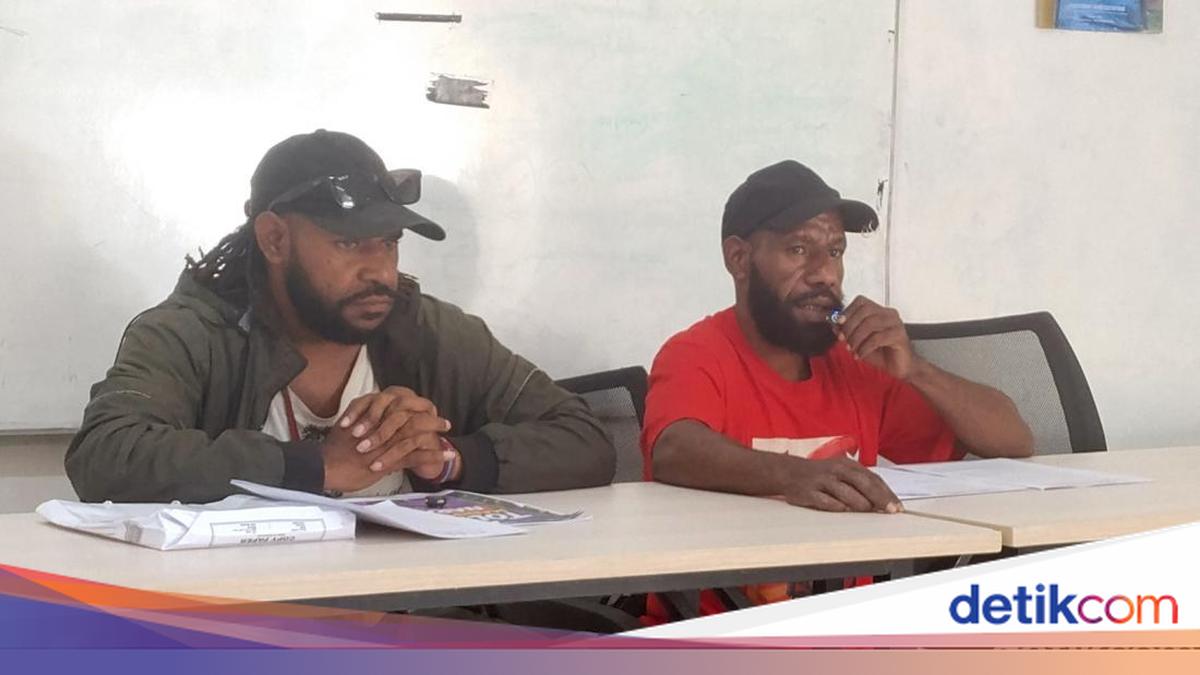
Students and activists from the Human Rights Investigation Team, the All-Indonesia Puncak Students, and the Bali Anti-Investment and Militarism Front have urged the National Commission on Human Rights (Komnas HAM) to classify the incident they term ‘Bloody Kembru’ in Kembru District, Puncak Regency, Central Papua, as a gross human rights violation. They also reject Komnas HAM’s recommendation to refer the case to the Indonesian National Police and the Witness and Victim Protection Agency (LPSK) without establishing its status as a gross violation.
The demand was made during a press conference in Denpasar, Bali, on Tuesday (23/6/2026). They argue that Komnas HAM’s Recommendation Letter Number 513/PM.00/R/VI/2026, dated 17 June 2026, fails to accommodate several findings gathered by the investigation team in the field. ‘This recommendation does not reflect the field facts we have collected. Many important findings were not included in the consideration,’ said Abis Murib, the Bali regional coordinator for the Human Rights Investigation Team. Abis stressed that the case cannot be treated merely as an ordinary criminal act. ‘We believe there are strong indications of gross human rights violations as stipulated in Law Number 26 of 2000 concerning the Human Rights Court. If this status is not established from the outset, the direction of the handling will be misguided,’ he added.
The Human Rights Investigation Team presented a chronology of events they claim forms the basis for demanding the gross human rights violation designation. The incident reportedly began on Monday night, 13 April 2026, with the mobilisation of security forces from Magebume District to Kembru District via land and air routes. ‘Residents only became aware of the operation in the morning, when they discovered traces of military activity around the village,’ said one team representative. According to the team, the operation took place on Tuesday, 14 April 2026, at around 05:00 WIT in an area previously used as a refuge for residents from Pogoma District. ‘The events on the ground indicate the use of armed force that directly impacted civilians,’ another representative stated.
The team recorded nine civilian fatalities in the incident: Wundilina Kogoya (36), Kikunge Walia (55), Pelen Kogoya (65), Tigiagen Walia (76), Ekimira Kogoya (47), Daremet Telenggen (55), Inikiwewo Walia (52), Amer Walia (77), and a five-year-old child named Para Walia, who died after receiving treatment for a gunshot wound. In addition to the loss of life, several houses and livestock were reportedly affected. The incident also triggered the displacement of residents to Magebume, Sinak, Mulia, and Bina. ‘This is not just an ordinary impact, but a serious humanitarian situation,’ said Abis Murib. The team claims the number of displaced persons reached 12,620 based on data from the Central Statistics Agency (BPS) and the Population and Civil Registration Office (Dukcapil) of Puncak Regency. This figure differs from Komnas HAM’s data, which recorded 1,546 displaced persons.
Beyond questioning the legal status of the case, the investigation team also highlighted several findings they believe have not been accommodated in Komnas HAM’s recommendation. ‘What we question is why the status of this incident was not elevated to a gross human rights violation, when in our view the systematic and widespread elements are met,’ said Abis Murib. They also highlighted the omission of the name Mondokmbri Walia (48), a woman reported missing since the operation began. ‘This missing victim is not listed in the official document, even though the family is still searching,’ said a team representative. The discrepancy in displacement data is also considered to have a direct impact on humanitarian handling in the field. ‘This data gap is very large and has direct implications for aid to victims,’ said one team member. The team also questioned narratives linking the incident to a firefight. ‘On the ground, we did not find a picture of events resembling a firefight as mentioned in some reports,’ they asserted.
During the press conference, the team presented six main demands: rejecting Komnas HAM’s Recommendation Letter Number 513/PM.00/R/VI/2026; urging a comprehensive revision of victim and displaced person data; demanding the establishment of gross human rights violation status in accordance with Law Number 26 of 2000; urging the withdrawal of the Habema Task Force from Puncak Regency; demanding transparency and accountability from the Regional Military Commander and the Indonesian National Armed Forces (TNI) ranks regarding the incident; and encouraging continuous oversight by civil society and international institutions.