
Papua Waters Filled with Pumice from Underwater Volcano, Says BMKG
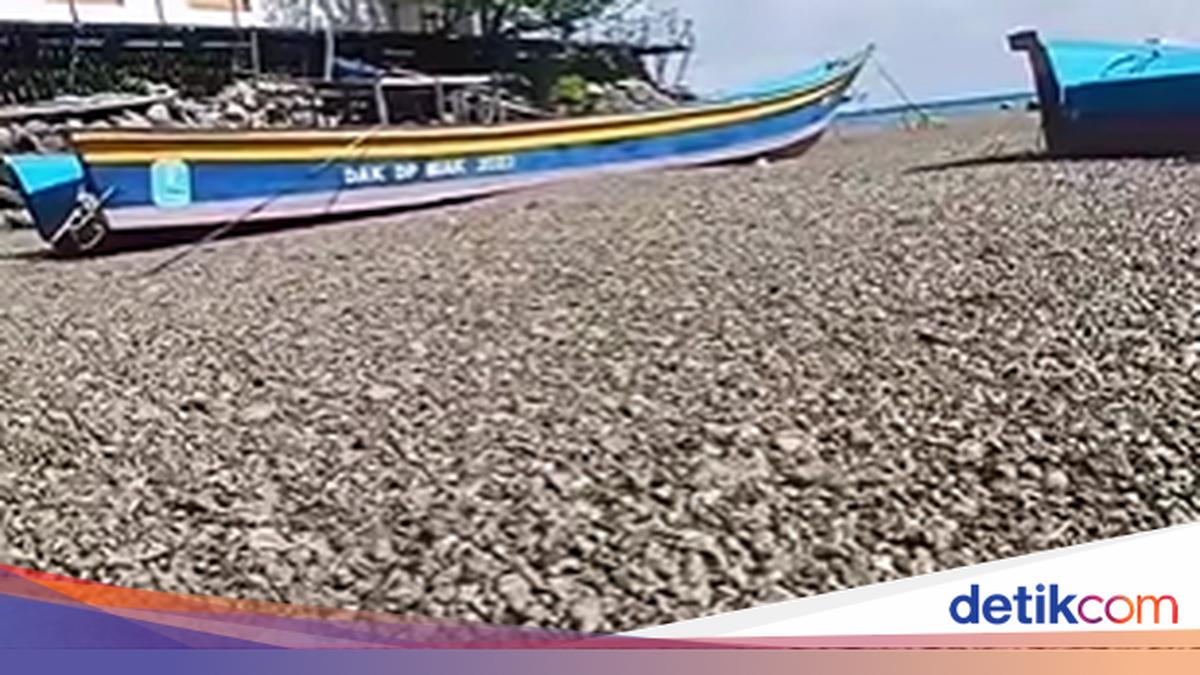
The Meteorology, Climatology, and Geophysics Agency (BMKG) has explained the origin of the pumice stones that have filled the waters of Sarmi and Biak in Papua, a phenomenon that went viral on social media. Video footage showed one shoreline completely covered in pumice, with the stones washing up onto the land.
Head of BMKG Jayapura, Heri Purnomo, stated that the pumice originated from an underwater volcanic eruption. “Based on our investigation, there was an underwater volcanic eruption in the Bismarck Sea north of PNG (Papua New Guinea), where the accumulation of lava produced a mass of pumice that floated to the surface around 8 June 2026 in the vicinity of the Loniu Strait,” Heri told reporters on Wednesday (8/7/2026).
After surfacing, the pumice was carried by ocean currents moving towards the western waters of Papua, causing it to be stranded along the coastal areas of Sarmi and Biak. “Based on the movement of sea surface currents, the conditions are moving westward, hence the pumice is visible in the Swanggara Strait. Further research is needed regarding volcanoes in the Papua region,” he said.
BMKG noted that, as far as is currently known, there are no active underwater volcanoes in the Papua region. However, the agency stressed that due to the underwater eruption, volcanic material followed the movement of currents in the northern waters of Papua. “But regarding whether there is an active underwater volcano around Papua, perhaps the Geological and Volcanology Agency knows,” Heri clarified.
According to BMKG, deeper investigation is required to understand the impact of the pumice on the community and the coastal ecosystem of Papua. However, the agency has received information that the material has created new landforms in the vicinity. “Whether it is significantly dangerous requires further research, but the material certainly causes shallowing along the coast due to sediment accumulation,” Heri stated.
BMKG explained that the pumice will naturally continue to move with the ocean currents, although some will settle along the coast. If there is any impact on shipping, the agency believes the relevant authorities have already addressed it. “If it endangers shipping lanes, it will certainly be cleared. The shipping authorities must have anticipated it,” he added.