
Papua Prepares Sustainable Forestry Roadmap for Sector Transformation
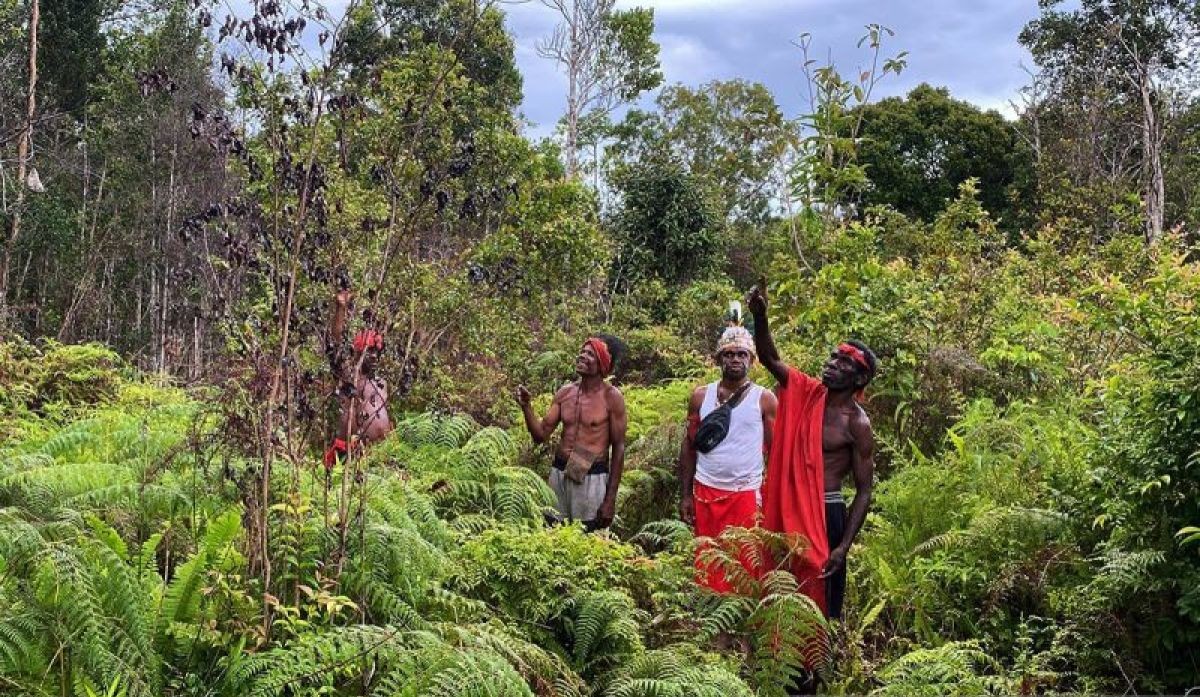
The Papua Provincial Government has expressed its commitment to accelerating the development of the forestry sector through the preparation of a sustainable forestry development roadmap. This document is expected to serve as a guideline for increasing the forestry sector’s contribution to the regional economy, while simultaneously maintaining forest conservation and improving the welfare of indigenous communities. This commitment was conveyed by the Governor of Papua, Mathius D. Fakhiri, when receiving a visit from the Board of Directors of the Indonesian Forest Entrepreneurs Association (APHI) at the Jayapura State Building on Wednesday.
Mathius emphasised that the Papua Provincial Government is open to various initiatives capable of strengthening sustainable forest management and providing greater economic benefits to the community. “We welcome various programmes that can increase the contribution of business actors to regional revenue while improving the welfare of the Papuan people through sustainable forest management that does not damage the environment. Papua wants to run, not just walk, in utilising all its potential through collaboration with all parties and coordination with relevant ministries and agencies,” he stated.
He explained that the local government is also continuously strengthening supporting infrastructure to sustain the development of the forestry industry. This includes increasing the capacity of Jayapura Port and constructing a port in Sarmi Regency to support the distribution and export of forest products from Papua.
According to Mathumn, various policy proposals, including opening direct export access for sawn timber from Papua and refining policies regarding processed timber sections, must be based on comprehensive scientific studies. Therefore, the preparation of a forestry roadmap is considered essential as a basis for aligning policies between the local and central governments.
Meanwhile, the General Chairman of APHI, Soewarso, stated that Papua possesses great potential to develop the forestry sector through a Multi-use Forestry (MUK) approach. This scheme does not only optimise the utilisation of timber forest products but also non-timber forest products and environmental services.
“Papua has immense potential to develop forestry business transformation through the Multi-use Forestry approach, which optimises not only timber products but also non-timber products and environmental services,” he said.
According to Soewarso, the preparation of a medium-to-long-term forestry development roadmap is necessary to provide direction for the sector’s transformation to become more competitive, sustainable, and capable of reviving the forestry industry from upstream to downstream. The roadmap is also expected to serve as a foundation for developing a forest product processing industry closer to raw material sources, increasing the use of environmental carbon services, and refining various policies to enhance the competitiveness of Papua’s forestry products.
During the meeting, APHI also proposed several strategic policies, including opening direct export access for sawn timber from Papua, refining policies for processed timber sections so that timber utilisation does not rely solely on Merbau, and harmonising regulations between the central and regional governments to accelerate the implementation of Multi-use Forestry.
In addition to meeting the Papua Provincial Government, the APHI Board of Directors also held discussions with the Faculty of Agriculture, Forestry, and Marine Sciences at Ottow Geissler University, Papua. Both parties agreed to follow up on the cooperation through the signing of a memorandum of understanding covering the implementation of the ‘Tri Dharma Perguruan Tinggi’ (the three pillars of higher education), the organisation of public and guest lectures, and internship programmes for forestry students within APHI member companies.
Discussions also covered opportunities to strengthen forestry education financing through the optimisation of customary rights compensation funds as part of efforts to improve the quality of human resources in the forestry sector. The series of activities concluded with technical discussions with the Papua Provincial Forestry and Environmental Office regarding the preparation of a forest management roadmap for the next five to ten years.
Through this roadmap, the government and stakeholders hope that forest management in Papua can become increasingly productive, competitive, and sustainable. In addition to encouraging the growth of the forest product processing industry within the region, this roadmap is also expected to strengthen the use of environmental carbon services, increase economic benefits for indigenous communities and the regional government, and support the resolution of social and tenure conflicts as a foundation for sustainable forestry development in Papua.