
Papua Barat Governor: Agrarian Reform Must Respect Customary Land Rights
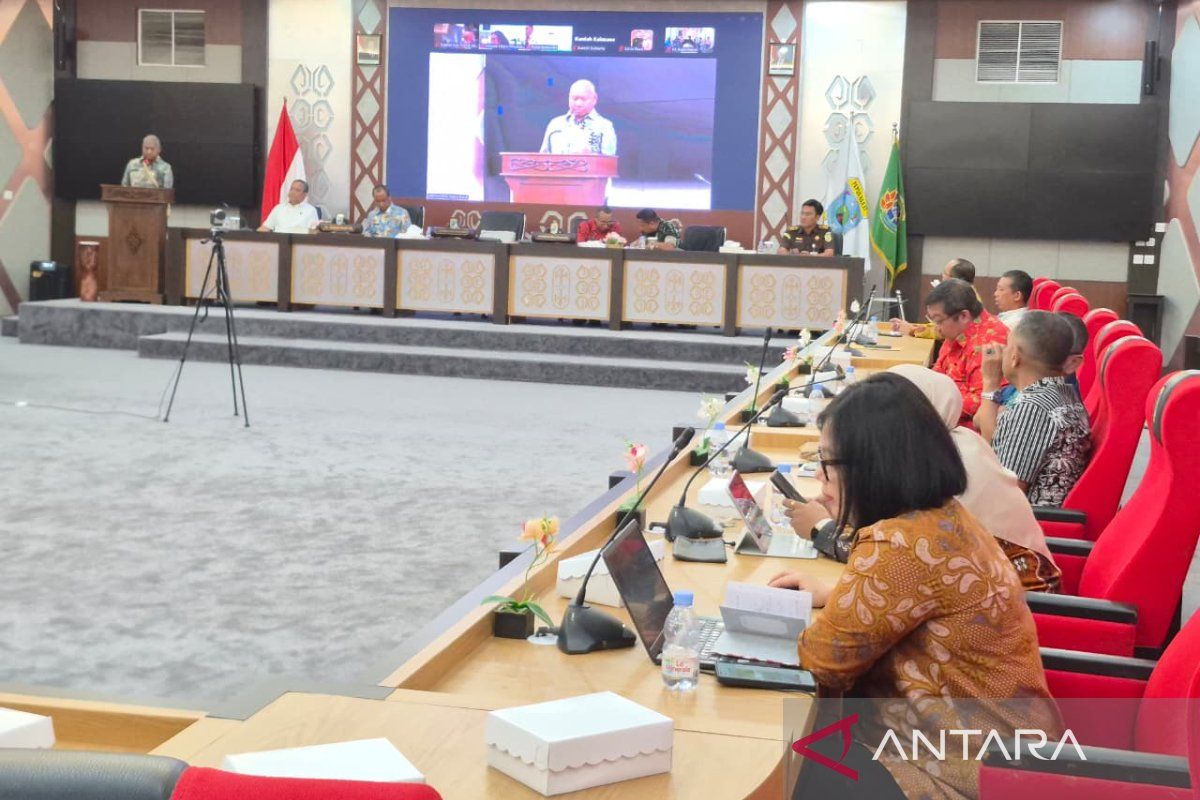
Manokwari (ANTARA) - West Papua Governor Dominggus Mandacan has affirmed that the implementation of agrarian reform must respect the rights of customary law communities whilst providing legal certainty in order to prevent land disputes that frequently hinder development programmes.
“The implementation of agrarian reform requires a special approach that respects customary land rights without disregarding national legal provisions,” said Dominggus at the opening of the inaugural coordination meeting of the West Papua Agrarian Reform Task Force in Manokwari on Thursday.
According to him, agrarian reform requires a special approach because indigenous Papuans view land not merely as an economic asset but as identity, a source of livelihood, and ancestral heritage that must be cared for across generations.
The provisions of agrarian reform are set out in Presidential Regulation No. 62 of 2023, which focuses on asset arrangement through the issuance of certificates and access arrangement in the form of infrastructure support, capital, technology, markets, and community assistance.
“We have formed the Agrarian Reform Task Force through West Papua Governor Decree No. 77 of 2026 as a coordination platform across regional agencies,” he said.
The Governor then highlighted the many land problems that persist in West Papua, particularly in Manokwari, triggered by new claims over land previously released by customary rights holders to the government or other parties.
Customary leaders of the past had handed over land for the development of government facilities through mutually recognised customary mechanisms. However, once construction was underway and certificates issued, other parties emerged to file claims.
“Payment has been made, yet new groups appear claiming to be the owners. As a result, the government has to pay repeatedly. This situation must not continue,” said Dominggus.
He expressed hope that the task force’s inaugural coordination meeting would serve as a forum to identify land problems and formulate measurable solutions, so that agrarian reform can support accelerated development in West Papua.
The task force may also form a special team to trace customary land release documents so that every certified parcel has clear evidence, allowing recognition of customary law to proceed hand in hand with state recognition of land ownership.
“The implementation of agrarian reform must also boost economic growth and realise a West Papua that is safe, advanced, independent, and prosperous,” said Dominggus.
The Governor urged all parties in West Papua to support land acquisition for government facility development programmes and other public interests, while prioritising deliberation with customary rights holders.
“Our elders once accepted development. They gave up their land for government facilities and other public interests because they wanted this region to progress,” said Dominggus.
Head of the West Papua Regional Office of the National Land Agency (BPN), Keliopas Fenitiruma, explained that the task force’s inaugural coordination meeting was intended to integrate data with regional agencies and other related institutions.
Agrarian reform activities are not merely about legalising or certifying land rights, but also about facilitating expanded access to capital through economic institutions so that land use has an impact on community welfare.
“That is the true essence of agrarian reform implementation,” said Keliopas.
He noted a number of crucial issues that must be discussed and examined together at the inaugural coordination meeting, including settlements located within forest areas and the completion of asset arrangement for the South Manokwari Regency Government.
The regional government, through the task force, must pay attention to three important indicators in implementing agrarian reform activities, namely the one map policy, the one planning policy, and the one regulation policy.