
Paper-Based Packaging Becomes Increasingly Relevant for F&B Industry
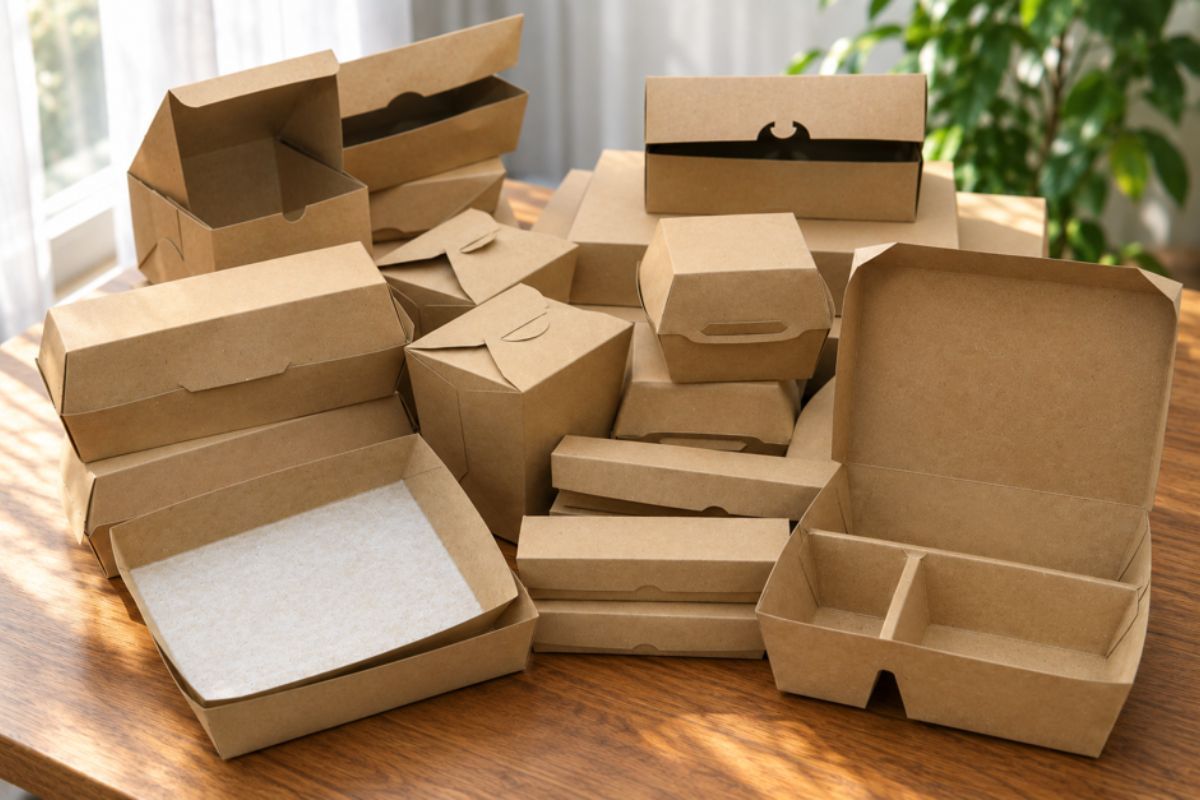
Jakarta (ANTARA) — Paper-based and paperboard packaging is increasingly seen as relevant to support the needs of the food and beverage (F&B) industry amidst the growth of ready-to-eat, takeaway, and delivery services.
The Ministry of Industry is encouraging an increase in the use of non-plastic packaging within the food and beverage industry, including paper and paperboard-based options.
The Ministry of Industry notes that paper and paperboard packaging accounts for approximately 28 per cent of the total packaging used in the national food and beverage industry.
This development opens up opportunities for the paper-based packaging industry. However, the choice of food packaging is not solely determined by the type of material, but also requires consideration of the product’s characteristics and usage requirements.
Founder of Ecopaq Indonesia, Anthony Hartono, stated that every food product has different packaging needs, particularly based on oil or liquid content, food temperature, storage duration, and the distribution process.
“Not all foods have the same packaging requirements. Dry foods differ from oily or liquid-based foods. Products intended for immediate consumption may also have different needs compared to foods that must undergo a delivery journey,” said Anthony.
According to him, the use of paper as a packaging material should be viewed as part of a packaging system that includes material type, thickness, construction, and protective coatings.
In paper-based food packaging, specific barriers or coatings can be used to increase resistance to oil or liquids. These specifications must be adjusted to the characteristics of the food and its method of use.
“Therefore, it is not enough to simply ask whether a package is made of paper or not. What is more important is whether the construction and specifications are suitable for the required function,” he said.
Anthony noted that these needs are evident across various F&B business segments, ranging from micro, small, and medium enterprises (MSMEs), restaurants, catering, bakeries, and hotels to large corporations.
In addition to serving as a container, packaging is also required to have strong construction, be able to reduce the risk of leakage, and maintain an appearance appropriate for the product’s needs.
In takeaway and delivery services, for example, packaging must be able to maintain its function throughout the distribution process. Meanwhile, foods with oil or liquid content require different barrier specifications compared to dry products.
On the other hand, the increasing push for non-plastic packaging provides space for the utilisation of paper and paperboard in the F&B industry. However, its implementation must still consider product characteristics, material composition, the need for protection against oil or liquids, and the management of packaging after use.
Anthony believes that a function-based approach is necessary so that the selection of packaging materials does not merely follow trends, but is tailored to the needs of the product and its usage process.
“Material is just one part of the packaging. But the ultimate function must remain the primary consideration. Good packaging is packaging whose specifications match the product, presentation method, and distribution process,” he said.
As consumption patterns change and delivery services expand, the packaging industry is also required to develop products that can combine aspects of function, production efficiency, and business needs.
Anthony stated that the development of paper-based packaging still offers room for innovation, both in terms of material, construction, and production processes.
“The F&B industry continues to evolve, and the needs of every business change accordingly. For the packaging industry, the challenge is to understand those needs and produce appropriate-use packaging, rather than simply offering more choices,” he concluded.