
PANRB Ministry Unveils 2026 Performance and 2027 Budget Plan
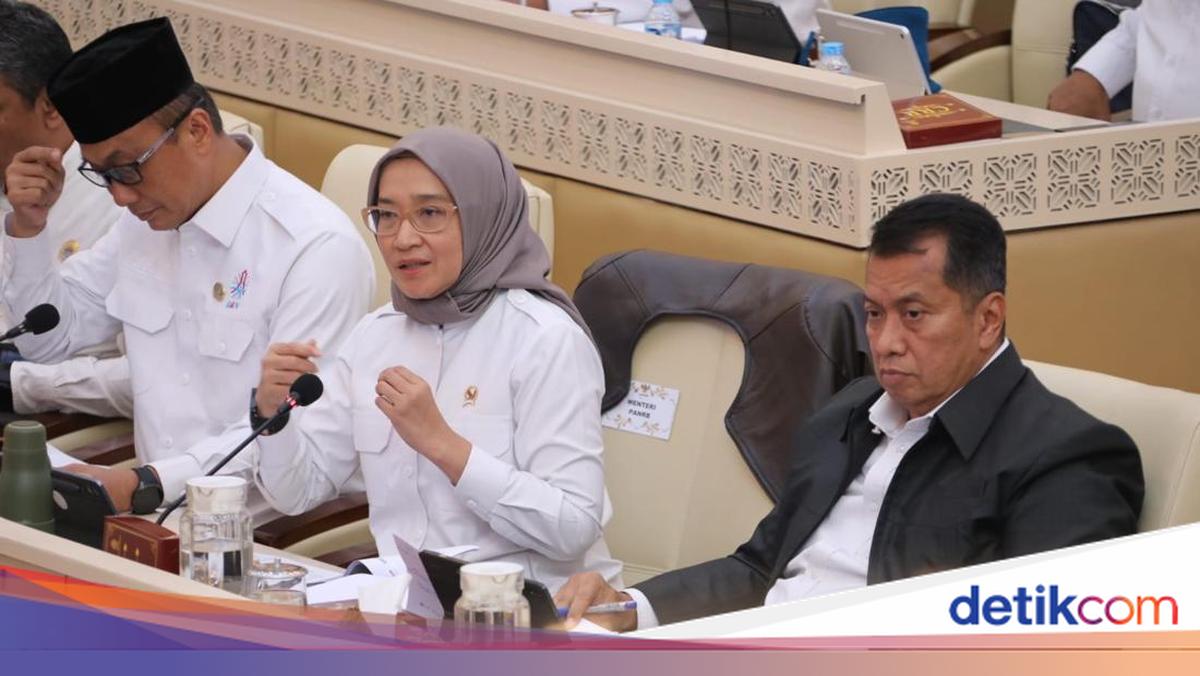
The Ministry of State Apparatus Empowerment and Bureaucratic Reform (PANRB) has recorded a number of advances throughout 2026 as part of efforts to realise bureaucratic transformation. This progress includes strengthening bureaucratic reform and performance accountability, agile institutional structuring, civil servant management transformation, and integrated public service transformation. Before House of Representatives Commission II, PANRB Minister Rini Widyantini stated that the ministry’s measures aim for impacts that can be felt by the public. “All performance by the PANRB Ministry is directed at delivering an increasingly effective, adaptive, integrated, and tangible bureaucracy, as well as efforts to achieve national development priorities,” Rini said in a written statement on Thursday (11/6/2026). She made these remarks during a Working Meeting and Hearing with House Commission II in Jakarta on Wednesday (10/6). Rini continued that the PANRB Ministry continues to strengthen digital governance and plays a supporting role in fulfilling the president’s priority programmes. The ministry also plays an important role in Indonesia’s accession as a member country of the Organisation for Economic Co-operation and Development (OECD). Through its bureaucratic reform programme, specifically in the focus of poverty alleviation, the PANRB Ministry has shown results. For regions implementing bureaucratic reform with this focus, the poverty rate was recorded at 6 per cent, lower than the national average of 8.25 per cent. This demonstrates that bureaucratic reform oriented towards solving development problems can have a real impact on public welfare. “In fulfilling the President’s priority programmes, the PANRB Ministry is assigned as Chair of the Implementing Team for the National Selection Committee for Human Resources Procurement. Currently, the process of filling human resources to accelerate national priority programmes within the Best Rapid Results Programme is underway,” she explained. To support public service transformation, up to June 2026, 305 Public Service Malls had been established across Indonesia. During the Red and White Cabinet period, 75 regions have inaugurated MPPs in their respective areas. “The PANRB Ministry continues to accelerate the establishment of MPPs in the regions, encouraging Omnichannel Public Services, and enhancing digital services to ensure equitable access to public services and ease of access for the community,” Rini stated. As of mid-2026, the PANRB Ministry’s budget realisation still needs to be boosted. Rini explained that the ministry has a work programme plan that will only be executed in the third quarter, targeting 75 to 80 per cent realisation. “The PANRB Ministry’s budget realisation is focused on the third quarter of 2026 because several work programmes are targeted for implementation in 2026. Budget optimisation is also carried out so that the ministry’s programmes can have a broad impact,” she explained. For the 2027 work plan, Rini continued that the PANRB Ministry focuses on accelerating bureaucratic transformation to support the national development agenda and the President’s priority programmes. In line with the 2027 Government Work Plan themed ‘Accelerating Growth through Productivity, Investment, and Industry’, the PANRB Ministry acts as an enabler in bureaucratic reform and governance. This role is translated into the ministry’s work programme across five main agendas: strengthening impactful, accountable, and integrity-based bureaucracy; agile and collaborative institutions; merit-based professional civil servants and talent; integrated and efficient digital government; and easy, fast, and community-centred public services. All these agendas will also continue to strengthen support for the implementation of the President’s priority programmes. Regarding the 2027 budget, the PANRB Ministry received an indicative ceiling of Rp 348.59 billion. Minister Rini conveyed that this budget still needs to be strengthened so the ministry can optimally carry out the priority agenda of bureaucratic transformation and support for national priority programmes. This budget is also focused on the ministry’s programmes, Indonesia’s OECD accession in the fields of Public Governance and Public Services, and the acceleration of post-disaster rehabilitation and reconstruction for Sumatra. “Hopefully this momentum becomes our collective endeavour to ensure that bureaucratic reform steps bring the greatest possible benefit to public welfare,” Rini concluded.