
PANRB Ministry and Estonia Explore Cooperation on Digital Government
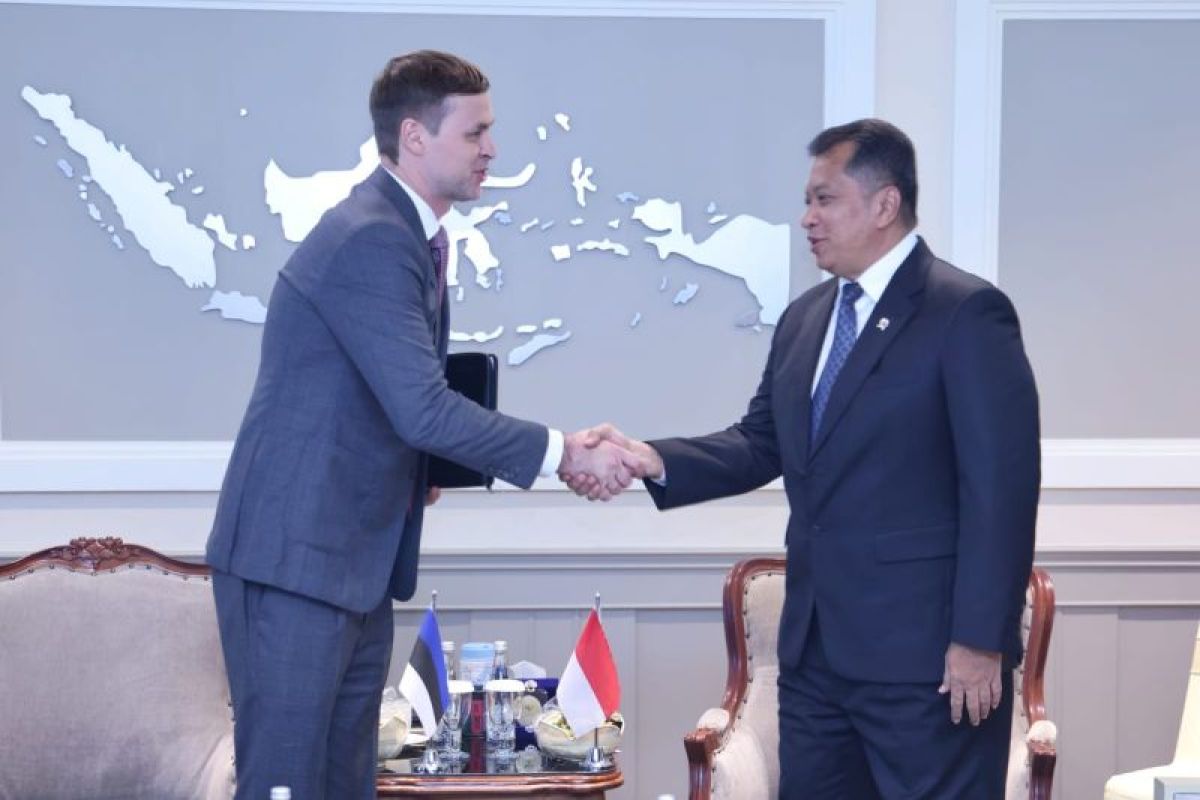
The Ministry of Administrative and Bureaucratic Reform (PANRB) is exploring potential cooperation with Estonia in the fields of digital government and governance reform in Indonesia. Deputy Minister PANRB Purwadi Arianto stated that Estonia is globally acknowledged as a pioneer and leader in digital government, with integrated public services and experience in adopting cutting-edge technology. “In this regard, Estonia’s experience is very relevant, because its digital success was built upon institutional reform, interoperability, and citizen-centric service design,” Purwadi said in a statement in Jakarta on Thursday. This was conveyed by Purwadi during a meeting with the Estonian Ambassador to Indonesia, Singapore, and ASEAN, Veikko Kala, at the PANRB Ministry office. Purwadi said that Indonesia views digital transformation not as a standalone technology agenda, but as an integral part of bureaucratic reform. Like Estonia, Indonesia views Digital Public Infrastructure as the foundation for integrated, citizen-centric public services. Indonesia’s focus on digital identity, data exchange platforms, and digital payments reflects an understanding that successful digital government is ultimately a governance reform agenda enabled by technology. He continued that Indonesia is transitioning from institution-centric to citizen-centric public services. The goal is to manage government services based on key life events and the citizen’s life journey, such as birth, education, employment, health, marriage, entrepreneurship, and retirement, rather than based on individual government institutions. Purwadi revealed that Indonesia faces unique challenges in terms of geographical size, population, digital literacy, infrastructure readiness, and institutional capacity. Equally important, Indonesia also faces the complex task of managing organisational change, namely breaking down long-standing bureaucratic silos to enable data interoperability and merit-based talent mobility across government agencies. Recognising these challenges, Indonesia sees significant value in learning from Estonia’s experience and adapting best practices relevant to Indonesia’s unique context. “Rather than simply replicating Estonia’s model, Indonesia is seeking practical insights, institutional knowledge, and capacity-building support that can help accelerate our own digital transformation and governance reform agenda,” he stated. Three potential areas of cooperation were identified. The first is digital transformation and governance reform. The second is capacity building for digital transformation and bureaucratic reform. The third is policy consultation and joint learning to advance citizen-centric public services. “These areas offer practical opportunities to strengthen our partnership and accelerate public sector transformation. We greatly look forward to a productive and sustainable partnership between our two countries,” said Purwadi. On the same occasion, Estonian Ambassador Veikko Kala conveyed that Estonia has built and operated digital governance for 25 years. Currently, 100 percent of public services in Estonia are digitalised. “This means every citizen in Estonia can access services 24/7 without having to leave their homes. They only need a digital ID or an internet connection, of course,” said Veikko. Veikko revealed that digital governance in Estonia is currently at a revolutionary stage, meaning the process is now largely focused on the cybersecurity phase. “We must ensure that whatever happens, all systems remain functional, because if they do not function, it becomes not only a problem for the continuity of the state, but also for the trust of the people using those services,” he said. Concluding his explanation, Veikko conveyed Estonia’s readiness to provide concrete solutions in supporting digital government according to Indonesia’s unique context. “Of course, we note that Indonesia has been using its own interoperability system. However, if Indonesia faces any challenges related to this, we are very ready to explore and assist in its implementation,” said Veikko.