
Panjaratan, the proboscis monkey haven of Tanah Laut
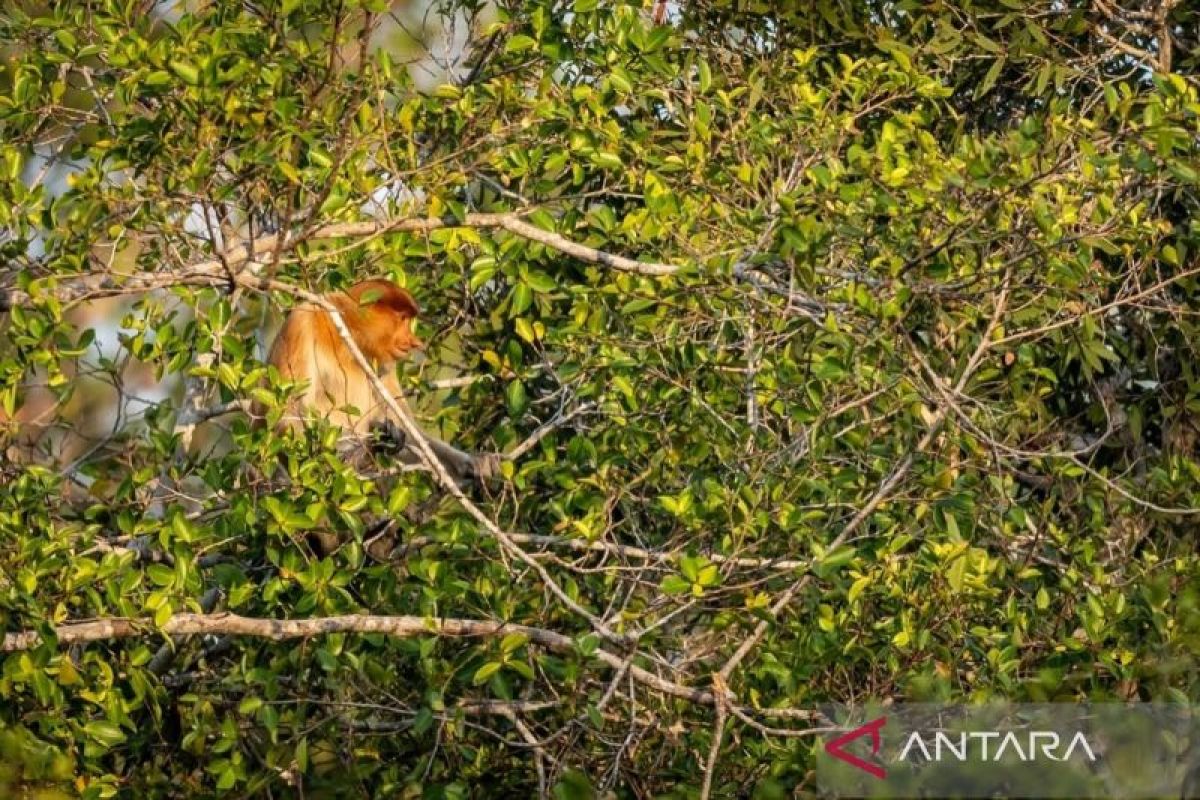
As the sun sets, a small motorised boat known locally as a klotok slowly approaches the riverbank in Panjaratan Village, Tanah Laut Regency, South Kalimantan — the gateway to a natural proboscis monkey habitat that survives amid dense riverside forest.
About 30 minutes from the jetty at the settlement, the houses gradually disappear. The riverbanks give way to stretches of trees, and the sound of the klotok’s engine becomes the only sign of human presence in the midst of the wildlife habitat.
Among the rambai, kebuau, galam, bangkal, baru and other trees, proboscis monkeys — scientifically known as Nasalis larvatus — begin to appear one by one. Some perch on branches, others leap from one tree to another, while some are busy feeding on young leaves.
Several proboscis monkeys even turn to look at the approaching klotok. The famously shy creatures do not immediately flee, but remain in the trees and carry on with their activities, as if the passing group below poses no disturbance to their way of life.
The scene offers an initial picture of Panjaratan as a habitat that still provides room for proboscis monkeys to live in the wild. In 2015, the population in the area was estimated at around 100 individuals; by 2022, according to the latest monitoring of the Panjaratan Essential Ecosystem Area (KEE), the number had reached 207.
The South Kalimantan Natural Resources Conservation Agency (BKSDA) has yet to update the population figure for 2026. However, the number of proboscis monkeys there is believed to have increased significantly. The estimate is based on field observations that found numerous proboscis monkey infants at various points along the riverbanks.
“We are aware of how important it is to protect this proboscis monkey area. These animals are protected and must be preserved together,” said a local representative, reflecting the community’s commitment to living alongside the wildlife.